The Case for Investment
Southeast Ohio’s Appalachian counties face persistent economic challenges — but possess extraordinary, underleveraged assets.
A Region of Assets, Not Deficits
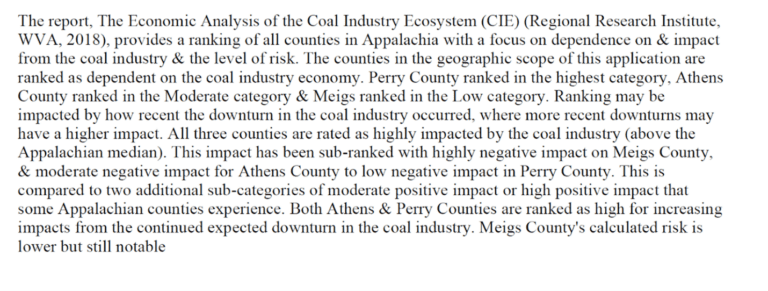
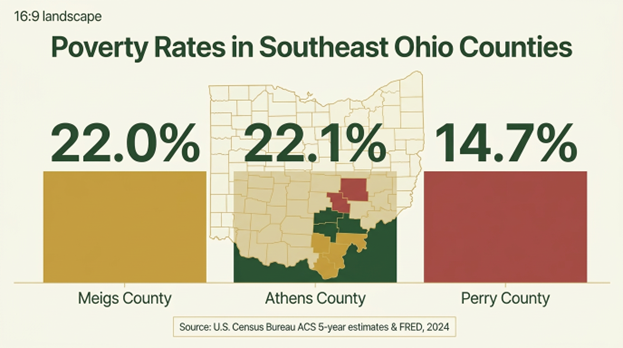
Meigs, Athens, and Perry Counties share common characteristics: high poverty rates, low labor force participation, limited access to career pathways, and economies historically dependent on resource extraction industries that have contracted significantly over the past two decades.
These same communities possess extraordinary, underleveraged assets. The region’s Appalachian heritage — including deep knowledge of native medicinal plants, a living tradition of folk arts and craftsmanship, rich foodways, and a landscape of remarkable natural beauty — represents an economic foundation that has never been systematically developed.
The challenge is not a lack of assets but a lack of infrastructure and capacity to convert those assets into income.
Key Findings from the ARC-Funded Planning Grant
Our comprehensive feasibility study (completed 2024) documented these critical gaps and opportunities.
Untapped Botanical Sector
Southeast Ohio’s forest-grown botanical sector has significant untapped potential, with national demand for verified, sustainably sourced medicinal herbs far exceeding current regional supply capacity.
Tourism Infrastructure Gap
Appalachian heritage tourism is a growing market, but the region lacks coordinated visitor infrastructure to capture multi-day spending.
Artisan Market Access
Local artisans and makers possess high-value traditional skills but lack business training, market access, and cooperative infrastructure to achieve financial sustainability.
Entrepreneurship Demand
Entrepreneurship and the desire to stand apart from institutional employment are core interests in populations left unemployed by the decline of the coal industry. However, opportunities to cultivate the necessary skills are few and far between.
Social Service Co-Location
The co-location of social services within arts and cultural organizations has proven benefits for fostering social inclusion and reducing barriers to workforce participation.
Community-Validated Approach
Community stakeholders across all three counties have validated the demand for this project through participation in planning sessions, letters of support, and direct engagement with the feasibility study process. The network model — preserving each site’s unique identity while sharing resources and programming — emerged directly from community input.
We point to findings from the ARC-funded planning grant.
“Southern Perry County doesn’t have a lot of work opportunities. Being part of this program has allowed me to get paid for performances, which has helped me cover bills and buy groceries. That kind of support means a lot around here.”
— Cameron Blosser, Heritage Interpreter
The Ohio Folk Centers Network Response
Prepared by the Federal Valley Resource Center, United Plant Savers, and the Little Cities of Black Diamonds Council, the Economic Transition Plan translates a year of POWER-funded planning and stakeholder listening into goals, metrics, and a five-part strategy for Appalachian Ohio.
Download the full plan (PDF)What’s Inside
What We Heard
Findings from a year of stakeholder listening across community members, local businesses, healthcare providers, educators, and county governments.
Goals & Shared Vision
Seven community-defined goals — from culture-bearer livelihoods and Main Street revitalization to culturally inclusive social services.
Measures of Success
Five metrics we will report against: individuals served, businesses created or improved, communities served, cultural assets preserved, and economic growth.
A Five-Part Strategy
Networking three folk centers, credentialing Appalachian Folk Culture Bearers, paid apprenticeships, the Living Traditions event series, and shared technical assistance.