By Diana Sette
State of the World’s Trees
In September 2021, Botanic Gardens Conservation International (BGCI) released a first-of-its-kind report on the state of the world’s trees. The study involved 5 years of intensive collaborative research by a global network of over 60 institutional partners and over 500 experts to compile extinction risks for the world’s 58,497 tree species. It found that 30% of tree species are threatened with extinction.1 That equates to around 17,500 tree species at risk, a number that is twice that of threatened mammals, birds, amphibians, and reptiles combined.2 The risk is likely higher as a further 7.1% were deemed “possibly threatened,” and only 21.6% of tree species were labeled insufficiently evaluated. Only 41.5% of the world’s trees were confirmed as safe from threats of extinction. The Global Tree Assessment (GTA), coordinated by BGCI, is working in partnership with the International Union for Conservation of Nature (IUCN) Species Survival Commission Global Tree Specialist Group and aims to complete comprehensive conservation assessments on the IUCN Red List of the world’s tree species by 2023, building on and amplifying earlier initiatives. The detailed tree species information used to compile the report is now available online on the BGCI’s GlobalTree Portal.3
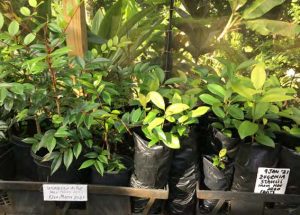
Trees represent the largest biomass on Earth, and they are at-risk from many threats with the top two being identified as deforestation for agricultural crops and logging timber.1
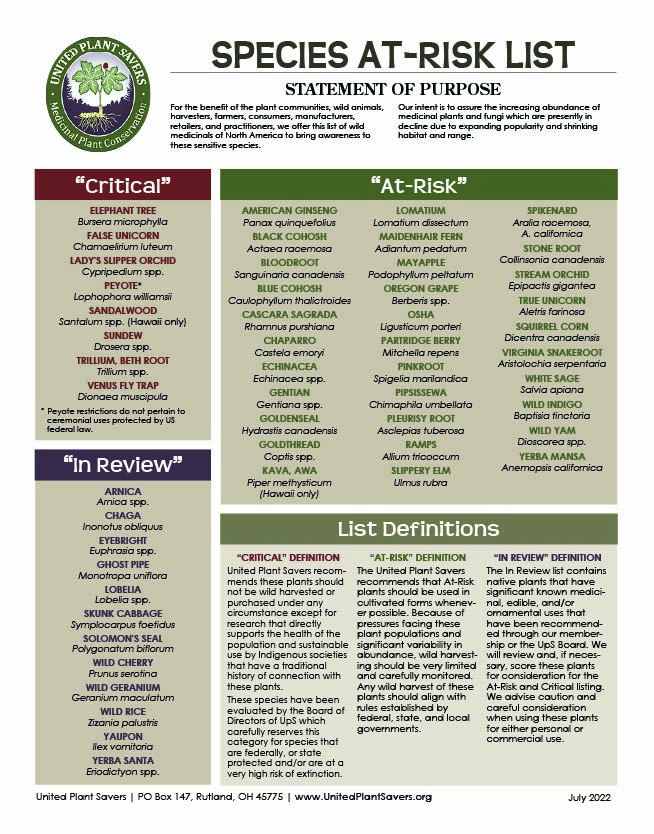
The NGO Traffic states in their 2018 report, that in terms of volume, value, and environmental impact, “Timber is by far the most important wild plant commodity in trade.” In fact, tree species make up half of Traffic’s “Wild Dozen” list of wild-collected species important in trade for herbal products traditional medicines, cosmetics, and food and are also at-risk of over-harvesting.4
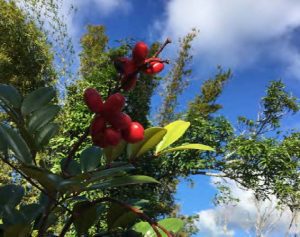
The Food and Agriculture Organization (FAO) of the United Nations estimates the annual global value of the timber trade as a whole in the U.S. at over $200 billion.4 Although a large amount of timber, particularly softwoods, originates in plantations, a high proportion of that in trade comes from natural, essentially uncultivated, sources. This applies particularly to tropical hardwoods, of which some 300 million cubic meters of roundwood is harvest annually—equivalent to perhaps 100 million trees.4
Illegal Timber Trade Putting Trees at Risk
Unfortunately, of the global timber trade 15-30% of timber is taken illegally with illegal trade estimated to be worth $50-$150 billion annually5. When it comes to tropical forest logging, only 5% of lumber productions are using sustainable forest management practices.5
A combination of political instability, government mismanagement, a lack of forest operation controls, and a failure to impose punitive penalties on well-known traffickers contribute to what may effectively be zero timber management control. Most of the illegal logging takes place in the tropical forests of the Amazon, central Africa, and Southeast Asia5. However, models of sustainable tropical forestry are emerging.
Tropical Forestry in Puerto Rico
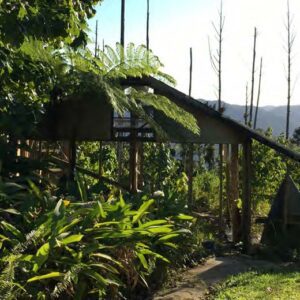
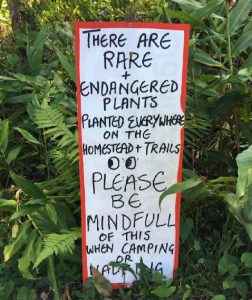
In January 2022, I had the opportunity to visit the land known as Las Casas de la Selva, home of Tropic Ventures Sustainable Forestry & Rainforest Enrichment project in Patillas, Puerto Rico, since 1983. On this biodiverse 1,000 acres of land, the Institute of Ecotechnics has been developing methods of sustainable forestry and timber production in secondary rainforests and is involved in on-going research identifying and tracking at-risk and endangered species. They are in the southern mountains adjacent to the Carite State Forest. Three hundred acres of the 1,000 acres of the tropical forest have been used to plant over 40,000 hardwood trees for selective thinning using sustainable forestry practices, while 700 acres remain as a wilderness preserve for watershed protection, research, and educational ecotourism. The project is certified as a Stewardship Forest,6 and there are walking trails developed to help increase awareness of rare and medicinal plants growing there. Their goal is to develop ways to live in the rainforest, while also supporting the health and resiliency of the biodiverse ecosystem.
I was lucky enough to get to spend some time with Thrity (3t) Vakil, who playfully identifies as a “Performance Scientist and Research Artist” and is the President of Tropic Ventures Research & Education Foundation and an accomplished artist. She shared with me about the work they have been doing in partnership with BCGI to monitor endangered species. With a grant from BCGI they have recently been working in partnership with the Global Tree Campaign to secure the conservation of two threatened endemic trees, Palo de Cruz (Garcinia portoricensis) and Tortugo prieto (Ravenia urbanii), by protecting wild populations, collating ecological information, propagating materials, and reinforcing wild sites.
Additionally, they have been working to grow other federally listed threatened species like Caribbean and Bigleaf Mahogany (Swietenia spp.), Blue Mahoe (Talipariti elatum), Ausubo or Bulletwood (Manilkara bidentata), Cobana negra (Stahlia monosperma), Palo de Jazmin (Styrax portoricensis), Palo de Nigua (Cornutiatia obovata), Calabash (Crescentia portoricensis x lineatfi olia), Rain Tree (Brunfelsia portoricensis), Matabuey (Goetzea elegans), and Uvillo (Eugenia haematocarpa).
Of Puerto Rico’s native tree species, 23% of them are endemic,7 making their preservation all the more critical to global biodiversity. Up until the 1940s, colonial deforestation reduced the Puerto Rican forests that once covered the island to less than 10% tree canopy cover. Since then a diligent effort began to extensively replant suitable native and regional hardwoods, creating a significant increase in secondary forest cover that is currently around 60% of the island.8
In 2015, Thrity and the project’s Technical Director, Andrés Rúa González, noticed that innumerable valuable hardwoods from trees like mahogany and teak, two of the world’s most endangered and coveted wood species, were being dumped in already overburdened landfills on the island. The solution was the creation of Puerto Rico Hardwoods (PRH). PRH has worked tirelessly with local municipalities, the Department of Natural Resources (DNRA), and local residents to prevent high value at-risk wood from being dumped or bulldozed into the ground during construction or agricultural projects.
In September 2017, these efforts became all the more urgent after Hurricanes Irma and Maria devastated 20-40 million trees9, taking down an estimated 10.4 billion tons of Puerto Rico’s tree biomass.10 Four to six million cubic yards of “vegetative debris” remained across the island, equating to roughly 1-2 billion board feet of wood.11 For an island facing challenges of economic instability and overwhelming debt, the hurricanes brought an opportunity to produce a significant income from salvaging valuable, hurricane-felled hardwood trees, especially considering that 95% of all of Puerto Rico’s wood and agricultural products are imported from off the island when it could be sourced sustainably from within the island’s abundant tropical forests.1
In October 2017, following PRH’s sustained pressure, the Puerto Rican Environmental Quality Board (EQB) passed a resolution to separate the tree trunks from vegetative waste at the U.S. Army Corps of Engineers (USACE) temporary debris sites.8 The U.S. Forest Service, with support from FEMA and USACE, launched a program to salvage valuable fallen trees, bringing thousands of trees to local sawmills in June and July of 2018. Unfortunately, when the resolution signed by EQB expired in August 2018, it was not renewed because DRNA declared that they had jurisdiction over the hurricane-felled timber and that most of the wood was “worthless.” It is arguable whether the hurricane-felled timber was actually worthless, and many sustainable forestry advocates, including the USDA Caribbean Climate Hub, have advocated for fallen wood reuse as a way to create a sustainable tropical forestry model for the Caribbean and other parts of the world.
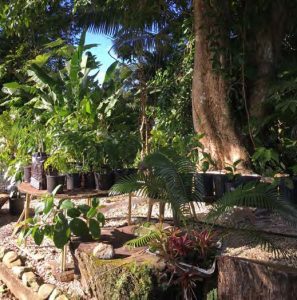
If Puerto Rico can find a way to sustainably harvest and trade at-risk species on the island with models like TVREF and PRH have created, it is possible that Puerto Rico will be able to provide its own supply of wood products, therefore decreasing the need for importing exotic tropical hardwoods that contribute to the deforestation of the Amazon or other globally at-risk tropical forests.
Ways to Support Sustainable Tropical Forestry
If you would like to support the stewardship, harvest, and trade of at-risk plants in tropical forests, there are many ways you can be involved. Volunteer at Eye on The Rainforest, especially if you have horticultural and propagation skills to offer, though anyone willing and able to support the work is welcome! Donate to the NGO through their website, www.eyeontherainforest.org. Purchase wood from sustainable sources13 and help spread the word about illegal logging, the need for sustainable forestry practices, and protecting biodiversity on this planet through the protection of trees. More resources in the reference list below.
References:
- Botanic Gardens Conservation International, State of the World’s Trees, September 2021. Retrieved from https://www.bgci.org/wp/wp-content/uploads/2021/08/FINAL-GTAReportMedRes-1.pdf
- Landmark global report: 1 in 3 tree species face extinction. September 9, 2021. Retrieved from https://phys.org/news/2021-09-landmark-global-tree-species-extinction.html
- Wild At Home: Exploring the Global Harvest, Trade, and Use of Wild Plant Ingredients. 2018. Retrieved from https://www.traffic.org/site/assets/files/7339/wild-at-home.pdf
- Salon. April 29, 2018. Retrieved from https://www.salon.com/2018/04/29/global-timber-trafficking-harms-forests-and-costs-billions-of-dollars-heres-how-to-curb-it_partner/
- Securing the conservation of endemic trees in Puerto Rico. Retrieved from https://globaltrees.org/projects/securing-the-conservation-of-endemic-trees-in-puerto-rico/
- The Ecologist. 31 October 2018. Retrieved from https://theecologist.org/2018/oct/31/saving-hurricane-felled-trees-puerto-rico
Additional Resources:
- International Institute of Tropical Forestry. Retrieved from https://www.fs.usda.gov/iitf
- USDA Caribbean Climate Hub. Salvaging Wood from Fallen Trees After Hurricanes Irma and Maria. San Juan, Puerto Rico. December 2017. Retrieved from https://caribbeanclimatehub.org/wp-content/uploads/2019/04/USDA-CCH_WoodWorkshopSalvagingWoodDec2017.pdf
- Institute of Ecotechnics. Retrieved from https://ecotechnics.edu/
- Puerto Rico Hardwoods. Retrieved from https://prhardwoods.com/
- Eye On The Rainforest: https://eyeontherainforest.org/ Facebook: Eye on the Rainforest
- More on Thrity Vakil and salvaging lumber from at-risk trees: https://youtu.be/hDwgZEA_zkg
- The Convention on International Trade in Endangered Species of Wild Fauna and Flora (CITES). Retrieved from https://cites.org/eng/disc/what.php
- The International Union for Conservation of Nature.Retrieved from https://www.iucn.org/
- IUCN Red List of Threatened Species. Retrieved from https://www.iucnredlist.org/
- Global Tree Assessment. Retrieved from https://globaltreeassessment.org/
- Botanic Gardens Conservation International. Retrieved from https://www.bgci.org/
Diana Sette is a writer, dancer, and mother who is passionate about art and the ways in which humans are in relationship with the natural world. She currently works as a horticultural therapist at University Hospital’s Rainbow Babies and Children’s Hospital in Cleveland, OH. Connect with her at dianasette.Wordpress.com.