By Kirby Grimley
As I was driving to the local community garden, I spotted a woman with a long gray braid in the distance eagerly running towards a tree. I watched her as she lovingly inspected the tree. “Now that’s a woman with a mission,” I thought. Turns out, this was my friend, Blanche Cybele Derby, artist and wild plant enthusiast, whom I was going to meet at the garden. It is a great honor to introduce you to her and her mission here.
Blanche, how long have you been wild foraging and what or who started you on this journey?
I’ve been interested in learning about plants and their uses ever since I was little. This eventually led me to want to forage for wild foods, which I’ve done for 60 years. Even when I was in elementary school I drew pictures of various plants I saw in books so I could identify them later. I collected actual samples and dried and placed them in a special “Nature Notebook.” In high school I tried to find information about useful plants at my local library, but didn’t have much luck, since in those days, it was B.C. (Before Computers). At first I majored in biology in college but since there weren’t any classes in botany, I switched to art but always continued my interest in the practical uses of plants.
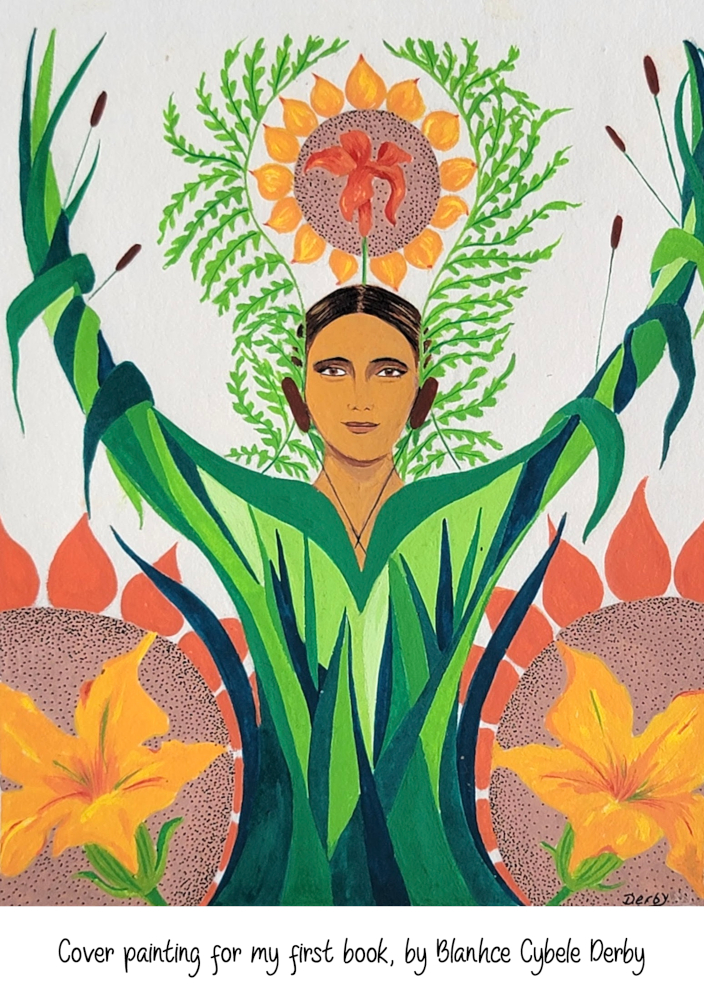
I wished I had a grandmother or mother who were familiar with plants, but they weren’t, which is why I was excited to read Euell Gibbons’ book Stalking the Wild Asparagus. He had the expertise my family members did not. Not only did he describe how to identify plants, but he also told how to prepare them. I was hooked. I began to forage and have continued to do so ever since. When I got married and moved to my husband’s farm, I had access to many wild and cultivated plants. I tested out my newfound knowledge on my patient husband. Often I substituted wild plants for cultivated ones in recipes. Later on, I was fortunate to finally meet a mentor named Ben Charles Harris, Renaissance man–author, musician, pharmacist, and forager. Since he lived in Worcester (MA) which wasn’t too far from me, I was motivated to get my driver’s license so I could visit and learn from him. I attended his herb study class and several of his weed walks, which were informative as well as entertaining.
I can forage for as long as I live. I’ve become more aware of seasonal cycles and of the time when plants appear. I usually ride my bike to collect wild foods which enables me to see plants I’d otherwise miss if I were to drive. Any walk, whether a 10 mile mile hike or a stroll downtown, becomes an adventure. I’ll never stop studying and learning.
What have you done with all the knowledge and wisdom you gained over the years?
Even though I’ve been gathering plants for many years, I often attend other people’s presentations because they are bound to know some things I don’t. I’m always curious. Curiosity is important if you want to learn, and I’ve got plenty of it! When I taught art at the high school level, we had mini courses the last 2 weeks of the year. Teachers could teach anything they wanted. There were no grades; I taught a class on wild edibles. My students and I went around campus to find, identify, and collect plants. The Home Ec. department let us use their room to process what we found. On the last day of class we had a Survival Banquet. It was a wonderful experience. This was the beginning of my decision to lead plant walks/ talks/workshops around New England. I’ve been teaching and doing this since. When I first started, there were very few people like me, but now, everywhere you turn, there is somebody leading a class or promoting their programs on the Internet.
I volunteer at the Smith College Botanic Garden to lead tours for all ages and am a guest speaker to classes of several Smith Biology professors. Almost thirty years ago, I wrote/illustrated 2 books on my personal experiences with wild edibles and later made 3 films. These are no longer available and I decided that instead of reissuing them, there was a better way to reach out. With the advent of YouTube, I’ve made 90 short educational videos about wild, cultivated, and even some invasive plants. Now I can connect with folks all over the world. When I first started, technology wasn’t good—images were slightly blurry, and I had a clunky camcorder with tapes. But now, things are so much better that I can even make an entire video on my phone! I also write quarterly articles for a newspaper magazine in my home town area, which is another way I can communicate locally.
What are a few of your favorite plants and preparation tips?
Here are some I use often with some easy ways to prepare them.
Black Locust flowers (Robinia pseudoacacia): When I published my first book, I decided to have a celebration at the school where I taught. This book included a chapter about the fragrant black locust flowers that have a subtle scent of vanilla. Since I was friends with the cafeteria staff, I asked them if they would help me cook up some fritters from these flowers to serve to students as they waited in line to have their lunch. The night before, I collected bags of flowers so I had plenty on hand. I set up some tables by the cafeteria; one of the cooks was with me and had a fryer to prep them. At first students looked askance at me, but as soon as the first brave person tasted one and wanted more, others joined in. This was an exciting way to introduce these flowers and my book at the same time. To make these fritters dip whole flower clusters in an egg batter, roll in flour, and fry on both sides for a few minutes. Drain on a paper towel. (Don’t deep fry them or they will be too oily). To eat, use the stem of the flower as a handle.
Cattails (Typha spp.) Perhaps my attraction to these plants stems from a dream I had almost 50 years ago. In it I was collecting pollen, and its dust covered my body. I was transformed. I felt an intense peace and sense of power. It was as if I was a part of the plants and them a part of me. I was so moved by this experience that I reenacted it in a drawing. Several years later, my husband was doing some research about an Apache artifact and found cattail pollen was used extensively among those tribes. They regarded it as sacred and sprinkled it over young girls during their puberty ceremonies, just like I had done to myself in my dream. These plants supply bounty for humans and nonhumans alike. I collect the male flower buds as well as the fine yellow pollen powder they later produce. I strip the leaves from the buds to make “Kittens on the Cob.” Strip their leaves off, quickly boil them for a few minutes, coat with a little butter, and eat. Like corn, these have a central thin flat cob that shouldn’t be eaten. Mix the pollen with other flours for pancakes or add some to smoothies.
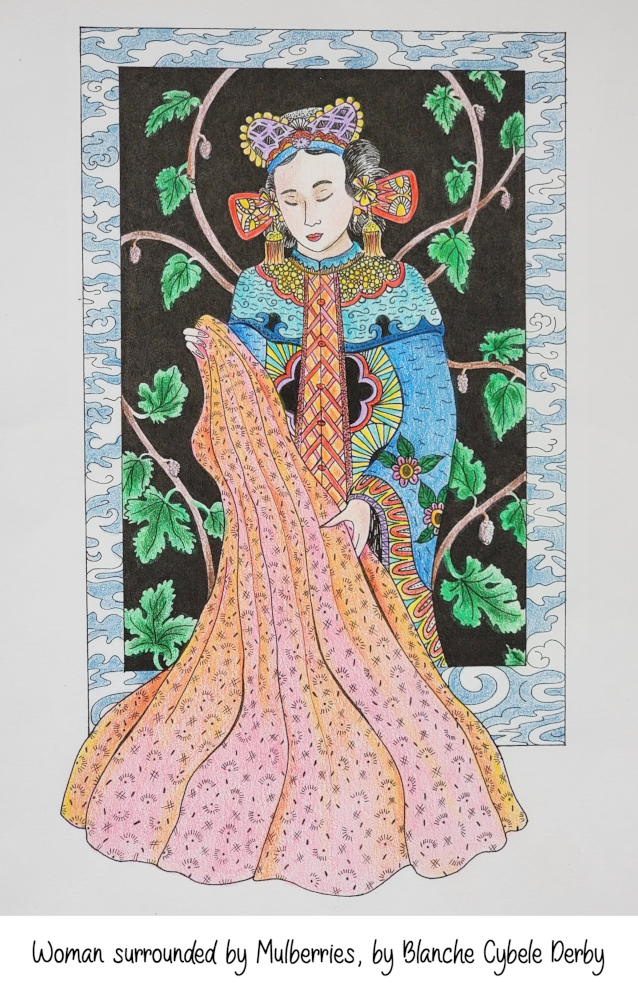
Mulberries (Morus spp.) In the 1830s, my city hoped to become a leading center for a domestic silk industry to rival that of China. Since white mulberry leaves were what silkworms preferred to eat, entire hillsides were planted with those trees. Unfortunately, harsh winters and high labor costs doomed the silk business here, but by that time, mulberry trees had adapted to their new home. Today some are still here, living monuments to what occurred long ago. We also have some native mulberries. Here are some easy uses for the berries: eat them off the tree, put them in smoothies, dry them, freeze them, and or juice them by heating, mashing, and straining to get a smooth liquid.
What advice would you give to someone who wants to start foraging?
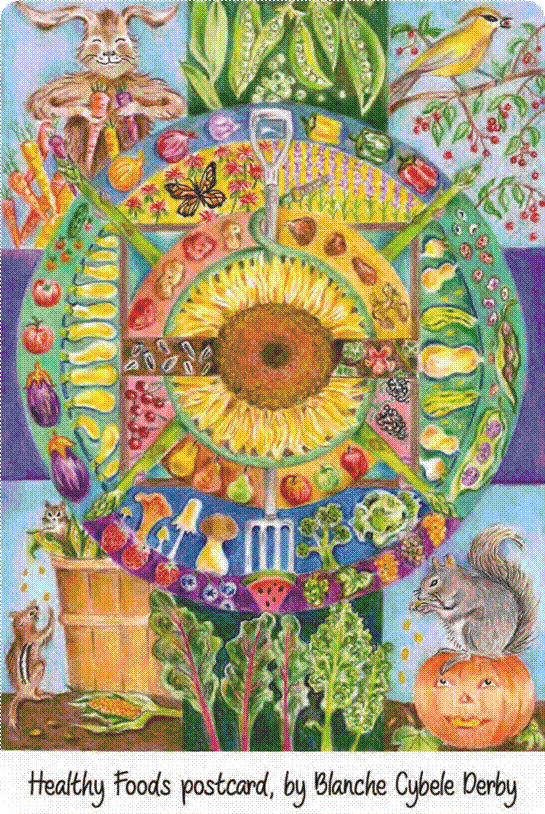
My advice is to start by identifying plants you already know—for example, dandelion (Taraxacum officinale) and research about their uses and how to prepare them. If you try to learn too many plants at once, it will be frustrating. The Internet can be a good resource, but there is always a chance the source may not be legitimate. There are several field guides available. Sam Thayer’s, Field Guide to Edible Plants is excellent and thorough. It’s over 500 pages, so obviously it might be too heavy to take into the field. Attend a walk or class with someone familiar with edibles so you can ask questions and see the plants in person. Take pictures so you will have something to remember when you get back home. Participate in one or more herbal conferences, which are often held in the U.S., where people from this country and the world present information about plants. Be sure you know how the plants you collect can be prepared. Some can be eaten raw as well as cooked like garlic mustard (Alliaria petiolata); others like ostrich fern (Matteuccia struthiopteris) shouldn’t be eaten raw and need to be cooked. It is important to be a responsible collector. Don’t pick an area clean. After all, there are others—our animal friends and fellow foragers—who might want some, too. Avoid areas like heavily traveled roads and railroad tracks where pollutants may be found. And obviously, and most important, learn which plants are edible and which ones are not. Proper identification is the key that opens the door to plant knowledge. If in doubt, throw it out!
How can people view your videos and contact you?
My YouTube Channel: https://www.youtube.com/@thederb720
My instagram page:@blanche.derby
My facebook page: Forage: Field & Forest
Thank you, Blanche. I have enjoyed hearing your stories and am grateful that folks can access all that you have to share, regarding the plant world. You are an inspiration as you truly are a plant lover with a mission!