By Stella Rose Godbold-Hemp
The genus of Artemisia is both widely known, but also widely overlooked. With over 400 species worldwide and complex chemistry, the genus is sometimes put on the “back burner” of herbal medicine, although there is rich cultural significance and so much scientific potential. Most species of Artemisia are climate-resilient medicine, which can be a useful tool in today’s world that deserves a deeper look. Artemisia is a genus of extremes globally known for treating things like malaria but locally ignored for its quieter gifts like pain relief and respiratory support. This research is intended to shed more light on the gifts of this genus and explore how it can serve our communities today.
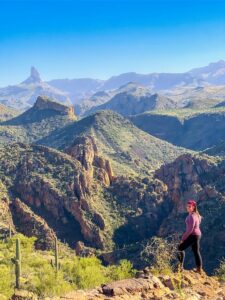
My personal motivation started from a memory of a 10-year-old me. Visiting Arizona for the first time, I felt a soul connection to the desert land and vowed I would make it my home someday. Enamored by the landscape, the first plant I came into contact with was a fragrant bush in the Painted Desert, what I would later discover was a species of Artemisia. I carried a piece of this plant home, not knowing what it was, but giving it a sniff as I would daydream of a lifetime in the desert. After planting my roots in Arizona, I began traveling around the southwest desert to explore the various landscapes and plants. I found myself drawn to the various fragrant bushes that I would find, again, discovering later that they were all part of the same genus. It seemed like everywhere I traveled an Artemisia would find me and captivate me. In my mind, they are the essence of the desert that I know and connected with.
After learning about the potent medicine of Artemisia, I never understood why they aren’t talked about more. A quick Google search of “medicinal desert plants” will lead you to Creosote (Larrea tridentata), Prickly Pear (Opuntia ficus-indica), or Aloe (Aloe vera) but rarely to any Artemisia species. There are about 10 different species in Arizona alone, and my motivation for this writing is to study them and find how they are interconnected. My love for Artemisia comes from my love of the desert, the place that saved my soul and connected me to my true self.
I hope to bring this genus a little more into the spotlight of desert medicine, and to share the insights of the ancient peoples that revered its various species. I hope that someday, when someone thinks of medicinal desert plants, Artemisia is not overlooked. With the complex chemistry of the Artemisia genus, there needs to be more research and study regarding these plants and their medicinal potential. I want to kick up the metaphorical dust around the genus hoping to grab the attention of more desert herbalists to utilize these plant allies.
I will highlight three of the Artemisia species that grow in the American Southwest Deserts such as the Mojave, Sonoran, Chihuahuan, and the Colorado Plateau.
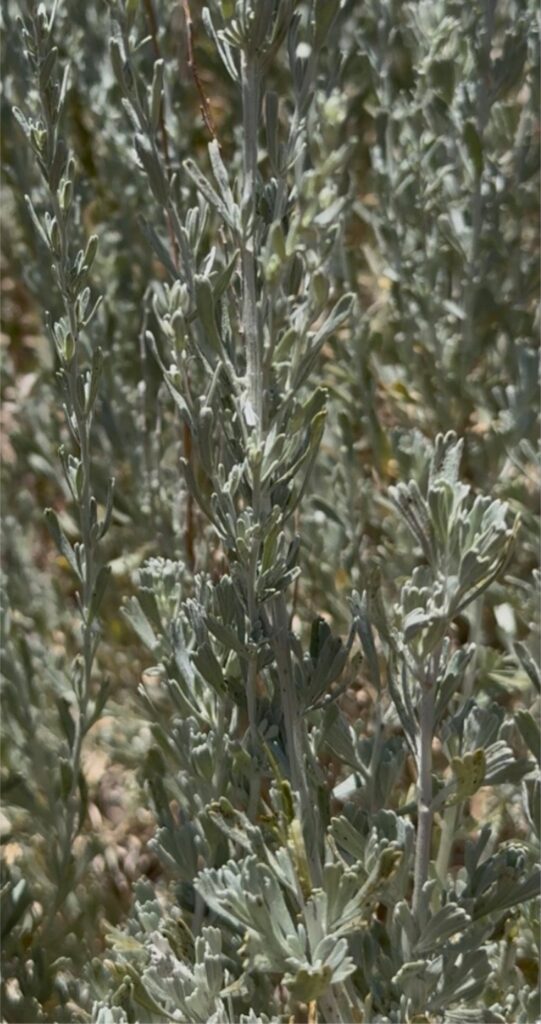
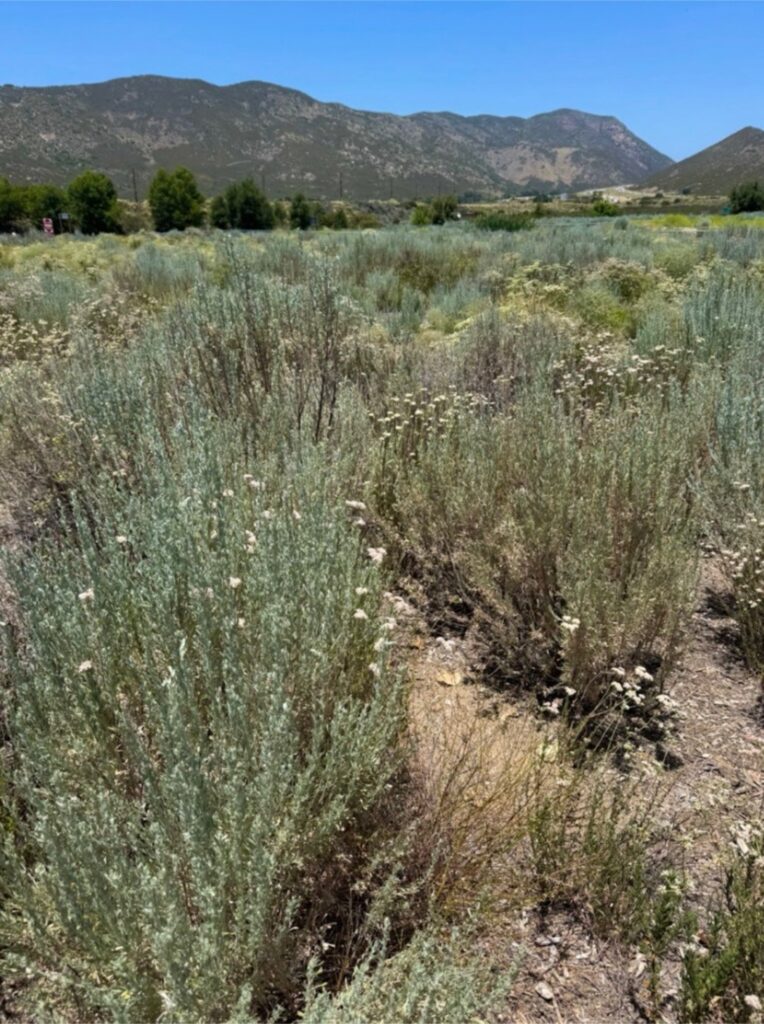
Big Sagebrush
(Artemisia tridentata)
Laguna Mountains, Cleveland National Forest, California. Photos by Stella Hemp
Big sagebrush, a woody shrub growing from 1-3 meters tall, thrives in cold deserts, plateaus, foothills, and valleys at around 3,000-8,500 ft in elevation. This artemisia has wedge-shaped leaves that end with a tri-tipped tooth, hence the name “tridentata.” The leaves are a gray-green that are very aromatic. Big sagebrush is deeply tied to the cultural identity of the Great Basin and is a critical food source for the survival of sage grouse, who eat the leaves year-round.
Chemical profile:
Camphor, eucalyptol, pinene, and borneol.
Fun Fact: a healthy sagebrush can live up to 100 years!
Ethnobotanical uses:
The Cahuilla people used A. tridentata as a disinfectant for the air in homes and sweathouses by burning the leaves and stems. A decoction of the leaves was taken for stomach complaints. The Diegueno used the fresh and dried leaves for bad colds with coughing and bronchitis. Havasupai used the leafy stems as a dermatological wash for sores and pimples and as a tea for coughs and runny noses. The Navajo used A. tridentata for analgesic purposes for headaches as well as for ceremonial medicine.
Let’s take a look into the uses of A. tridentata from the Navajo people:
The leaves were boiled and used as a steam inhalant, as well as tea for cold and respiratory issues. Wet sagebrush bandages were wrapped around achy, rheumatic joints to relieve pain and inflammation. A wet compress of the plant was laid across the forehead for headache pain. Leaves were also chewed to relieve tooth pain. The Navajo also used this plant as a purifier for the air and in sacred ceremonies. Artemisia tridentata was a powerful medicinal resource for the Navajo, as well as a source for dyes and basket weaving.
Contemporary uses:
Big sagebrush has been studied for potential anti-microbial actions.
Preliminary results concluded that A. tridentata does have antimicrobial activity.
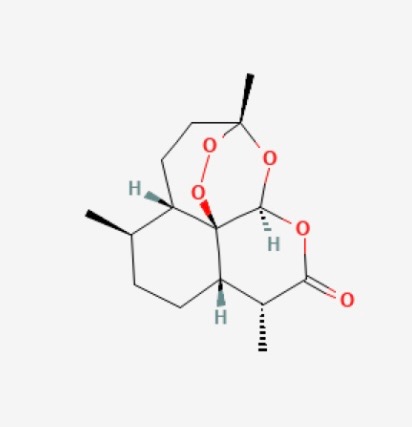
All about Artemisinin
Artemisinin is a potent antimalarial sesquiterpene lactone found in the Artemisia genus, primarily in A. annua. This potent compound has been proven to be exceptionally effective in drug-resistant malaria. Artemisinin-based combination therapies are currently recommended as the first line of defense in the treatment of malaria according to the World Health Organization. Artemisinin is activated by iron within the parasite’s digestive vacuole and releases free radicals.
Artemisinin has also been found to kill cancer cells that are resistant to chemo and radiation by releasing a high concentration of free radicals inside the cancer cell.
Artemisinin has been utilized for quickly clearing fevers, (1-3 days) but also has a short half-life of 1-3 hours in the body.
Early lab studies have suggested activity against SARS, COVID-19, and hepatitis B, but there has been no clinical approval yet.
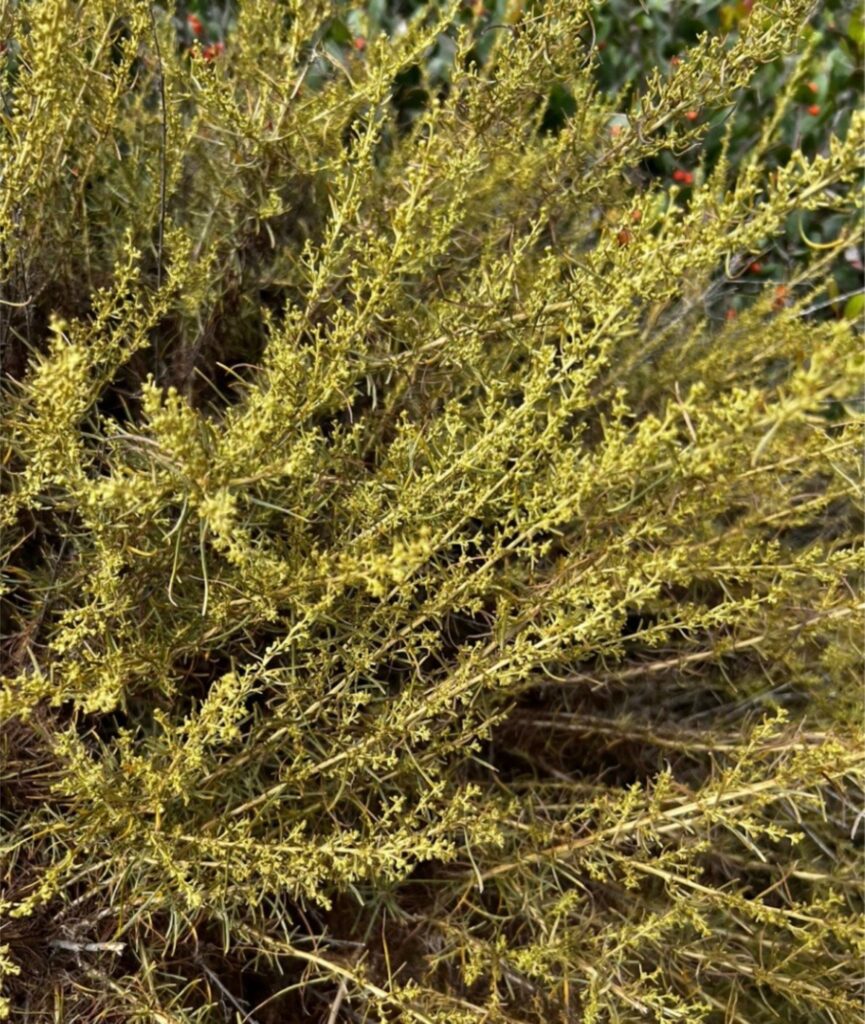
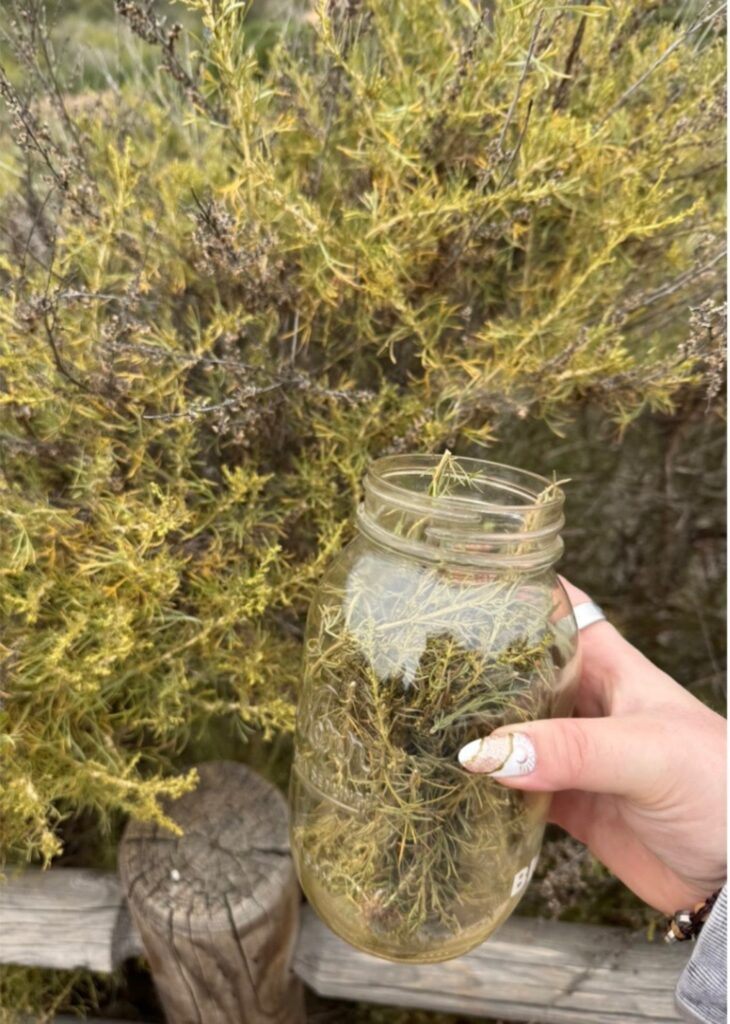
California Sagebrush (Artemisia californica), San Diego, California. Photos by Stella Hemp
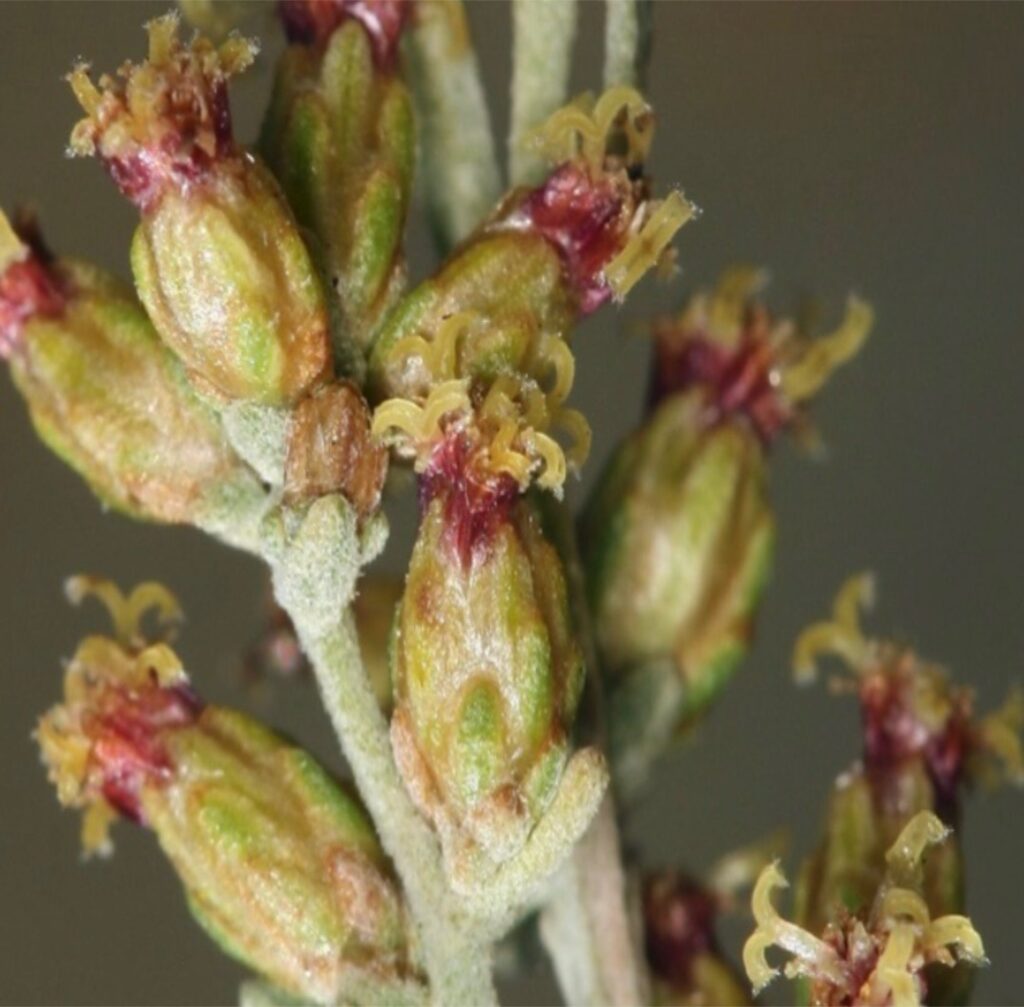
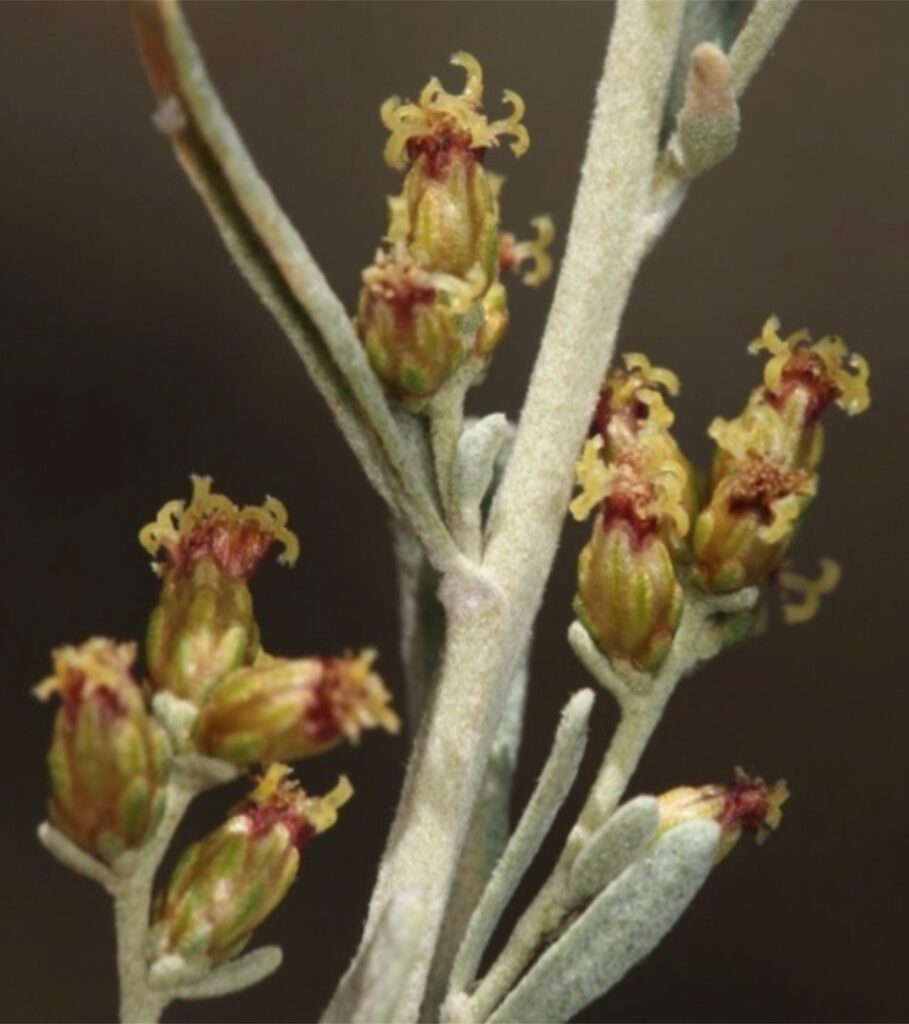
Black Sagebrush (Artemisia nova), Photos by Steve Matson
California sagebrush
(Artemisia californica)
San Diego, California. Photos by Stella Hemp
A woody subshrub that stands 1-2 meters tall with a wide, rounded crown. Leaves are finely divided and feathery, often mistaken for a conifer at a glance. A. californica is a very densely aromatic plant, the scent being described as piney, citrusy, with a hint of musk. Very resinous, this plant needs a high ethanol extraction. Growing only in Baja California, and the southern coast of California, this shrub can only be found on dry slopes and coastal mesas no further than 50 miles from the coastline.
Chemical profile:
Camphor, cineole, thujone, pinene
Fun fact:
Often called “cowboy cologne” due to its strong and pleasant scent. Ranchers would use this plant as a natural deodorizer and insect repellent.
Ethnobotany:
The Chumash utilized California sagebrush as a hair wash or poultice to relieve headaches. They also used this plant in purification rituals, especially ceremonies relating to death and made bundles to place along paths to shrines.
The Kumeyaay would grind the leaves of A. californica and create a poultice for ant bites. They would also make a decoction to be used in baths to treat measles. Additionally, they would smoke the dried leaves as a substitute for tobacco.
The Tongva would make a tea of California sagebrush and give it to newborns to purify them. They believed chewing the leaves of A. californica would alleviate stomach pain, and drinking an infusion would help reduce pain associated with fevers.
Chumash use
Chumash healing integrates mind, body, spirit, and aromatic plants like California sagebrush. The smell of A. californica was used to evoke pleasant memories. Chumash people often utilized it for easing the pains of childbirth and menstrual cramps. Smoke from burning the plant was used for purification and spiritual cleansing. In the Chumash language, California sagebrush is called “We’wey.” It was also documented to be used for respiratory issues, cuts, wounds, and headaches.
Contemporary uses:
A topical liniment is used for muscle pains, arthritis, joint pains, bruises, broken bones, and lower back pain. Pain relief is reported to begin within 20 minutes, lasting for 2-3 hours depending on severity. The mechanism of action is in the monoterpenoids in the plant that act on the transient receptor potential cation channels in the skin and inhibit COX-2 reducing inflammatory signaling in superficial tissues.
Black Sagebrush
(Artemisia nova)
Photos by Steve Matson
Also known as “little black sage”, this plant grows in much of the desert southwest. Found at elevations of 4,000-7,000ft, often higher than the habitat of A.tridentata, little black sage grows and thrives in shallow, rocky, and calcareous soils. Her habitat is desert grasslands and sagebrush steppe, often found on limestone or volcanic slopes. Little black sage is shorter and darker than that of A. tridentata, growing between 30-60 cm tall. Leaves are narrow and evergreen and often entire (not lobed). She prefers full sun, extreme drought conditions, and cold winters—typical of a cold desert shrub. A. nova is a critical winter food source for mule deer and pronghorn.
Chemical profile: artemisin, dehydromatricarin, thujone, pinene, borneol.
Ethnobotany:
Northern Paiute would burn the leaves and branches as incense during ceremonial healing, cleansing, and mourning rituals. A tea was made of the leaves and stems and was taken for colds, stomachaches, menstrual pain, and as a bitter tonic to “clean the blood.”
Western Shoshone people would make a tea of the leaves to be used as a febrifuge and digestive bitter. Weak teas were made and given to women as an afterbirth cleansing and mild uterine tonic. The plant was made into bundles and carried on long journeys through the desert.
The Ute would use little black sage in place of big sagebrush in ceremonies for cleansing and vision quests. Smoke inhalation or teas were made to clear chest congestion, cough, and feverish chills. Small, dried sprigs were tucked into clothing to ward off “evil winds” of spiritual or physical illness. A. nova was also added to warm baths for aches and stiffness after long hunting trips.
Fun Fact:
A. nova can live over a century, anchoring itself in mere inches of soil. Its resin-rich leaves stay evergreen even under snow, helping wildlife survive harsh winters.
Summary:
“Black sagebrush is the small sage of high places—a plant of endurance, used by the mountain people for strength and purification.”
—Adapted from Great Basin oral histories (Fowler 1989)
Hidden Secrets
Ancient wisdom carries in the breeze,
Hidden secrets only told to bees.
She drops her seeds to live another day—
Potent medicine buried in the clay.
A strong desert warrior, ready to defend,
A soft-spoken lover, an old and loyal friend.
Harsh and dry beneath the sun’s relentless glow,
Artemisia knows no struggle—she only knows to grow.
The ancient ones revered her, called her sacred plant,
But modern life forgot her, buried in the sand.
What will it take to remember the voices of our elders—
To study and respect her,
The way that they had held her.
— Poem by Stella Hemp
Stella Godbold is a desert herbalist whose passion lies in cultivating intimate relationships with the plants of the Southwest. Her work is rooted in observation, tradition, and a deep reverence for the landscapes that shape both plant and person.