by Jenni Parsons of Woodland Herbal
My feet were placed on the green path before I was able to walk. I come from a long family line of healers, eclectics, homeopaths, apothecaries, snake oil makers, and herbalists. A single branch from this wide family tree shows a rich history of herbalism and medicine in America.
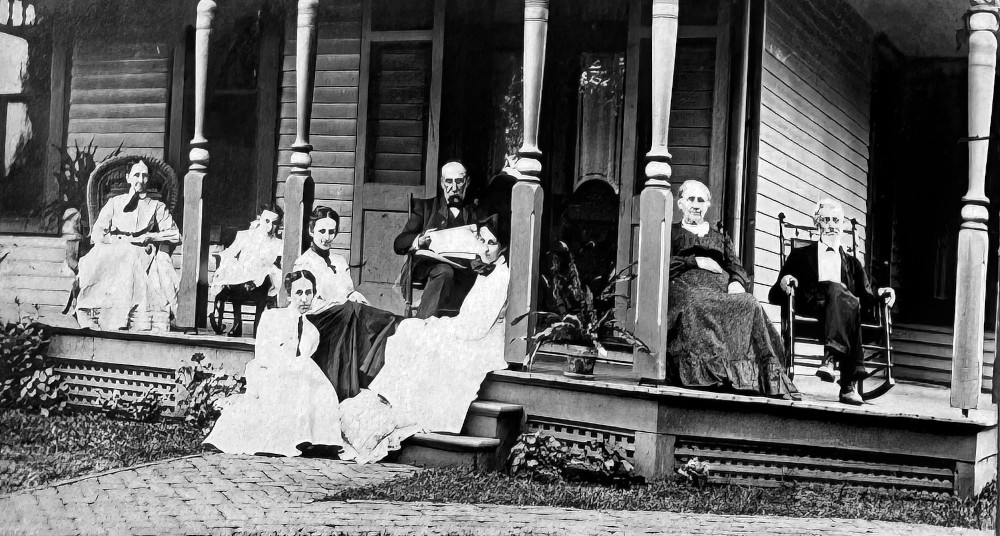
Elenora, a Quaker school teacher, fell in love with a conductor on the B&O Railroad named John Miller. In 1853 they were married and settled in Cambridge, Ohio, near Elenora’s family and friends. The couple celebrated the birth of their first child, Viola, within a year. Their joy turned to deep despair as cholera swept through the county, taking Viola before her fi rst birthday. Family journals tell of a tiny gravestone bearing the words, “Are not my days few?” This giant love of a tiny girl shaped the future of my family for generations to come.
In their grief, the couple left Ohio for John’s hometown of Syracuse, New York to search for answers and purpose. They found both as John began training with Dr. C. Cooper, a prominent physician. Armed with a new copy of “The Dispensatory of the United States” and family wisdom and plant lore, Elenora and John got to work.
They developed a tonic recipe that became Dr. J.R. Miller’s Universal Magnetic Balm just as the patented medicine market exploded in this country. The sea green bottle contained tinctured herbs and honey and had a large sticker that advertised in bold print : cures cholera morbus, colic, dysentery and all bowel complaints, neuralgia, headache, and all pain. The label included a photograph of John’s bearded face looking fatherly and wise. John and Elenora had created an affordable remedy for families not wealthy enough to call a doctor in times of trouble, a remedy for families like theirs.
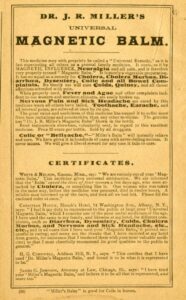
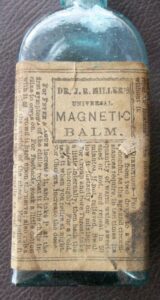
During this time of creating and learning, Elenora gave birth to two healthy sons, Otis and Marion. The family painted a horse drawn wagon and packed it with their tonic to sell in the streets with style. In a short time the formula became a local favorite, then an apothecary staple, and finally a national household name. Dr. J.R. Miller’s Universal Magnetic Balm became so popular it attracted the attention of larger competitors. In the late 1860s, D. Ransom, Son & Co. filed a lawsuit against the Millers. The suit claimed the tonic was nothing more than snake-oil and quackery, the balm was falsely advertised as magnetic, and John claimed to be a doctor when he was not licensed. I, like every other herbalist who just read the tonic claims, cringed when I saw the balm’s label. By modern standards the Millers broke every single rule, from no ingredients listed to medical miracle claims. But, in John and Elenora’s time, buzz words like magnetic and bold claims were the standards of the day and expected. The Ransom company had been very successful suing and acquiring their competition, and the Millers were no exception. The case was settled out of court and the family lost the rights to the product recipe, name, and even John’s own likeness. Ransom & Sons didn’t skip a beat. They took over production and added the tonic to their family of apothecary products without changing a word on the label. Not even the name or photo. It remained a best seller for many years after.
John R. Miller died in 1871. Elenora scooped up her sons, Otis and Marion, and returned to Ohio, to a small dirt floor cabin near her sister. Otis later recalled this time as “a very cold and hungry winter.”
Not far from the Millers, Levi Clemens Wells (named for a noted relative), returned home with his wife, Mary, daughter, Margaret, and son, Henry, from his study of medicine in Cincinnati and earned a diploma in Chicago. He hung his shingle as a practicing eclectic physician to the city of Cambridge in 1876.
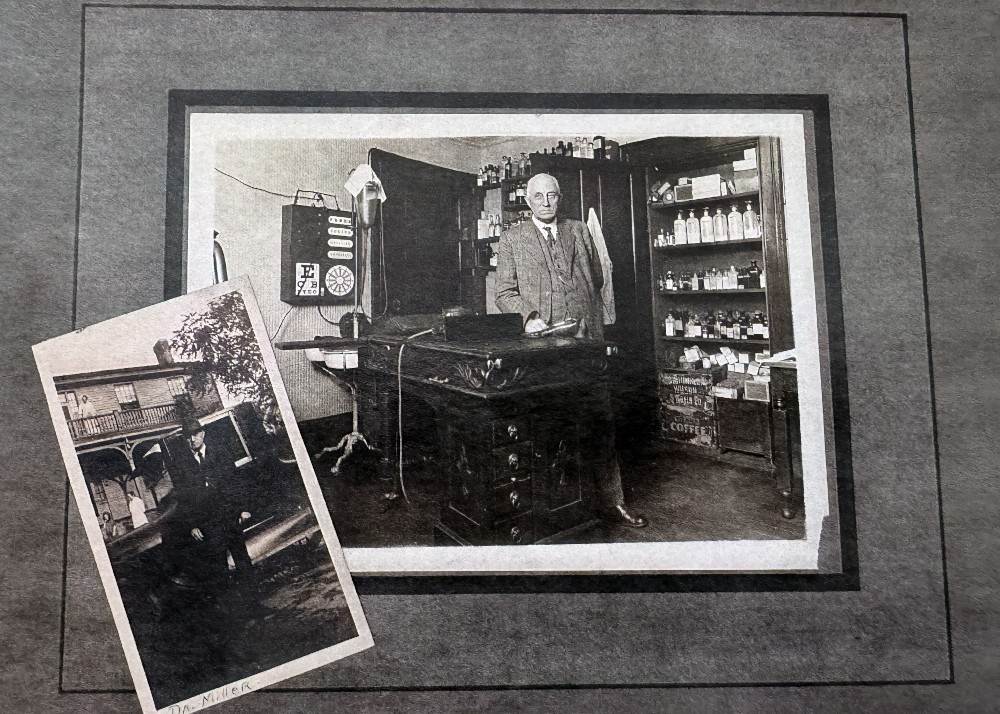
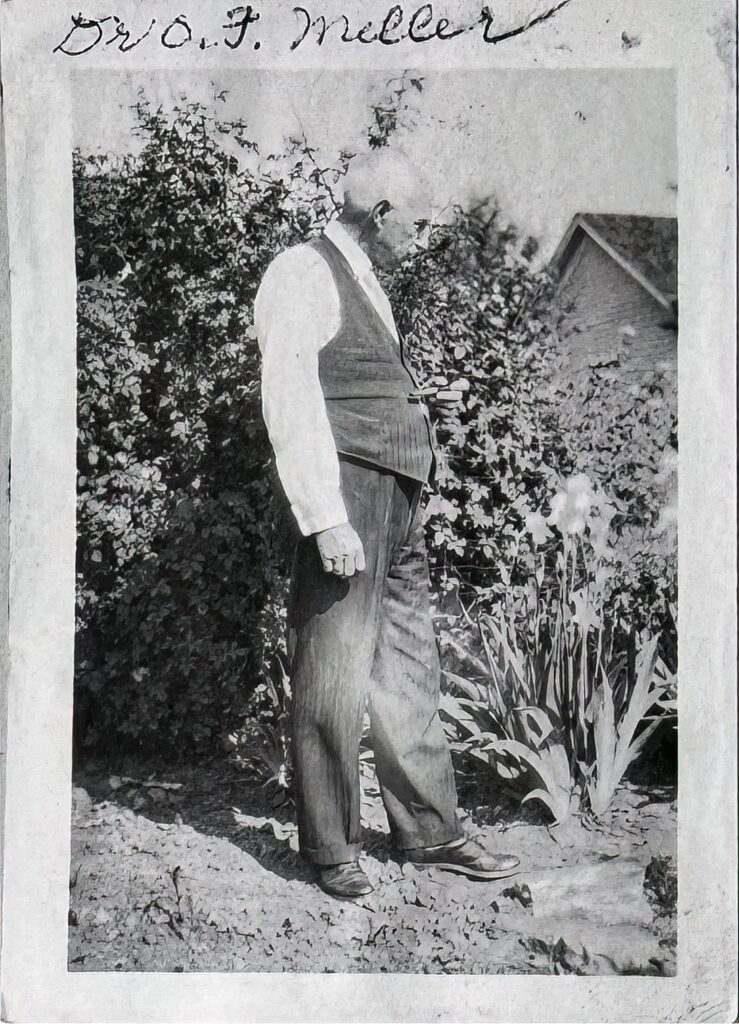
Otis F. Miller, son of John and Elenora, followed in his father’s footsteps. His first job was with the B&O Railroad, the same place his father worked years before. Also like his parents, he was called to healing. After working a full day for the Railroad, Otis walked to town to apprentice with local physician, Dr. Levi C. Wells. Otis gained more than a mere education; he fell in love with the doctor’s lovely daughter. He married Margaret Wells in 1898. Despite having no formal schooling during his eccentric childhood, Otis was tutored by his mother using a dictionary and Bible. Otis, Margaret, and their newborn son traveled to Kentucky to the Louisville Homeopathic College to study medicine.
Their second son was born in 1902, with Dr. Otis Miller acting as attending physician. My great grandfather was named Cecil when his daddy caught him in his arms. Otis excelled in his studies, even delivered addresses to the Homeopathic Society meetings on topics like “temperature” before joining the U.S. Medical Corp in 1917. During his service, Margaret and the children returned home to Ohio and began planting, creating a market garden to supplement their income.
Margaret’s brother Henry Wells earned his degree from the Cleveland Homeopathic Institute, and interned at the Cleveland city hospital, before returning home to Cambridge to join his father’s practice. Henry eventually opened a state-of-the-art hospital, dedicated to his parents, in his hometown. The Wells hospital was eventually joined with Cambridge City Hospital, where Dr. Henry Wells served as chief of staff.
Otis returned home to open his own apothecary and served as a family doctor, making house calls until the end of his life. His wife continued her market garden, and Cecil harvested vegetables to take to town to sell. At 18 years old, Cecil attended a box social at a local grade school. A popular fundraiser in 1920, ladies prepared a picnic lunch in a box and men would bid for the privilege of sharing a meal with its maker. Cecil bid on, and won, a box prepared by young school teacher, Beulah, thus starting a lifetime of love and picnics together.
My great grandmother Beulah kept a daily journal all her life, one of our family’s greatest treasures. She recorded her everyday chores, including working in the hot beds built in her backyard. Each spring she wrote about baking soil (she loved the scent), planting seeds, weeding, and potting seedlings. By late spring, she and Cecil were selling pepper, tomato, zinnia, marigold, and petunia plants to their community. Seven children took their turn helping as they grew. Their youngest daughter arrived in 1937, my grandma, Patricia Miller.
To this day, Patricia grows the most beautiful petunias. She married a cattleman, and they worked the land with their three children. Their middle child is Barbara, my mama. As she grew Barbara learned how to harvest, plant, cook, sew, preserve, and create beautiful things. In my mama’s hands, what was once essential to survival to generations before became art.
Barbara and her husband settled across the road from Patricia, and I appeared in 1981, born in the Cambridge Hospital. The same year, mama planted her herb garden, wanting natural options for her new baby girl. What started as a few plants became a passion, and a source of wonder to me. She took the daily chore of making dinner and made it her artistic outlet by creating or trying a brand-new recipe incorporating her herbs every week. My papa, brother, and I were her very willing tastetesters. Today, Barbara Keith is an accomplished culinary herbalist, and she is compiling her many wonderful recipes for a book.
I also fell in love with plants, and while I enjoy cooking with them, I am filled with wonder at how they affect our bodies. I followed the medicinal plant path, which led me in a circle to the past. I was led to recipes from Grandpa John and Otis, stories of Grandpa Levi and Uncle Henry. I recall pressing my nose to Grandpa Cecil’s apothecary roses and sitting on his knee as he called for yet another family picnic. I read the journals of Grandma Beulah, and I have the great fortune of my Grandma Patricia still sharing her love, stories, and wisdom with me.
It is easy to read stories about the past and feel it is simply a time gone by. It is tempting to sneer at a tonic advertisement from the 19th century and think, “snake-oil, quackery, and charlatan,” without understanding the family behind the slogans. Not so simple for me and mine, as it is the story of our family. I am proud to be their daughter. I am proud of my eclectic inheritance.
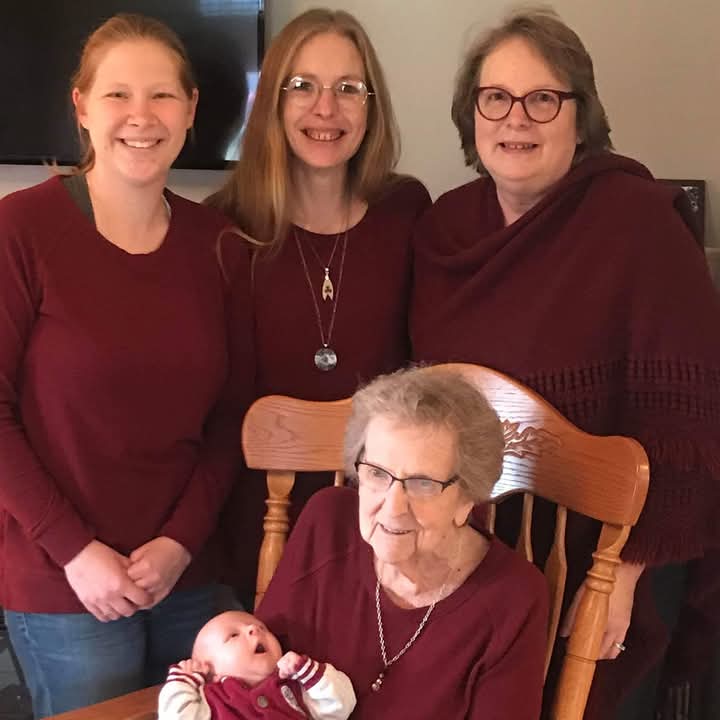
Jenni Parsons is a community herbalist who serves through the family business, Woodland Herbal, and teaches at The Green Path Academy, based in Warsaw, OH. Learn more by visiting www.woodlandherbal.com.