How we are promoting biodiversity at Flourish Farm AND Botanical Sanctuary
By Crystal Moore-Stevens
Biodiversity
Biodiversity is such an important part of sustaining life on Earth, as it is quintessential to environmental and human health. Ecosystem health is directly affected by biodiversity. Schlaepfer (2018) offers insight into how ecosystems are resilient and adapt to environmental changes, such as climate change, due to the biodiversity of plant and animal species. Biodiversity encompasses all living entities and organisms from watersheds to forests to glades—flora, fauna, and fungi.
“Earth’s landscapes are interconnected like a living mosaic, held together by the movement of species and the natural flow of water, nutrients, and energy. But today, these lifeline networks of rivers, forests, and grasslands are increasingly under threat…. The way we grow food—combined with expanding infrastructure, pollution and climate change—is fragmenting landscapes and driving deforestation, biodiversity loss and breakdown in ecosystem functions.” Global Land Outlook Thematic Report on Ecological Connectivity and Land Restoration (2025)
Many factors affect biodiversity, including the presence or absence of flora and fauna, soil type, geology, hydrology, slope, land use, land-use history, and the use of bordering properties (Forman, 1995). Scientists warn us that we are facing the sixth mass extinction. This sobering notion is backed by data that suggests approximately one million species of plants and animals are at severe risk of disappearing in the wild. Many ecosystems and endangered species are on the precipice of disappearing. Nearly half of the world’s population of plants and fungal networks are affected by this crisis as deforestation and soil degradation are occurring at unprecedented rates (IPBES, 2019). There is a strong global need for ecosystem restoration, invasive species management, land stewardship, diversified native plantings, and soil conservation, all of which can help to promote biodiversity and environmental health. There is a need for a grassroots movement to create cultivated ecology in backyards, community gardens, on rooftops, in city parks, suburban areas, small farms, and conservation areas spanning the globe (Tallamy, 2020; UNCCD & CMS, 2025). Due to development, deforestation, monocultures, and other destructive practices, natural habitats for flora, fauna, and fungi have become fragmented, isolated, and destroyed, harming biodiversity. These harmful practices are detrimental to the environment, ecosystems, and watersheds (O’Connell and Noss, 1992). While some conservation efforts are in place, restoration is not happening quickly enough or on a large enough scale to mitigate the damage already done.

Mississippi River Basin Watershed
Our farm and botanical sanctuary is situated in Madison County, Illinois, which is part of a riparian ecosystem known as the Piasa Palisades region, encompassing the confluence of the Mississippi, Missouri, and Illinois rivers. This system is located in the Eastern Temperate Forests ecoregion and is part of the River Hills subregion. We live along the Illinois-Missouri border, near the confluence of the Illinois River Basin and the Mississippi River Basin watersheds, a globally crucial riparian ecosystem. The US Army Corps of Engineers (2024) states that the Upper Mississippi River System (UMRS) covers 500,000 square kilometers in North America and includes tributaries and floodplains. It is home to diverse species, including river otters, foxes, bobcats, deer, reptiles, amphibians, and birds. The U.S. Geological Survey (2022) states that the UMRS area provides habitat for nearly 150 fish species, 57 mammal species, 45 amphibian species, 40 freshwater mussel species, and 80 aquatic species. The UMRS is known as the Mississippi Flyway, a migratory corridor for nearly 40% of North American waterfowl. Forests in the floodplains also provide habitat for over 150 species of birds. In Illinois, over 480 species, including mammals, birds, reptiles, amphibians, insects, crustaceans, mussels, and plants, are endangered or threatened. Some of these have been spotted in Madison County, such as the Indiana Bat. Endangered mammals include the Grey/Timber Wolf and several species of bats, including the Indiana bat. There are also 47 endangered and six threatened invertebrate species, including various mussel species (Illinois Endangered Species Protection Board, 2020).
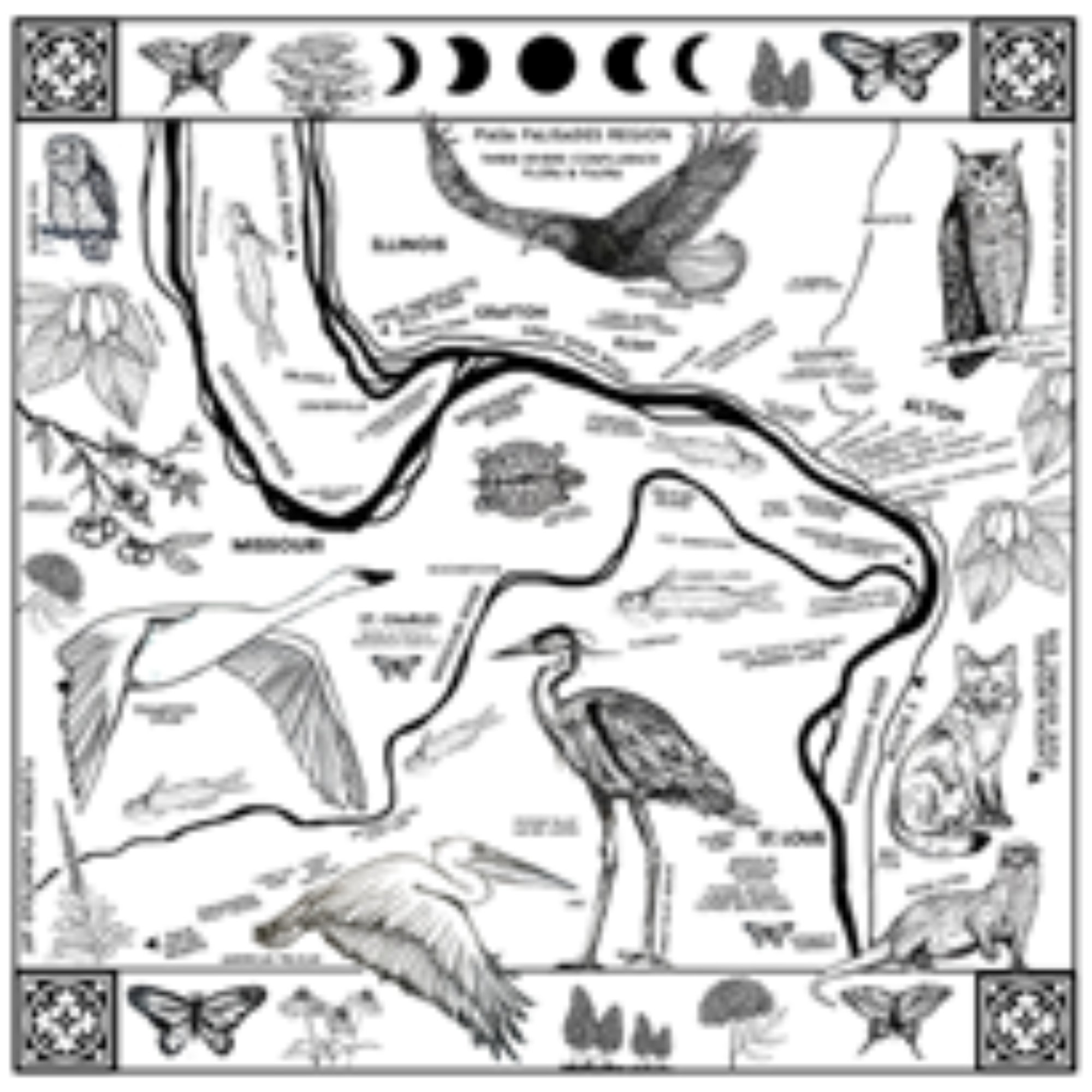
Fig 2. Confluence artwork Fig. 3: Bluff line along the confluence of the Mississippi and Illinois rivers
The Disappearance of Natural Ecosystems
In our own community, the disappearance of natural ecosystems and increased deforestation near Alton, Illinois have been documented by local organizations. The Nature Institute (TNI) has reported significant habitat loss along the Mississippi River due to agricultural expansion and development (The Nature Institute, n.d.). The Great Rivers Land Trust has published findings on the adverse effects of deforestation and land conversion on local biodiversity (Great Rivers Land Trust, n.d.). The Illinois Department of Natural Resources (IDNR) has conducted studies demonstrating the impact of deforestation on local wildlife, plant, and animal species, particularly on biodiversity within riverway ecosystems (Illinois Department of Natural Resources, n.d.). These findings show the urgent need for conservation efforts in the region. While many organizations, such as the Sierra Club and community members, promote environmental education and awareness, there is a notable lack of public awareness beyond the knowledge shared among the small population of scientists, conservationists, and environmentalists.
Loss of Tree Cover
When researching loss of tree cover in our region, I came across data collected and analyzed by the Global Forest Watch. From 2001 to 2023, Madison County lost approximately 1,137 acres of tree cover, a 1.4% decrease since 2000. The state of Illinois Lost 67,800 acres, a 1.2% decrease in tree cover. The US lost approximately 118,363,000 acres of tree cover, a 17.7% decrease since 2000 (Global Forest Watch, 2024). I encourage you to research your own community and region. The numbers are shocking. As a result of deforestation and loss of tree cover alone, the habitat has become fragmented. There is a significant decline in the number of connected ecosystems, which directly affects wildlife and pollinators (O’Connell & Noss, 1992; UNCCD & CMS, 2025).

The Importance of Native Plants
According to the Missouri Department of Conservation, native plants in the region have most likely been present for nearly 10,000 years, dating back to the end of the last Ice Age. Over this course of time, native plants have adapted and evolved. Factors such as geology, climate change, and the presence or absence of wildlife all play a role in the evolution of plants. Native plants help preserve the natural diversity of local and regional ecosystems. Established native plant stands can help prevent invasive species from taking over wild areas (Missouri Department of Conservation, n.d.). Research indicates a strong correlation between native plant biodiversity and the diversity of pollinators. Native plant communities are vital to the health of pollinators. A study by the University of Illinois Urbana-Champaign established a link between the overall well-being and productivity of honeybees and the incorporation of a variety of native plants into landscapes dominated by monocrop farmland in Illinois, primarily corn and soy. The research indicates that planting diverse strips of native perennial plants near corn and soy fields results in more varied and plentiful communities of birds and insects, including native pollinators, yielding a rich, biodiverse ecosystem (University of Illinois Urbana-Champaign, n.d.).
Pollinator Connections
Many of these native and at-risk plants have relationships with native pollinators, so it’s important to plant them in your garden to attract bees, butterflies, skippers, and hummingbirds. Echinacea has a strong relationship with many native bees. Echinacea attracts beneficial insects such as bees and butterflies (Albrecht et al., 2012).
I surprisingly captured a still image of the snowberry clearwing moth as it was hovering over and resting on an echinacea flower. The cone shape of the echinacea provides a stable structure for the moth to grip while hovering, and the flower offers color contrast between the bright pink petals and the bright orange cone, attracting fast-flying insects and ensuring frequent visits (Fenster et al., 2004). The proboscis length allows the moth to reach past the spines of the E echinacea, which many other insects cannot. This helps the flower avoid nectar thieves while allowing only some specialists to drink the nectar.

Fig 4. Snowberry clearwing moth on Echinacea spp.
Fig 5. Eastern Carpenter Bee on Passiflora incarnata
Another plant that’s not considered endangered but is native to us that we plant is passionflower (Passiflora incarnata), which has many medicinal benefits. It attracts a variety of pollinators, including bees, butterflies, and hummingbirds. One of the beautiful aspects of passionflower is its mutualistic relationship with the bumblebee. It has this little sonication dance that collects pollen from the passionflower. The flowers and leaves are medicinal, and the fruits are edible.
Bee balm (Monarda fistulosa), is a native perennial we grow on our farm. It also attracts a variety of pollinators, including bees, butterflies, moths, and hummingbirds. Beebalm is a host to the hummingbird moth, an amazing pollinator.

Passiflora incarnata
on Monarda fistulosa

Butterfly Milkweed
on milkweed

Butterfly milkweed (Asclepias syriaca) has an amazing relationship with pollinators. It is considered rare and at risk in the wild, so I encourage everyone to grow as much butterfly milkweed as possible. All types of milkweed are helpful to local pollinators.
We grow many milkweed species, including common milkweed and swamp milkweed. Milkweed attracts a wide array of pollinators, bees, flies, moths, and hummingbirds, as well as butterflies.
Wild ginger (Asarum canadense) is a host plant for the pipevine swallowtail butterfly. It’s very important to integrate many of these into your local ecosystems. Bee balm attracts a variety of beneficial insects (Bennett et al., 2014). Yarrow (Achillea millefolium) is noted for its ability to attract pollinators and repel pests (Smith & Johnson, 2015). These findings collectively demonstrate the positive impact of native plants on pollinator communities and examine the relationship between native plant biodiversity and pollinator diversity (Daniels et al., 2020; Rahimi et al., 2022).
United Plant Savers
As shown through the United Plant Savers’ work as an instrumental leader in plant conservation, they work to protect at-risk plants from the dangers of overharvesting and usage. Their education and advocacy bring awareness to the dangers of unethical herbalism, overharvesting, and poaching, which can lead to ecosystem degradation and the decline of wild, rare plant species.
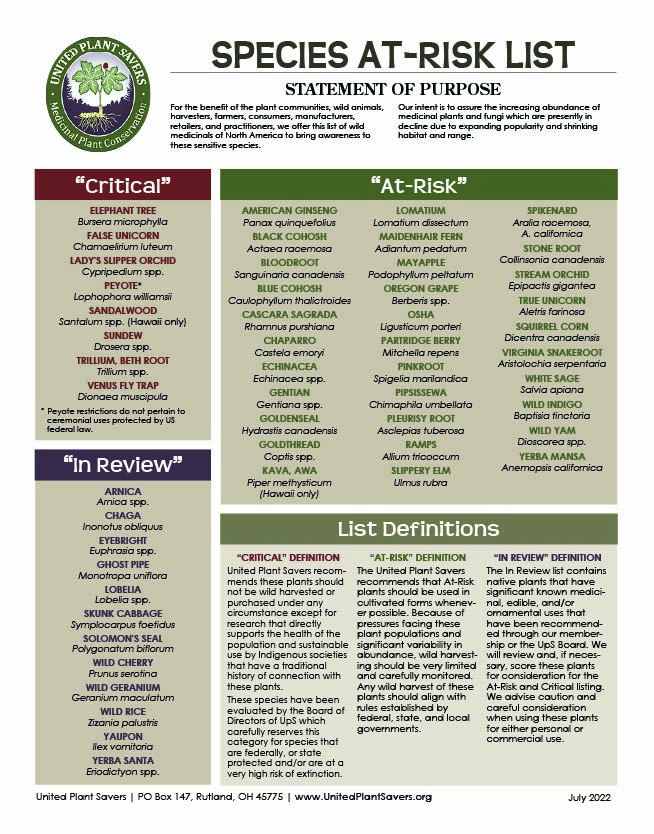
There is a need to conserve at-risk plants, including milkweed (Asclepias spp.), American ginseng (Panax quinquefolius), goldenseal (Hydrastis canadensis), echinacea (Echinacea spp.), and Trillium (Trillium erectum) here in the Midwestern United States. These species are valued for their medicinal properties but have become threatened by ecosystem degradation, habitat loss, overharvesting, and unsustainable harvesting practices. Historically, having no policies to regulate wild stands or re-planting efforts have led to their current endangered status (Chandler & McGraw, 2020). Preserving at-risk medicinal plants is crucial. At-risk species such as American ginseng are declining due to overharvesting and should be cultivated rather than wild-harvested. United Plant Savers, whose mission is to “protect native medicinal plants, fungi, and their habitats while ensuring renewable populations for future generations,” is a nonprofit organization that relies on community stakeholders and volunteers. Its citizen-scientist approach empowers community involvement via direct action. They also urge sustainable practices and cultivation to prevent the extinction of at-risk native plant species (United Plant Savers, n.d.). In collaboration with Jane Bothwell, the United Plant Savers compiled a list of at-risk species in 2000 and revised it in 2006. I share this list any chance I get—in every presentation or talk I give—with my herbalism students, with friends and family members, and with the general public. This list needs to be shared widely with anyone entering the field of herbalism. I feel we, as herbalists and environmental stewards, should all do our part by raising awareness about this topic among landowners, budding herbalists, and those who make and sell products using herbs, through social media platforms. Let’s continue to spread the word about the important work being done by the United Plant Savers and do our part to create cultivated ecology and grow at-risk and native plants.
Table 1: Species at-risk list (United Plant Savers, n.d.)
Creating Cultivated Ecology, One Small Farm at a Time
My husband and I have been farming together using organic and regenerative practices since 2007. We co-own and operate Flourish Farm, a 10-acre farmstead and botanical sanctuary on the bluffs of the Mississippi River in Godfrey, IL, with our 2 children. Our passion for ecosystem preservation and biodiversity drove us as naturalists and organic farmers. We wish to help be a part of the solution on our farm. The steps we have taken include removing invasive species, conducting prescribed burns, building soil, using water preservation techniques, and planting native species.
We grow a variety of fruits, vegetables, flowers, culinary and medicinal herbs, native trees, shrubs, and flowering plants, as well as at-risk herbs. We grow the herbs in fruit tree guilds and in small food forests planted around our farm.
Our practices include regenerative agriculture techniques such as cover cropping and soil-building, as well as permaculture (permanent agriculture) methods.

Healthy ecosystems and biodiversity drive the work we do, and we have committed to planting a diverse range of species each year to contribute to biodiversity on our 10-acre farm, which is mostly wooded. Since 2016, we have planted thousands of plants each year, including fruits, vegetables, flowers, and herbs with a focus on native plants and medicinal herbs. Since we have been practicing various methods of ecological restoration, including invasive species removal, prescribed burns, and planting native trees, shrubs, and flowering plants, we have noticed a significant increase in the number of wildlife species and an improvement in overall biodiversity on our farm. What started as lawn, overgrown grasses, and invasive species has transitioned into a thriving ecosystem with a myriad of pollinators, songbirds, woodpeckers, bats, treefrogs, deer, wild turkey, coyotes, foxes, and bobcats, to name a few. To further support this new biodiversity, we now implement ecologically sound farming practices, continuous plantings of native species, and regular maintenance to remove invasive species.
Flourish Folk School
I run Flourish Folk School, which offers a 120-hour herbalism training program as well as classes on ethical wild foraging, Earth skills, and other aspects of healthy living and earth stewardship. As an herbalist and educator, I like to intertwine the theme of ethical herbalism throughout all our workshops and programs. In our programming, we offer practical growing tips for at-risk herbs and suggest sustainable harvesting, finding alternatives, and ecological restoration to secure their future. The interwoven theme throughout our programming and workshops is to invite people to explore the historical connections between people and plants for food and medicine. Some of our offerings include Intro to Gardening, Herbalism 101, Mushroom Inoculation, Ethical Wild Foraging, Cooking With Wild Foods, Basic Plant Identification, Mushroom Foraging and Safety 101, Basic Herbal First Aid, Resilient Living Workshop Series, as well as Botanical Art, Cyanotypes, Natural Dyeing, and Natural Fiber Arts.
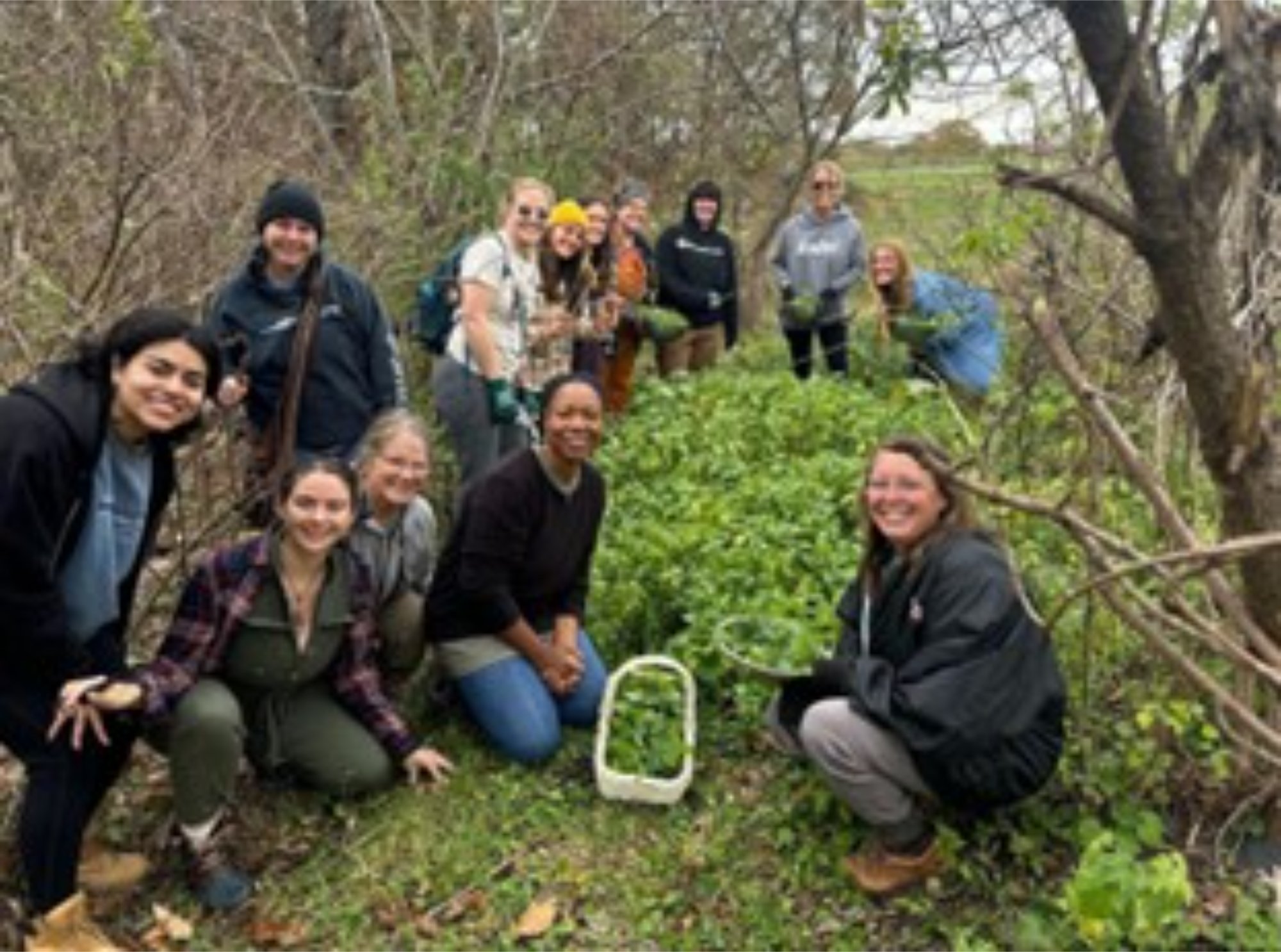
Fig 8 & 9: Our herbalism students


Flourish Botanical Sanctuary
In 2016, we moved onto our land, bought it in 2021, and then registered it as a Botanical Sanctuary in 2022, as part of the Botanical Sanctuary network of individuals and organizations dedicated to conserving at-risk species and promoting biodiversity. We have reintroduced at-risk plants, including ginseng, goldenseal, and echinacea, through nearly a decade of planting efforts. We have several small stands of wild trillium (Trillium spp), mayapple (Podophyllum peltatum), and trout lily (Erythronium americanum), as well as a variety of spring ephemerals and have been protecting them by removing invasive species and maintaining the surrounding ecosystem on our property. Conservation efforts are crucial to prevent further loss and ensure these species’ survival for future generations (United Plant Savers, n.d.).
Traditional Ecological Knowledge
Traditional Ecological Knowledge (TEK) has deeply inspired our work. Indigenous peoples have continued to maintain ecosystems and conserve the land for thousands of years through diverse plantings, controlled burns, and ecosystem protection, thereby ensuring the abundance of food and medicinal plants. There is so much to learn from authors and earth stewards such as Robin Wall Kimmerer, who champions reciprocity and care for the Earth, and Vandana Shiva, who has dedicated her life to advocating for regenerative agriculture. Traditional Ecological Knowledge has shaped and continues to shape conservation efforts related to biodiversity preservation. Indigenous leaders such as Robin Wall Kimmerer, an author and ecologist, are working diligently to champion Traditional Ecological Knowledge. Kimmerer’s work emphasizes the importance of reciprocity and Earth care in conservation because conservation often involves exploitative practices, such as logging. Kimmerer (2002) encourages landowners and decision-makers to adopt a more ecological approach to conservation. Kimmerer’s goal is to motivate conservationists to adopt a more environmentally focused approach.
Medicinal plant usage has a very complex history. There are many threads intertwined in the fabric of herbalism. Indigenous peoples have maintained ecosystems and conserved the land for thousands of years through diverse plantings, controlled burns, and ecosystem protection, ensuring abundant food and medicinal plants (Kimmerer, 2013). Colonization disrupted the ecologically sound practices of Indigenous peoples by leading to ecosystem degradation, erosion, habitat destruction, polluted waterways, and the overexploitation of natural resources, including medicinal plants such as ginseng (Kimmerer, 2013). We strive to follow Kimmerer’s approach on our 10-acre farm through regenerative agriculture practices, minimal tillage, soil-building, composting, cover cropping, pollinator garden creation, and promoting biodiversity in all our practices. In my own work, I have spent countless hours educating thousands of individuals, groups, and large and virtual audiences about the importance of cultivating an ecology. My mission is to inspire the broader community to create cultivated ecology in their own gardens by planting a variety of plants for backyard biodiversity. This simple act offers more opportunities for wildlife and can create more connected, less fragmented habitats.
Graduate Studies
An important part of teaching in this field is continuing my own education, so I enrolled in a hybrid graduate program with Project Dragonfly through Miami University in Oxford, Ohio. I am focusing on biodiversity and the interwoven themes of ecosystem restoration, regenerative agriculture, herbalism, and native plants.


Fig 11 & 12. Biodiversity Deck
Biodiversity Deck of Flashcards
For one of my projects, I created an art-forward biodiversity deck of flashcards that highlights 36 native and medicinal plants. This biodiversity deck represents a myriad of plants that are either native to the Midwestern United States or grow well in this region. The plants were chosen for their combination of ecological functions, benefits to wildlife, contributions to biodiversity, resilience, or use as food and medicine. This grouping of plants grows well in polyculture systems, food forests, or as additions to backyard gardens or farms. The plants in the deck are inspired by permaculture design principles and valued for their ecological functions, including attracting pollinators, stabilizing soil, preventing erosion, supporting nutrient cycling, and contributing to biodiversity by providing food and habitat for wildlife. For the Biodiversity Deck, I chose a variety of common native plants, medicinal plants, and at-risk plants including serviceberry (Amelanchier spp.), elderberry (Sambucus nigra), Nanking cherry (Prunus tomentosa), aronia (Aronia melanocarpa), hazelnut (Corylus avellana), witch hazel (Hamamelis virginiana), purple coneflower (Echinacea spp.), beebalm, yarrow, New England aster (Symphytotrichum novae-angliae), goldenrod (Solidago canadensis), passionflower, anise hyssop (Agastache foeniculum), blue false indigo (Baptisia australis), tradescantia (Tradescantia spp.), red clover (Trifolium pratense), creeping thyme (Thymus serpyllum), stinging nettle (Urtica dioica), lemon balm (Melissa officinalis), comfrey (Symphytum officinale), calendula (Calendula officinalis), chamomile (Matricaria chamomilla), tulsi (Ocimum sanctum), Hibiscus roselle (Hibiscus sabdariffa), lemongrass (Cymbopogon citratus), lemon verbena (Aloysia citriodora), spilanthes (Spilanthes spp.), oregano (Origanum vulgare), lavender (Lavandula angustifolia), Egyptian walking onions, mullein (Verbascum thaspus), and St. John’s wort (Hypericum perforatum), as well as at-risk plants including ginseng (Panax spp.), goldenseal, mayapple, and trillium. Included in these cards are the common name, genus and species, origin, geographical location, growing requirements, bloom time, the pollinators they attract, and wildlife connections, as well as ecological functions such as fixing nitrogen or retaining soil through deep roots. I have also included human connections, such as edibility and/or the medicinal benefits of each plant. Having an educational tool to use while teaching has been wonderful, as I am often in the field with a backpack leading plant walks, farm tours, and foraging hikes. View the Biodiversity Deck at flourishfarmstead.com
Call to Action
Community members, backyard gardeners, homeowners, and private landowners have an opportunity to restore ecosystems and provide food and habitat for wildlife.
There is a strong need to contribute to biodiversity through diverse plantings, ecosystem restoration, and the preservation of at-risk species.
I find it very important, now more than ever, to plant native species and native trees, restore native ecosystems, and improve the diversity of plantings in our own backyards, creating cultivated ecology and really trying our best to make an impact while we are here.
The most rewarding part of creating a cultivated ecology is forming deeper connections to the plants we have growing on our farm and to the microecosystems and habitats that naturally occur because of the diverse plantings. I strengthened my observation skills by sitting next to the plants we have growing on our farm. Some highlights include seeing an indigo bunting eat ripe service berries, witnessing hummingbird moths mate in flight over the beebalm, seeing the tiniest mason bees covered in pollen and sleeping in the calendula flowers, and seeing the eastern carpenter bees perform their sonication dance around the center of a passionflower. I appreciate the capacity to slow down and admire the beauty and wonder of the plants and flowers growing on our farm.
Crystal Moore-Stevens is an organic vegetable and herb farmer, author, educator, herbalist, and multidisciplinary artist. She co-owns and operates Flourish Farm, a 10-acre farmstead and botanical sanctuary on the bluffs of the Mississippi River in Godfrey, IL with her husband, Eric Stevens, and their 2 children, Cayan and Iris, along with 3 goats, 1 dog, 5 cats, and chickens.
References:
Aguilar, R., Ashworth, L., Galetto, L., & Aizen, M. A. (2006). Plant reproductive susceptibility to habitat fragmentation: Review and synthesis through a meta-analysis of self-incompatibility and pollinator specialization. Ecology Letters, 9(8), 968–980. https://doi.org/10.1111/j.1461-0248.2006.00927.x
Appalachian Beginning Forest Farmer Coalition. (2024). Forest farming initiatives and educational workshops. Retrieved from Appalachian Beginning Forest Farmer Coalition.
Barnes, J., Anderson, L. A., Gibbons, S., & Phillipson, J. D. (2005). Echinacea species (Echinacea angustifolia (DC.) Hell., Echinacea pallida (Nutt.) Nutt., Echinacea purpurea (L.) Moench): A review of their chemistry, pharmacology and clinical properties. Journal of Pharmacy and Pharmacology, 57(8), 929–954. https://doi.org/10.1211/0022357056127
Blasiak, J. (2019). American ginseng (Panax quinquefolium L.) is a source of bioactive phytochemicals with pro-health properties. Nutrients, 11(5), 1041.
Braus, J. (Ed.). (2011). Tools of engagement: A toolkit for engaging people in conservation. National Audubon Society. Retrieved from https://dg56ycbvljkqr.cloudfront.net/sites/default/files/eepro-post-files/Tools_of_%20Engagement_NAAEE.pdf
Burkhart, E. P., Nilson, S. E., Pugh, C. V., & Zuiderveen, G. H. (2021). Neither wild nor cultivated: American ginseng (Panax quinquefolius L.) seller surveys provide insights into in situ planting and husbandry. Economic Botany, 75(2), 126-143. https://doi.org/10.1007/s12231-021-09521-8
Chandler, J. L., & McGraw, J. B. (2020). History, conservation, and cultivation of American ginseng, North America’s most famous medicinal plant. In Medicinal and Aromatic Plants of North America (pp. 141–158). Springer. https://doi.org/10.1007/978-3-319-18156-1_11
Chauhan, H. K., Bisht, A. K., Bhatt, I. D., Bhatt, A., & Gallacher, D. (2019). Trillium – toward sustainable utilization of a biologically distinct genus valued for traditional medicine. The Botanical Review, 85(3), 252-272. https://doi.org/10.1007/s12229-019-09211-0
Conservation Service, USDA. Retrieved November 3, 2025, from https://plants.usda.gov
Endangered Species Protection Board. https://dnr.illinois.gov/espb.html
Fenster, C. B., et al. (2004). Pollination syndromes and floral specialization. Annual Review of Ecology, Evolution, and Systematics, 35, 375–403.
Forman, R. T. T. (1995). Land mosaics: The ecology of landscapes and regions. Cambridge University Press.
Gladstar, R., & Hirsch, P. (2000). Planting the future: Saving our medicinal herbs. Rodale Books.
Global Forest Watch. (n.d.). The USA. Retrieved from https://www.globalforestwatch.org/map/country/USA
Grow Native! (n.d.). Native plant database. Missouri Prairie Foundation. Retrieved October 21st, 2025, from https://grownative.org
Illinois Department of Conservation. (n.d.). Illinois Department of Conservation. Retrieved September 16th, 2025, from https://www2.illinois.gov/dnr
Illinois Department of Natural Resources. (n.d.). Illinois Department of Natural Resources. Retrieved September 2, 2025, from https://dnr.illinois.gov
Illinois Wildflowers. (n.d.). Illinois Wildflowers. Retrieved October 16th, 2025, from https://www.illinoiswildflowers.info
IPBES. (2019). Global assessment report on biodiversity and ecosystem services. IPBES Secretariat. https://doi.org/10.5281/zenodo.3831673
Herkert, J. R., & Ebinger, J. E. (Eds.). (2002). Endangered and Threatened Species of Illinois: Status and Distribution, Volume 1 – Plants. Illinois Endangered Species Protection Board.
Hutchens, A. R. (1991). Indian Herbology of North America: The definitive guide to native medicinal plants and their uses. Shambhala Publications.
Kimmerer, R. W. (2002). Weaving Traditional Ecological Knowledge into Biological Education: A Call to Action. BioScience, 52(5), 432–438. https://doi.org/10.1641/0006-3568(2002)052
Kruger, S. D., Munsell, J. F., Chamberlain, J. L., Davis, J. M., & Huish, R. D. (2020). Describing Medicinal Non-Timber Forest Product Trade in Eastern Deciduous Forests of the United States. Forests, 11(4), 435. https://doi.org/10.3390/f11040435
Law, J. (2024). Wild ginseng is declining, but small-scale ‘diggers’ are not the main threat to this native plant − they can help save it. The Conversation. Retrieved from
Leopold, S. (2022, May 29). Ending the Trillium Trade. United Plant Savers. Retrieved from https://unitedplantsavers.org/ending-the-trillium-trade/
McGraw, J. (2023). Wild American ginseng: Lessons for conservation in the age of humans. University of Georgia Press.
Missouri Botanical Garden. (n.d.). Plant Finder. Missouri Botanical Garden. Retrieved December October 21st, 2025, from https://www.missouribotanicalgarden.org/plantfinder
Missouri Department of Conservation. (n.d.). Missouri Department of Conservation. Retrieved October 2, 2025, from https://mdc.mo.gov
Missouri Department of Natural Resources. (n.d.). Missouri Department of Natural Resources. Retrieved December 1, 2025, from https://dnr.mo.gov
Missouri Wildflowers Nursery. (n.d.). Missouri Wildflowers Nursery. Retrieved November 4, 2025, from https://mowildflowers.net
National Park Service. (n.d.). Overview – Indigenous Knowledge and Traditional Ecological Knowledge (U.S. National Park Service). Retrieved from https://www.nps.gov/subjects/tek/description.htm
North American Association for Environmental Education. (2017). Community engagement: Guidelines for excellence. NAAEE. Retrieved from https://eepro.naaee.org/sites/default/files/eepro-post-files/community_engagement_guidelines_pdf.pdf
Ormsby, A., & Leopold, S. (Eds.). (2018). Proceedings of The Future of Ginseng and Forest Botanicals Symposium. July 12-14, 2017. Morgantown, West Virginia.
Poitras, A. (2018). Ginseng and the forest: A case study in the conservation and commodification of a North American medicinal plant (Honors Thesis). Portland State University.
Predny, M. L., & Chamberlain, J. L. (2005). Goldenseal (Hydrastis canadensis): An annotated bibliography. U.S. Department of Agriculture, Forest Service, Southern Research Station. Retrieved from https://www.srs.fs.usda.gov/pubs/gtr/gtr_srs088.pdf
Riggs, M., & Kindscher, K. (2016). The Echinacea Market. In K. Kindscher (Ed.), Echinacea (pp. 141-158). Springer. https://doi.org/10.1007/978-3-319-18156-1_11
Schmidt, J. P., Cruse-Sanders, J., Chamberlain, J. L., Ferreira, S., & Young, J. A. (2019). Explaining harvests of wild-harvested herbaceous plants: American ginseng as a case study. Biological Conservation, 231, 139-149. https://doi.org/10.1016/j.biocon.2019.01.006
Senzaki, S., Hackathorn, J., Appleby, D. C., & Gurung, R. A. R. (2017). Reinventing flashcards to increase student learning. Psychology Learning & Teaching, 16(3), 325–342. https://doi.org/10.1177/1475725717719771
State of Illinois. (n.d.). Illinois Endangered Species Protection Board. Retrieved from https://dnr.illinois.gov/espb.html
Szczuka, D., Nowak, A., Zakłos-Szyda, M., Kochan, E., Szymańska, G., Motyl, I., & Blasiak, J. (2019). American ginseng (Panax quinquefolium L.) is a source of bioactive phytochemicals with pro-health properties. Nutrients, 11(5), 1041. https://doi.org/10.3390/nu11051041
United Nations Convention to Combat Desertification. (2025). Global land outlook: Thematic report on ecological connectivity and land restoration. UNCCD.https://www.unccd.int/resources/publications/global-land-outlook-thematic-report-connectivity
United Plant Savers. (2022). Medicinal Plant Conservation Species At-Risk-List. Retrieved from https://unitedplantsavers.org/wp-content/uploads/2022/07/22229-UpS-Species-At-Risk-List-2022-rev-7-22.pdf
University of Kansas. (n.d.). Community Tool Box. Retrieved October 21, 2021, from https://ctb.ku.edu/en
United States Department of Agriculture. (n.d.). PLANTS Database. Natural Resources
U.S. Army Corps of Engineers. (2024). Piasa and Eagle’s Nest Habitat Rehabilitation and Enhancement Project. Retrieved from U.S. Army Corps of Engineers (https://www.mvs.usace.army.mil/Portals/54/docs/pm/Reports/EA/PiasaEaglesNestIslandsHREPappM.pdf)
U.S. Environmental Protection Agency (EPA). (n.d.). National Environmental Justice Advisory Council. Retrieved September 27, 2024, from https://www.epa.gov/environmentaljustice/national-environmental-justice-advisory-council