By Fernando Arbelaez1, Julieta Minervini2, Daniel van der Post3, Juan Millan4
1 IUCN-SuLi member, Fundación Biodiversa Colombia Director
2 Fundación Biodiversa Colombia Gender Expert
3 Fundación Biodiversa Colombia board member
4 IUCN-SuLi member, Fundación Biodiversa Colombia associate researcher
Fundacion Biodiversa Colombia (FBC) was created in 2005 to preserve the biological and cultural heritage of Colombia. Our aim is to promote and develop biological, social, and cultural research and conservation projects, while seeking alternatives for sustainable development. In order to guarantee the sustainability and continuity of the conservation processes in the long-term, we recognise the need to work closely with the communities that directly use natural resources. Our community outreach, therefore, incorporates raising awareness on the importance of conservation, knowledge dialogues, empowerment, gender approach, generation of sustainable economic alternatives, and improving local living conditions. We pay particular attention to women and children as the most critical and marginalised groups.
Since 2009, FBC has focused its work in the Barbacoas region, in Central Colombia. This is one of the last conservation opportunities for the critical ecosystems of the lowlands of the Middle Magdalena Valley. By working together with local communities, landowners, and allied organisations, FBC aims to preserve, restore, and connect the remnants of natural forests and wetlands and promote sustainable development alternatives for the region. In 2012, FBC established El Silencio Natural Reserve, covering a mere 79 ha. It has since expanded to more than 3.300 ha and is now an area for conservation, restoration, research, and model of sustainable development for the region.
Straight from the start, the importance of working with the community of Bocas de Barbacoas was evident. The Barbacoas wetlands are perhaps the best preserved in the region, and the Bocas fishing community is its most natural guardian being strategically located at the entrance to the wetlands. However, as a consequence of years of violence in the region, the Bocas fishing community has suffered from precarious social and economic conditions with no access to arable land, low education levels, and no voice in regional socio-political processes. FBC therefore started to raise and highlight the voice of the community and to involve them in regional processes. As a consequence, the community was involved in the declaration of the Ciénagas de Barbacoas Regional Protected Area in 2017 and, later on, its Environmental Management Plan.
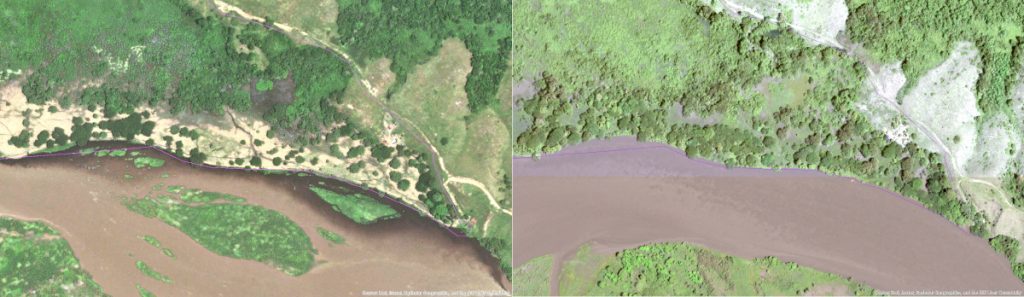
In alliance with other organisations, we have begun a knowledge exchange with the community to raise awareness about the importance of the conservation of this critical ecosystem. In particular, we began to train members of the community in plant nursery management, ecological restoration, and reforestation as alternatives and complementary economic activities to fishing. These include making use of different restoration projects and improvement programs for livestock rearing in the region, setting up a community plant nursery for seedling production, and the community becoming involved with tree planting. At the same time, clean drinking water was identified as a priority by the community. Together with the community, FBC helped to obtain and organise the funding necessary to rehabilitate an abandoned well and install a solar pump. As a result, clean water now reaches the houses of 70 families, ending nearly 25 years of consumption of non-potable water from the canal in front of the village.
During FBC’s process in the Bocas community, we quickly realised the need to work on gender related issues. Fishing is mainly carried out by men, and women had no means of income. While most women and children are residents in the village, seasonal male workers cause an influx of men into the local population every fishing season. In addition, there is very little law enforcement in the area, as the state has very little presence. As a result of these factors, there is a high level of conflict and violence, where women and children are generally the most affected. In combination with a lack of awareness and access to sexual and reproductive health, there is a high rate of teenage and unwanted pregnancies.
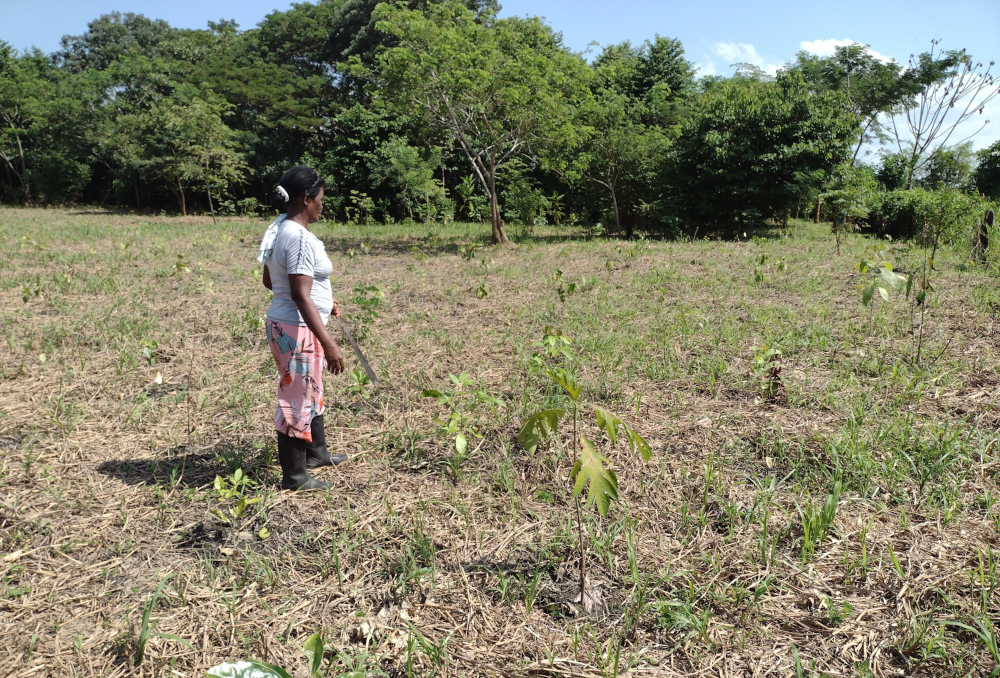
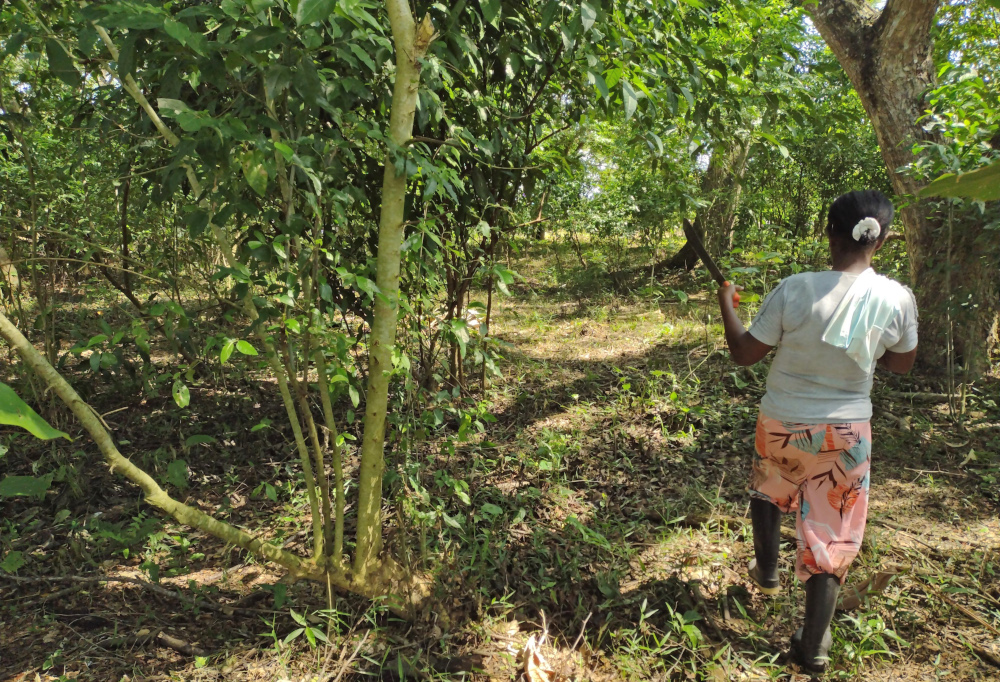
Hortencia, one of the group leaders, shows an area recently planted (left) compared to an area restored in 2021 (right). Fernando Arbelaez 2023
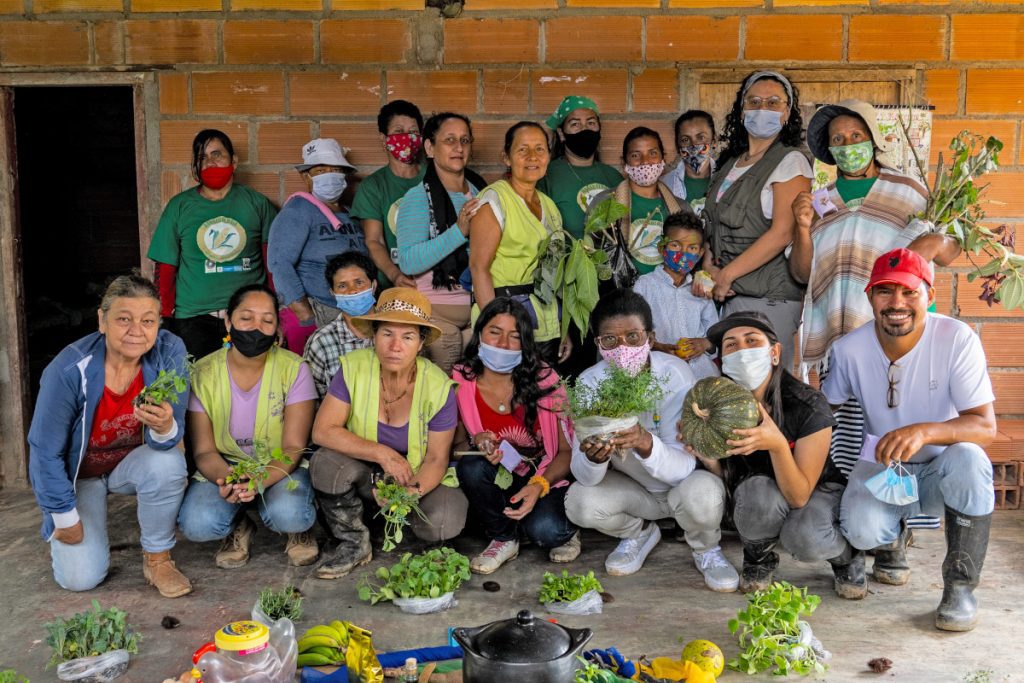
With support from the Ministry of Science, in 2020 we therefore began working with a group of 20 women to empower them through agroecology and food security projects. We carried out capacity-building workshops on agroecology, agro-diversity, and food security, and supported the implementation of productive backyards, while rescuing and incorporating their knowledge on cultivation and use of medicinal plants.
Moreover, in 2021, we partnered with Plant for the Planet to support the Barbacoas women’s group to start planting a community-managed restoration area within the El Silencio Natural Reserve in a zone contiguous to the community along the Magdalena Riverbank. The project’s goal was to provide direct economic benefit based on restoration and agroforestry for these women.
Currently, the initiative has become a “Top Project” in the Plant for the Planet crowdfunding platform. The women have transformed more than 10 ha of plain grasslands into a diverse young forest by planting more than 3000 trees belonging to 49 species. This includes species of timber, fruit, and medicinal trees, with the earliest planted trees now reaching over 12 m in height. Thanks to their hard work, what used to be a difficult area to walk through under the scorching Middle Magdalena Valley sun, is now a shady fresh promenade full of diverse life.
Agroforestry and ecological restoration have become a source of income and has empowered the Barbacoas women’s group within the community. Through agreements with the rest of the community, the women now manage the plant nursery for their own profit and benefit. They administer their own funds, and while they mostly do the tree planting themselves, they hire labour when needed. They take pride in their work and take care of the planted trees as if they were their own children. Not content with their outstanding work so far, their goal is to reforest another 6 ha. This restoration project will connect the various forest patches and expand the habitat for many species inhabiting the area, including sustainable use of resources by the community. In addition, the project will continue generating much needed income for the women’s households.
For FBC, this amazing group of women represents a success story of work with Bocas de Barbacoas, motivating us to strengthen our bond with the community. The Barbacoas women’s group is a bastion within the community that we aim to further strengthen through training and empowerment on additional topics such as gender issues, sexual and reproductive health, food governance, and environmental education with the children, among others.
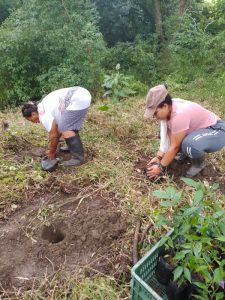
Natural Reserve. Barbacoas women’s group 2023