By Susan Leopold
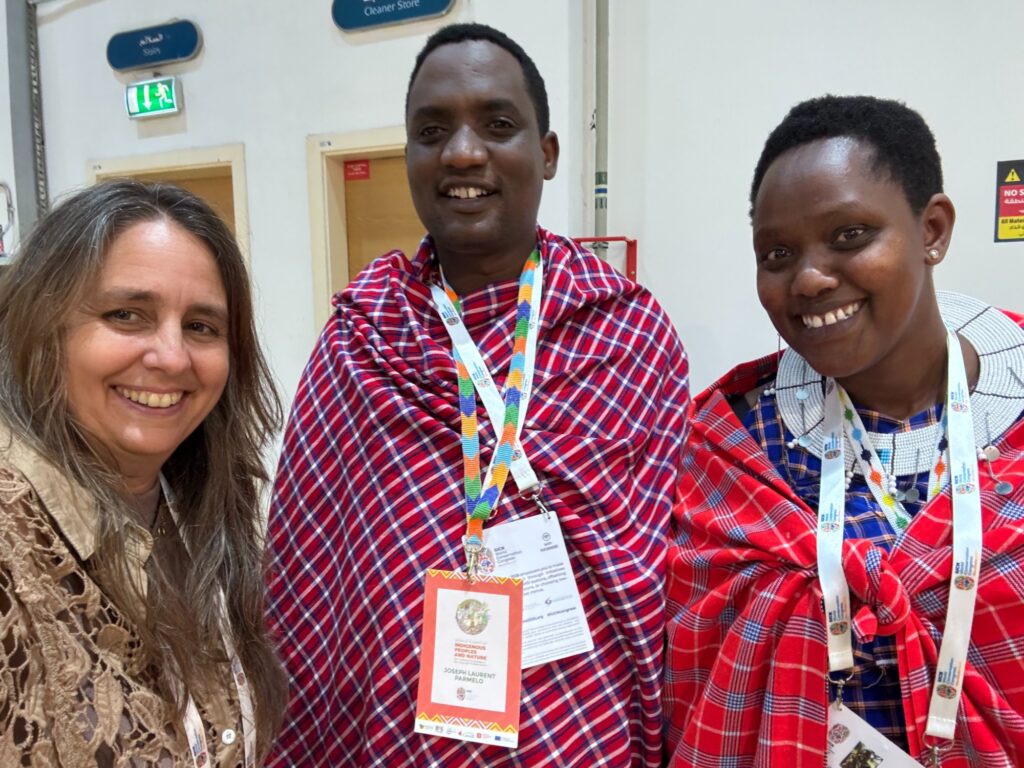
Connecting with plant people at the IUCN. Shout out to Joseph & Catherine from Tanzania – @indigenousiliot


Alison Ormsby @adventurescientist (left), and Nuri from the Environmental Agency (right).
Why I keep going back to the IUCN
My commitment to the IUCN traces back to being a geography major at Boston University, where I first encountered the Red List and understood that conservation, to mean anything, had to be global. You cannot protect a medicinal plant in Appalachia without paying attention to what is happening to its cousins on the other side of the world, and you cannot advocate for undervalued taxa without plugging into the networks already asking the same questions. That early conviction is why I have worked to make United Plant Savers a contributing member of the IUCN and of its Medicinal Plant Specialist Group. Our voice at that table, however small, is there because our members make it possible. Conservation funding arrives in waves that are hard to navigate, and membership is what keeps us showing up year after year at the Red List, at Congress, at the motions that shape international policy.
At the Congress
This October’s IUCN World Conservation Congress in Abu Dhabi brought together over 10,000 participants from around the world. Held every four years, it is the largest environmental gathering on the planet a forum where governments, NGOs, Indigenous organizations, and scientists argue their way toward collective action. United Plant Savers was there with a booth, and the thing I most wanted to demonstrate is simple: there is a community of people who care about plant conservation, and we are organized.
The under-representation of plants in conservation remains stark. More than 80 percent of animal species have been described and Red Listed. Only 18 percent of plants have been Red Listed, and only 0.4 percent of fungi. These are the neglected taxa data-deficient species that carry enormous ecological weight and receive almost none of the attention. Plants that are harvested from wild populations and moved through global trade, like so many of our medicinal species, sit squarely in this gap. One of the motions adopted at this Congress was Motion 083, urgent action to prevent the illegal trade of succulent plants, put forward by the Cactus and Succulent Plants Specialist Group. It is a small win, but these are the wins that accumulate into policy.
What also accumulates is relationship. At our booth and in the corridors, I was able to connect with colleagues from the Atlanta Botanical Garden, the Morton Arboretum, and the Center for Plant Conservation, all of whom are working on different fronts of the same plant biodiversity crisis. I met Nuri from the Environmental Agency in Abu Dhabi, who showed me Teucrium stocksianum, a fragrant native mint that grows in the Arabian Peninsula. I met Joseph and Catherine from the Indigenous Livelihood Innovation Organization Team, whose short film Our Knowledge is the Language of Mother Earth describes the role of medicinal plants in their Tanzanian community. And I watched California and Massachusetts announce their intention to join the IUCN in 2026 two U.S. states taking a conservation posture that the federal government is not.
Dr. Grethel Aguilar, the IUCN Director General, put the scale of the work plainly: “As we face the decades ahead, the scale of the challenge before us cannot be underestimated. We must transform our society, our food and energy systems and our Union to build lasting resilience to face the future.”
The gap between plant and animal conservation is narrowing, slowly, as more people come to understand that plants are not scenery. They are the substrate of human health, and they are the reason every other living system on this planet works. The Congress is where that understanding moves from sentiment into policy. Our seat at the table is where United Plant Savers does the quiet, long work of making sure medicinal plants are part of the conversation.

Frankincense (Boswellia sacra)
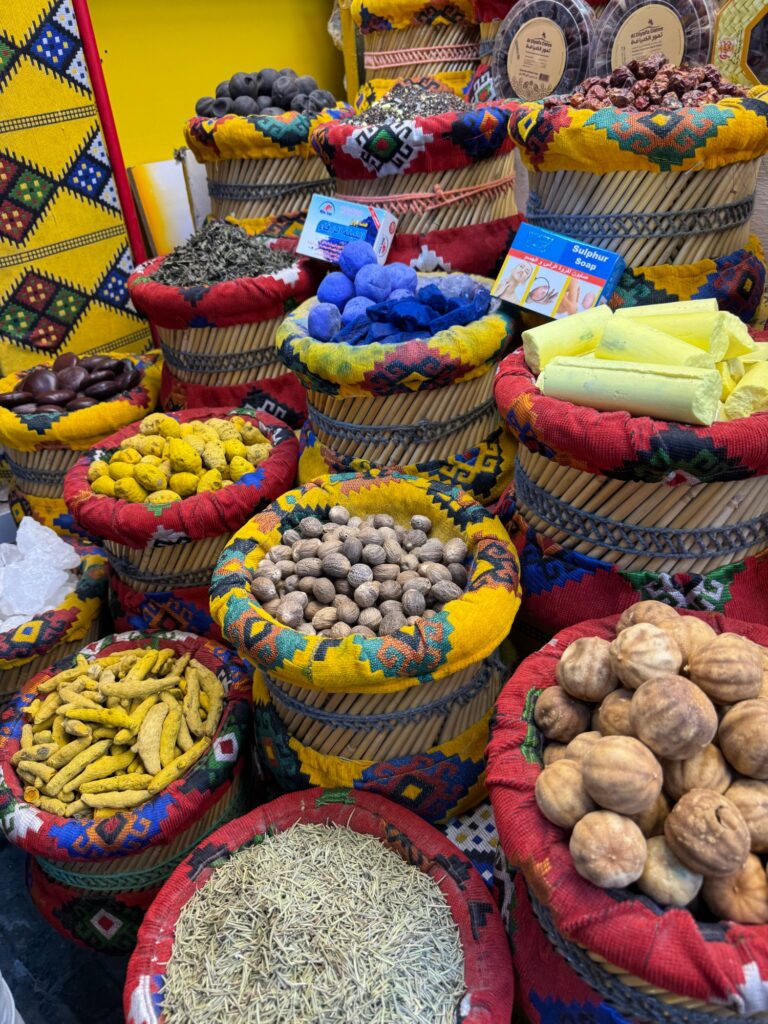
Herbs on display at a market in Oman

Khor Rori, a UNESCO World Heritage site

Collected frankincense seeds for the nursery
From Abu Dhabi to Oman
Following the Congress, I traveled on to Oman to see Boswellia sacra frankincense in its wild habitat, with Stephen Johnson as my guide. Much of what happens at a conference like IUCN is abstract: motions, Red List criteria, percentages, pledges. Meeting a living tree on the landscape where it has grown for millennia reminds you what all of that is for.
Meeting Boswellia sacra
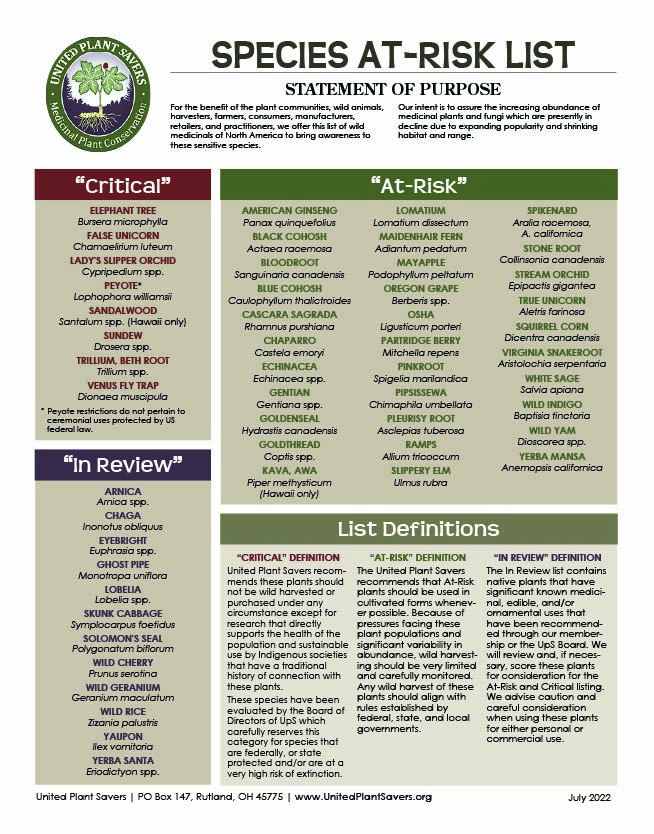
Boswellia sacra is not a big tree. It is thick and chunky with small, thin leaves, and it sits low on the land. For Plant Savers readers who have never been to Arabia, the closest reference I can offer is the elephant tree (Bursera microphylla) on our At-Risk list, which grows in the Sonoran Desert. They are in the same family, the Burseraceae, and the resemblance is striking once you’ve seen both. Same resinous architecture, same capacity to hold water and oil in a trunk that looks too small for its own work.
The landscape Boswellia lives in is severe and beautiful. Wadis carve the valleys, dry most of the year, becoming rivers when rain finally comes. The sun is harsh to the point of being intoxicating. The harvesters who tap these trees live in caves for shelter the only refuge the land offers. They cut into the trees, then come back a week or two later to collect the hardened tears of resin. The resin itself moves through a spectrum of color as it oxidizes and cures: pale yellow, deep brown, and sometimes a startling vibrant green. It is a land where it seems time stops, because to go there is not for the faint of heart.
We also visited a local tree nursery where Boswellia sacra seeds are being collected and propagated, and a sorting house where resin is graded before it enters the global market. Supporting that propagation work is one of the most direct things anyone can do for the future of frankincense. These trees take decades to mature, and every seedling that survives the desert is a bet on the next century.
Khor Rori and the long memory of trade
A short drive from the living trees is Khor Rori, also called Sumhuram a UNESCO World Heritage site and one of the oldest known ports of the frankincense trade. From the third century BC onward, for more than 800 years, Sumhuram shipped Boswellia resin to Mesopotamia, Ancient Egypt, the Indus Valley, and the Mediterranean. The site is clearly segmented: residential quarters, a temple to the moon god Sin, storehouses for frankincense, and a market square. Archaeologists have pulled kohl applicators, incense burners, jewelry, and animal-shaped bells from its dirt.
Standing in the fortified city above the Indian Ocean lagoon, I thought about the story I grew up with the three magi following a star, carrying gold, frankincense, and myrrh to the infant Jesus. Frankincense was not a symbol in that story. It was a commodity of profound value, shipped through this port, traded across civilizations, and already two thousand years ago a tree under human pressure.
What the Congress and the tree are saying together
Global demand for frankincense has risen sharply over the past twenty-five to thirty years, pushing the supply chain in ways that threaten both the Boswellia genus and the communities who tap it. That is the pattern we see again with medicinal plants: sacred tradition meets commodity market, and the plant pays. The harvesters I saw in Oman are not laborers. They are stewards of a species, of a landscape, and of a trade older than most nations. Protecting frankincense means protecting them.
This is what the IUCN numbers mean when you translate them out of the abstract. An 18 percent Red List coverage for plants is not a statistic; it is the distance between a tree like Boswellia sacra and the policy protection it deserves. A 0.4 percent coverage for fungi is not a statistic either; it is the reason so much of what sustains forest ecosystems is invisible to the regulatory frameworks meant to protect them. Closing those gaps is slow work, and it is the work United Plant Savers shows up for in Abu Dhabi, in Oman, and back home in Appalachia, where the same questions take different forms but never really change.
The plants are still waiting for us to notice. Some of them, like Boswellia, have been waiting since the third century BC.
Go Deeper: Free Online Class
Frankincense Unveiled: From Ancient Times to Modern Global Markets
A 45-minute class featuring Anjanette DeCarlo and Stephen Johnson on Boswellia diversity, sustainable sourcing, and the challenges facing the contemporary frankincense trade. Free to access through the International Herb Symposium.