By Thomas Garran
The image of the wandering monk from the TV series Kung-fu and my study of martial arts helped develop my impression of Chinese culture and mysticism during my childhood. The idea of the lone barefoot monk wandering the country righting injustice and brewing herbal concoctions to heal both himself and those he encountered is an ethos I have always felt very connected to. Those were the 70s and early 80s—fast forward to 2004, and I started to bring those images into focus with real monks and real monasteries during my first trip to China. In 2007 I returned, and for the last 15 years have lived, loved, lost, and learned in the culture that had such a significant impression on my childhood. This essay attempts to clarify a small slice of what I have learned here about medicinal plants and what I am bringing back from my time here.
China’s long history of using plants as medicine has created layers of complex networks of wildcrafters, growers, buyers, sellers, processers, medicine makers, pharmacies, and practitioners—relationships that often go back generations. In the modern era hospitals, exporters, and scientists have been added to the layers of this milieu. The latter are a well-funded arm of modern Chinese medicine, probing the tradition in search of modern breakthroughs that could lead to the next “great” medical advance (i.e., drug). At its core, this network is a conglomeration of people who love plants and have intimate relationships with the plants they work with most closely.
I came to China as a practitioner, seeking out doctors in clinics and hospitals in hopes of learning the “secrets” of clinical Chinese medicine from experienced doctors who commonly see 50-100 patients (sometime more) every day, 5-7 days a week. One thing that I learned quickly was that very few doctors had any connection to the herbs they prescribed and never even touched them. A prescription is written and given to the patient, who then takes it to the pharmacy where they it is filled.
This was my first introduction to some of the layers that exist within the greater “industry” of Chinese medicine.
My experience in China has been filled with all the things that life has to offer, and love and loss are two of the most common elements to our human experience. First, love was brought to me, and there was marriage, and as love often does, it brought a new life into the world. However, loss soon followed. On the eve of Chinese New Year 2011 our beautiful baby Autumn Reine fell victim to SIDS, leaving a crater of emptiness in our lives.
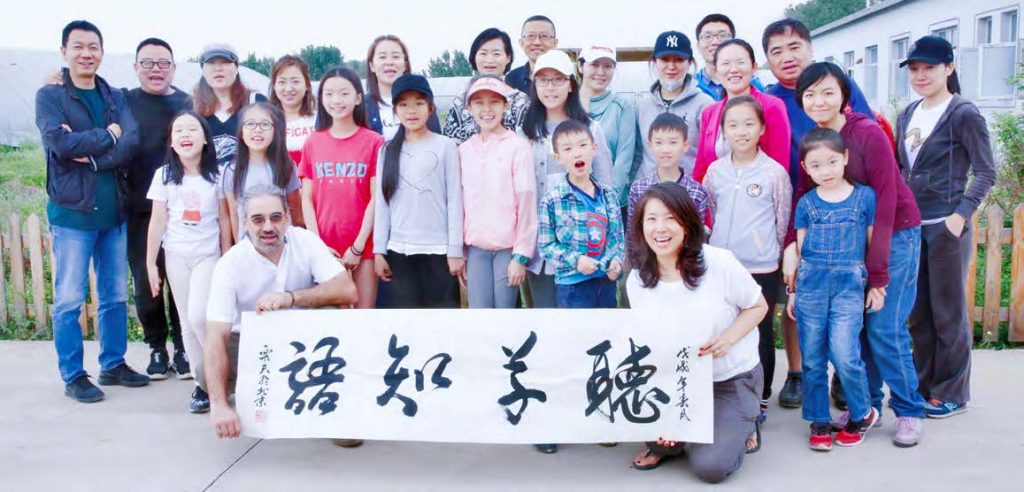
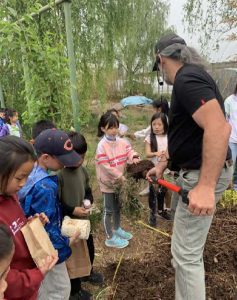
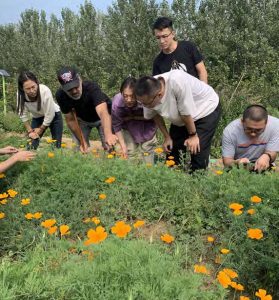
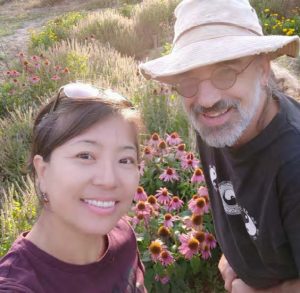
Running on fumes in the wake of our daughter’s death, my wife and I happened upon an astonishing offer from a woman who ran an orphanage for children of incarcerated parents. They had a farm and offered to allow us to bury Autumn Reine there under a tree we would plant. But then, halfway through our first meeting, I had an idea. What if we built a garden filled with flowers where children from both the orphanage and elsewhere could come and laugh and sing in the summer sunshine? Autumn Reine would forever be surrounded by the joy of children. Fast forward more than a decade, and we have built 5 of these gardens. More than 120 medicinal plants are rooted in the soils that have been tended by thousands of children and adults over that time while they were reconnecting to the soil and the plants in front of a backdrop of learning about organic gardening, soil ecology, and simple uses of the plants. Some children have come back year after year, and we recently received an email from a couple who, at an early volunteer event, met, got married, and recently had a daughter whom they named Autumn.
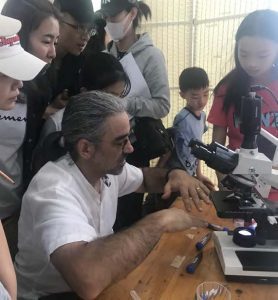
After Autumn Reine’s death, I chose not to return to the clinical apprenticeship where I had been for about a year. My focus was entirely on the garden. This shift from clinical practice to gardening and eventually farming herbs led me to the China Academy of Chinese Medical Sciences: National Center for Materia Medica Resources and Daodi Herbs. Here, I was given the good fortune to do my PhD and mentor with the top academics in the field of ecological agriculture. The trajectory of my life had changed forever, and a completely new world of Chinese medicine opened to me. My studies at this institution offered me the opportunity to travel the country, visit farms and markets, and attend and present at conferences on every aspect of Chinese medicine. I did cultivation research projects at the farm I managed and continue to be involved in projects across the country. The advantages of studying at the pinnacle institution for academic study of Chinese medicine are tremendous, especially when your advisor is the president of that institution.
Since before my first book was published in 2008, I have looked closely at and ruminated incessantly over the ecological impact of using Chinese herbs in North America. In that text I stated, “[Chinese medicine practitioners have] many good reasons to make use of Western plants. Probably the most important of these is conservation of resources.”1 My goal in writing the book was, and remains, to stop or at least slow the excessive use of resources to transport herbs around the world. This effort has, in spite of publishing a second book on the subject in 2014, not been as impactful as I would have hoped. And, while I continued to do this work, it became clear to me that in order to have a meaningful impact on resource consumption, effort was necessary elsewhere. Given the shift in my professional focus from clinical to non-clinical areas of Chinese medicine, agriculture seemed like the logical direction. If we could grow a significant volume of the herbs used by Chinese medicine in North America, then we could not only save those resources, but also build a new avenue for farmers to integrate profitable crops into their agricultural systems.
Over the last 25-30 years there have been and continue to be attempts to cultivate Chinese herbs in North America, but they have not been able to have any significant impact on the commercial market and thus have failed to reduce the resources used to ship herbs from Asia to North America. I talked to many people who were interested in growing Chinese herbs in North America and Europe but heard of very few success stories. Interviewing people who had been involved in failed projects, those still involved but struggling, and others who had done academic research in the field suggested that one of the primary problems was information (i.e., growing, processing, etc.) and direct experience farming these plants. I was convinced that there was a way for me to have a positive impact in this area.
In 2016 I was asked to translate a text that had been edited by my PhD advisor and the head of my committee. This text, Growing Chinese Herbs: Daodi Practices for Growing & Processing Chinese Herbs was published in 2019. It was the first and remains the only book in English with source information on growing Chinese herbs. This information that is crucial for farmers—from soils and inputs to pest management and on-farm processing details. The information in the book was a critical piece of the puzzle that was missing. How to transfer my experience, access to source information, and enthusiasm to farmers outside of China?
I began to give seeds to farmers in hopes that they would grow them. I offered, free of charge, my experience and access to source information on how to grow and process them. I even offered to purchase the herbs from them so that they need not be concerned with the sales side of the business. However, this process uncovered yet another major barrier. Although I could talk about how these herbs are grown and processed in China, I could not look a farmer in the eye and tell them how those plants would grow on their farm. I could assure them that their farm very closely fit the ecological niche that one or more Chinese herbs prefer, but all that information was coming from halfway around the planet. I found it very difficult to take my enthusiasm and translate it into momentum on the ground.
Frustrated, I began to reevaluate what I had been doing and looking back at what had been done. Where was the problem? Then it dawned on me that the biggest problems cited in my original research had been solved. I had offered expertise from the source, but I could not offer “proof of concept,” which is to say, how these plants would respond to the soils, pests, etc. of North America. Nearing the completion of my PhD, I was steeped in academic research, and I realized that the vast extension programs of the land-grant universities of the United States might hold the answer. These programs, generally, hold the trust of their local agriculture community, and they have experienced researchers to help bring to fruition this part of the vision. So, starting in 2019 I began working with one university extension and then in 2020 another. Unfortunately, our favorite “wrench in the works,” COVID-19, sullied our progress to some extent, but we are planning significant steps forward this year with full-fledged yield experiments that will also include chemical analysis to see if what we are growing conforms to the Pharmacopoeia of the People’s Republic of China. Additionally, I have joined the non-profit organization American Institute of Integrative Herbalism, and we are focused on this singular issue. Our goal is to help raise funds to support farmers through training and grants for equipment and facilitate further research with university extension programs.
Currently, we have experimental farms in Colorado, North Carolina, and Maryland; one farm in West Virginia that has been able to bring small commercial volumes to harvest; and a farm in New Mexico that has made good progress over the last year. We are hopeful that more will be joining in the near future.
Love and loss have a way of changing a life. My wife and I have tried to do our best to honor the life that love brought us. The loss, we believed, could be transformed into a gain and although seeing a child run through a planted bed at a learning garden still makes me cringe, the joy on their face quickly turns that into a tender sigh and a warm smile.
References:
- Garran, Thomas Avery (2008). Western Herbs According to Traditional Chinese Medicine: A Practitioners’ Guide. Healing Arts Press.
Thomas Avery Garran, PhD is an herbalist with formal training in both Western and Chinese herbal medicine. Earning a certifi cate in herbal studies in the early 90s, then a Master’s in Traditional Oriental Medicine, he fi nally became the fi rst foreigner to earn a PhD in materia medica studies at China’s fl agship institution for the study of Chinese medicine in Beijing, China. He has published in peer-review journals and is both an author and a translator of several books. He and his wife run a learning garden and a small natural skin-care business in Beijing known as Herb Whisperer.