A Conservation Initiative for the Critically Endangered Commiphora Wightii
The decline in plant biodiversity has emerged as a serious global issue, particularly in developing nations and areas experiencing harsh climatic conditions where biological diversity is naturally limited. Rajasthan, the largest state of India, is dominated by arid and semi-arid environments and supports a considerable number of plant species that are unique to this region. The loss of such diversity in these fragile ecosystems can lead to permanent damage, affecting ecological balance as well as socio-economic and scientifi c prospects. Rapid urbanization, habitat destruction, pollution, and increasing human population are leading to a signifi cant decline in plant species from their natural habitats.
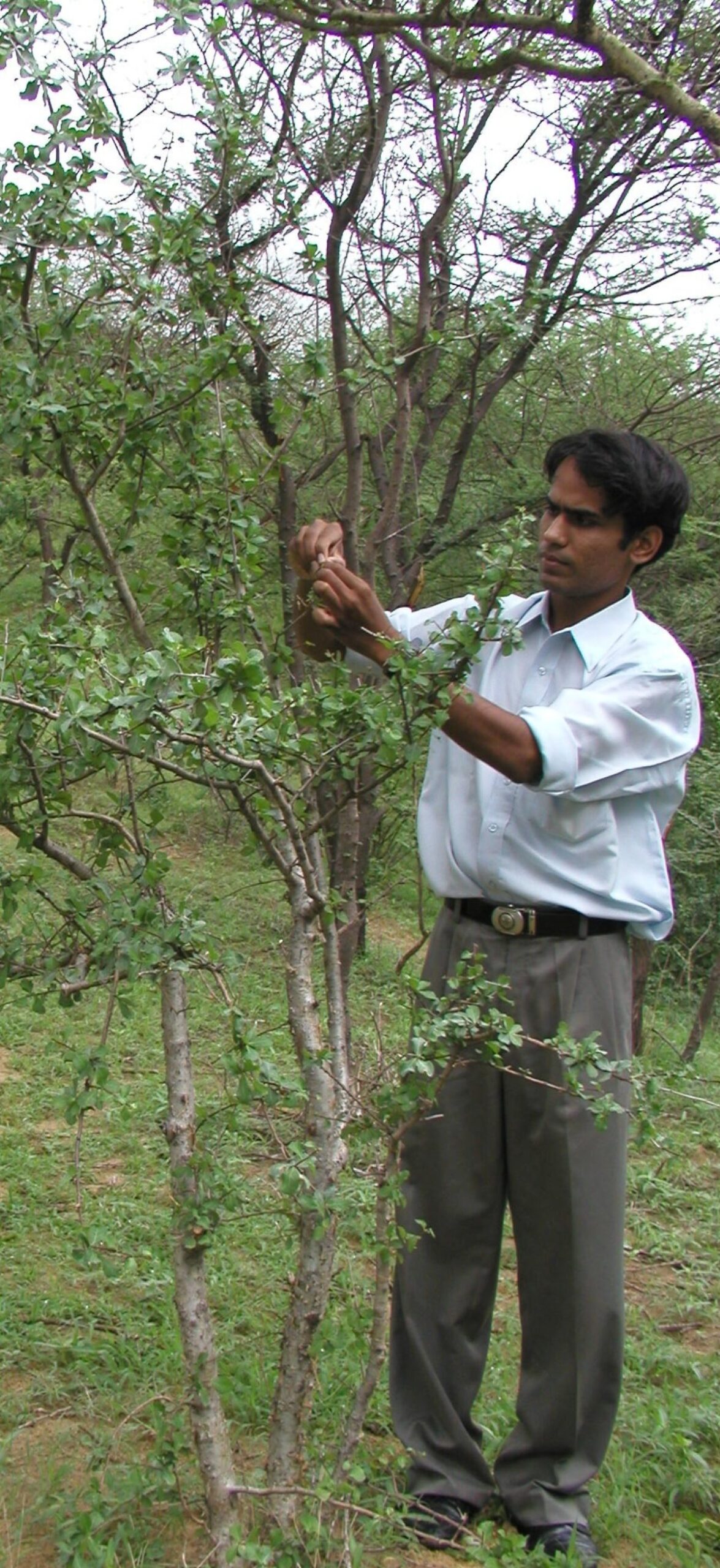
Commiphora wightii, a critically endangered plant species: Commiphora wightii (Burseraceae), commonly known as guggul, is a highly valued medicinal plant that is distributed across the arid and semi-arid regions of India, Bangladesh, and Pakistan. Within India, it occurs in states such as Gujarat, Rajasthan, and Madhya Pradesh. The plant typically grows as a small, thorny shrub or tree with dense, bush-like branching (Fig. 1). It produces a characteristic yellowish oleo-gum resin, which is secreted through specialized ducts present in the bark. The oleo-gum resin of C. wightii has been extensively documented in classical Ayurvedic literature for its therapeutic properties. It is traditionally used in the management of conditions such as bone fractures, arthritis, inflammation, obesity, cardiovascular ailments, and disorders related to lipid metabolism. The oleo-gum resin is obtained from the bark of C. wightii through a process of tapping. Under arid climatic conditions, the plant typically requires around 8–10 years to attain maturity suitable for resin extraction. Tapping is generally carried out during the winter season by making incisions on the thicker branches to facilitate gum exudation.
Traditionally, resin collection is undertaken by tribal communities using conventional tapping practices. These methods often involve making multiple deep cuts on the stem to maximize resin yield. A paste composed of animal urine, previously collected oleo-gum resin, and copper sulphate is commonly applied around the incision sites to stimulate exudation. Although this practice may enhance resin yield by three to four times compared to standard methods, it adversely affects the health of the plant. Such unscientific tapping techniques render the plant unsuitable for subsequent harvesting for several years and may ultimately lead to plant mortality, largely due to the toxic effects of copper sulphate and excessive injury to the tissues. Consequently, these practices are now recognized as a major factor contributing to the decline of natural populations of C. wightii.
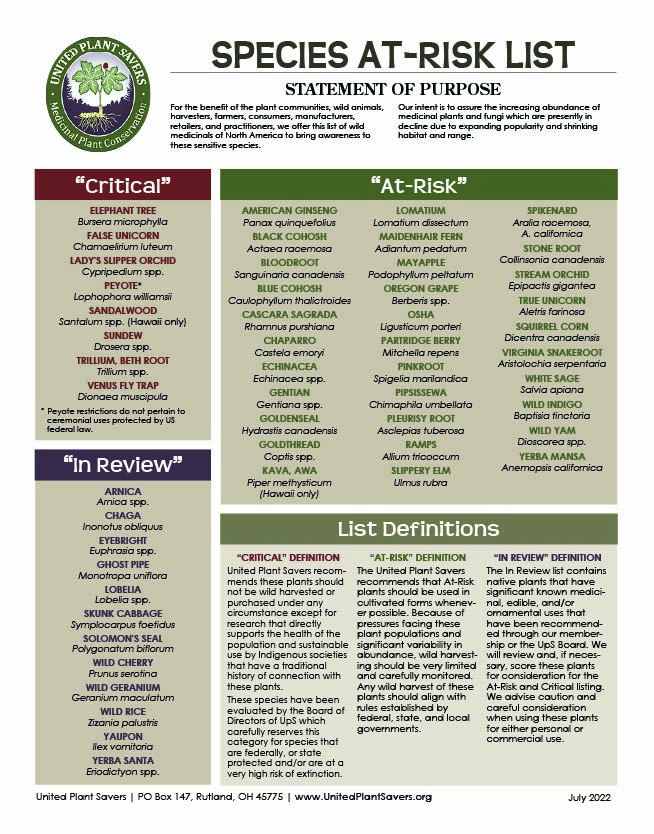
Unfortunately, C. wightii has become highly threatened due to a combination of biological and anthropogenic factors. The species exhibits slow growth, low seed set, and poor germination capacity, which limit its natural regeneration. In addition, the absence of systematic cultivation practices further constrains its population recovery. These challenges are exacerbated by excessive and unscientific extraction of its oleo-gum resin for pharmaceutical use and traditional religious practices, leading to a significant decline in its natural populations. The plant has been placed in the Critically Endangered category of the Red Data List maintained by the International Union for Conservation of Nature (IUCN). In response to its rapid population decline, I initiated the “Save Guggul Movement” in 2008 to support its conservation through a combined strategy integrating biotechnological methods with active community participation. The ultimate objective of the movement was to ensure the long-term survival and sustainable utilization of this ecologically and medicinally important species.
Save Guggul Movement: Under the “Save Guggul Movement,” awareness and educational initiatives were carried out in rural and tribal regions of Rajasthan (India) with the primary aim of conserving guggul. These activities were implemented in close coordination with village communities residing in and around the Aravalli Hills. To ensure effective dissemination of conservation knowledge, community groups comprising individuals from various age groups were established at the local level.
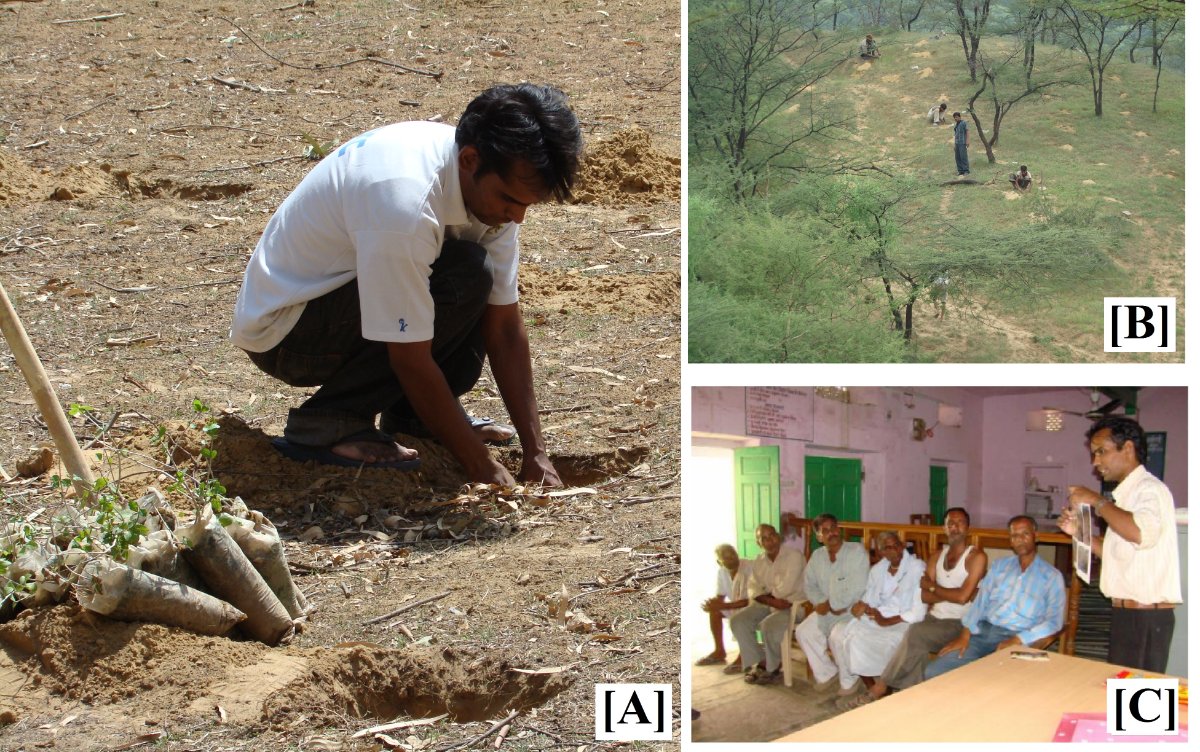
A variety of outreach efforts, including village-level workshops and awareness campaigns, were organized to support the conservation of guggul populations and their natural habitats (Fig. 2). These programs focused on highlighting the ecological importance of the species, its interactions within the ecosystem, and its role in the socio-cultural and livelihood practices of local communities.
In addition, C. wightii was presented as a key indicator species of arid and desert ecosystems. Engagement through meetings, discussions, and awareness sessions helped local communities develop a deeper understanding of the factors responsible for the decline of guggul and its critically endangered status. Furthermore, educational activities conducted in villages and schools—such as presentations, poster displays, and interactive sessions—contributed to strengthening awareness and encouraging active participation in conservation initiatives.
Outcomes of the Movement: The “Save Guggul Movement” received strong support and active participation from rural and tribal communities residing in the Aravalli Hills located in Rajasthan state of India. The awareness initiatives were well received, leading to a positive shift in community perception toward the conservation of Commiphora wightii. As a result, local people developed a greater understanding of the ecological and medicinal importance of the species, as well as the need for its protection. Importantly, community members became actively involved in conservation efforts, particularly in the transplantation and reintroduction of propagated C. wightii plants into their natural habitats. This collaborative engagement significantly contributed to strengthening on-ground conservation practices and enhancing the survival prospects of the species.
Between 2008 and 2010, with the active support and participation of local village communities, approximately 5,000 C. wightii plants propagated through stem cuttings were transplanted in the Aravalli Hills. The survival rate of these plants exceeded 80%, indicating the effectiveness of the approach. At present, the majority of them have reached maturity, demonstrating the success of community-assisted restoration efforts.
Lessons from the Save Guggul Movement: The initiative highlighted that conservation of threatened plant species cannot be achieved solely through laboratory-based research. While controlled, laboratory-oriented approaches provide important insights and propagation techniques, they remain insufficient in ensuring long-term survival of species in natural ecosystems. Effective conservation requires the translation of research from the laboratory to field conditions with active implementation at the ground level.
Although plant tissue culture techniques have been successfully developed for many threatened species, their true conservation value is realized only when in vitro raised plants are reintroduced and established in their natural habitats. Therefore, integrating laboratory advancements with field-based restoration and community participation is essential for meaningful and sustainable conservation of plant biodiversity. In addition, it is essential to actively involve local communities in plant conservation initiatives, as they possess rich traditional knowledge of native flora and ecological conditions. Their close association with the natural environment enables them to contribute valuable insights into species distribution, growth patterns, and sustainable utilization practices. Therefore, integrating community participation with scientific approaches can significantly enhance the effectiveness and long-term success of conservation programs.
Strict implementation of biodiversity conservation laws is essential for the effective protection of threatened plant species. Regulatory measures should be strengthened to control and monitor the collection of plant material from natural habitats. In particular, pharmaceutical and other commercial industries must be restricted from indiscriminate harvesting of wild plant resources and encouraged to adopt sustainable sourcing practices such as cultivation and regulated use.
The initiative to conserve C. wightii, which began in 2008 as a personal effort, has since evolved into a collective movement involving thousands of individuals committed to its protection. This growing participation reflects increasing awareness and dedication toward the conservation of this threatened species. With continued and coordinated efforts from both communities and researchers, there is strong optimism that C. wightii populations will recover in their natural habitats and, in the future, may no longer warrant inclusion in the IUCN Red Data List.
References
- Why Vineet Soni in bent on saving the guggul plants, UNESCO’s A World of Science
- Education and Awareness in the ‘Save Guggul Movement’
- Sir Peter Scott Fund project: Guggul Tree, Rajasthan
Dr. Vineet Soni is a botanist from India and founder of the “Save Guggul Movement.” He earned his Ph.D. from Rajasthan University, India and carried out post-doctoral research from Geneva University Switzerland. For more information, visit at https://en.wikipedia.org/wiki/Vineet_Soni
Department of Botany, Mohanlal Sukhadia University, Udaipur-313001, India