By Emily Little
Herbal education is often described through the language of lineage: apprenticeship, intergenerational transmission, structured programs, and progressive mastery. These pathways remain vital. They carry knowledge across time and situate us within traditions of care and responsibility. They offer mentorship, shared standards, and continuity.
Yet some contemporary conditions complicate the assumption that plant learning unfolds along a single, uninterrupted arc. Chronic illness, fluctuating capacity, caregiving labor, economic precarity, geographic isolation, and ecological instability shape how, and how steadily, many people are able to participate in formal training. These realities do not necessarily sever connection to inherited knowledge. More often, they simply reorganize it.
The reflections that follow emerge from my experience with both intergenerational herbal knowledge and learning shaped by significant shifts in personal capacity. From this vantage point, another pattern became visible alongside lineage-based models: a mode of learning that develops through constraint rather than continuous expansion. I lovingly refer to this pattern as learning sideways.
Formal herbal education frequently follows the linear progression of plant identification, expanding materia medica, increasingly complex formulation, clinical application, then eventual independence or teaching. This structure reflects certain environmental assumptions: relative stability of time, health, mobility, and access. It presumes sustained participation and sequential growth.
I’d like to clarify to say these assumptions are not inherently problematic; they reflect the conditions under which many programs were formed. But ecological systems rarely develop under such uninterrupted stability. Disturbance and uneven resource distribution are ordinary features of living systems. Growth does not always move upward or outward. Often, it roots deeper in place.
When capacity narrows—whether through illness, labor demands, economic or environmental limitation—learning tends to localize. Travel may become less feasible, and extended intensives may fall out of reach. The plants within walking distance, those growing in backyard gardens, along sidewalks, or at the edges of cultivated fields, become our primary teachers. Our radius may contract, but our attention focuses.
Returning to the same patch of nettle (Urtica spp.) over several growing seasons reveals mineral uptake patterns, soil conditions, and the effects of repeated harvest. Watching yarrow (Achillea millefolium) through drought and abundance makes its thresholds visible. Tending calendula (Calendula officinalis) from seed to seed-saving cultivates familiarity with variation, like how rainfall alters growth habits or how insects signal shifts in ecological balance. Knowledge accumulates through continued return rather than expansion.
Under these conditions, repetition begins to replace breadth. Rather than moving steadily through ever-widening plant lists, we may remain with a smaller group of species, studying them through observation, preparation, reading, and embodied experience. Making the same infusion across seasons or at different moments of personal capacity sharpens discernment. Subtle differences become perceptible and slight variations become meaningful.
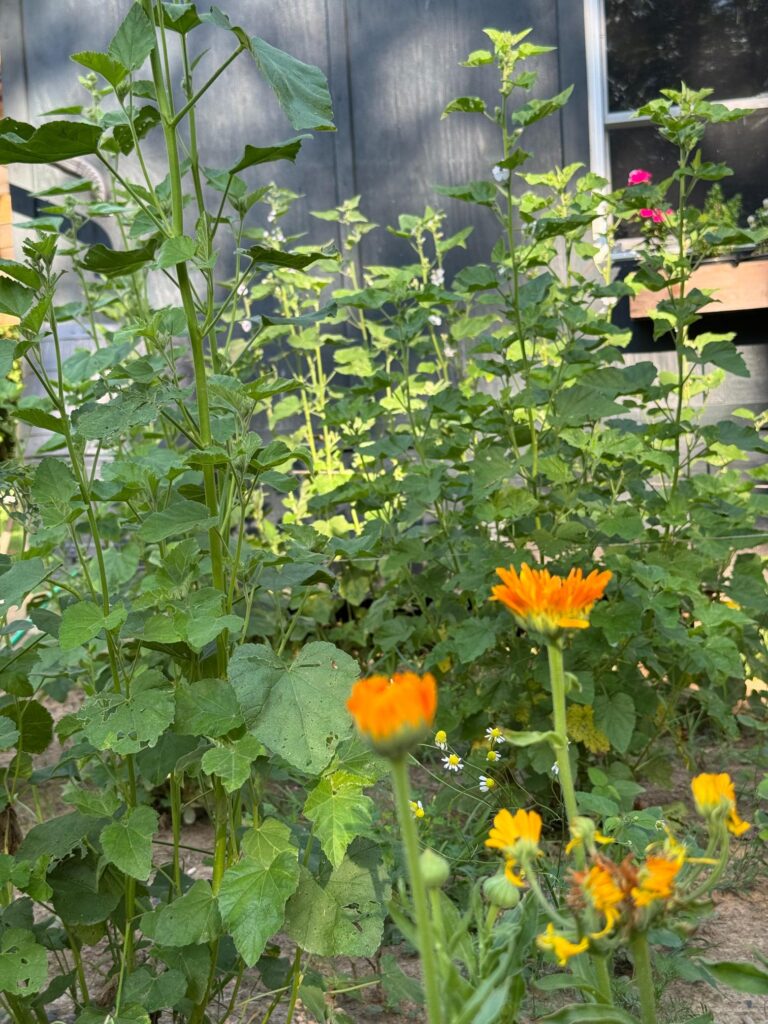
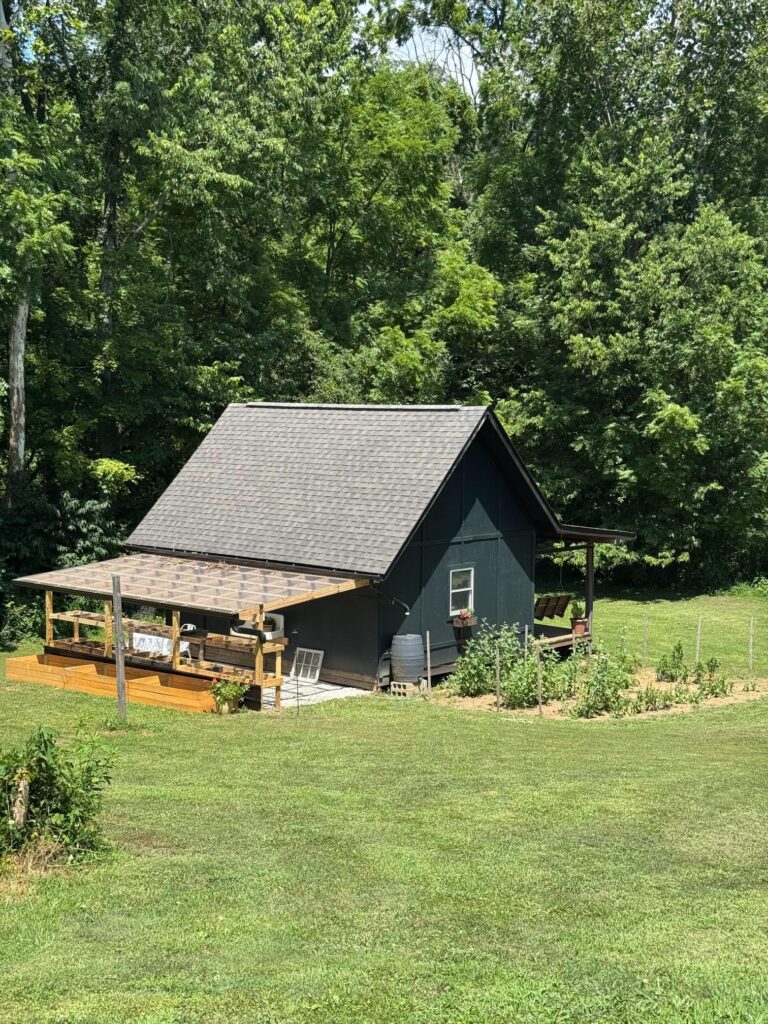
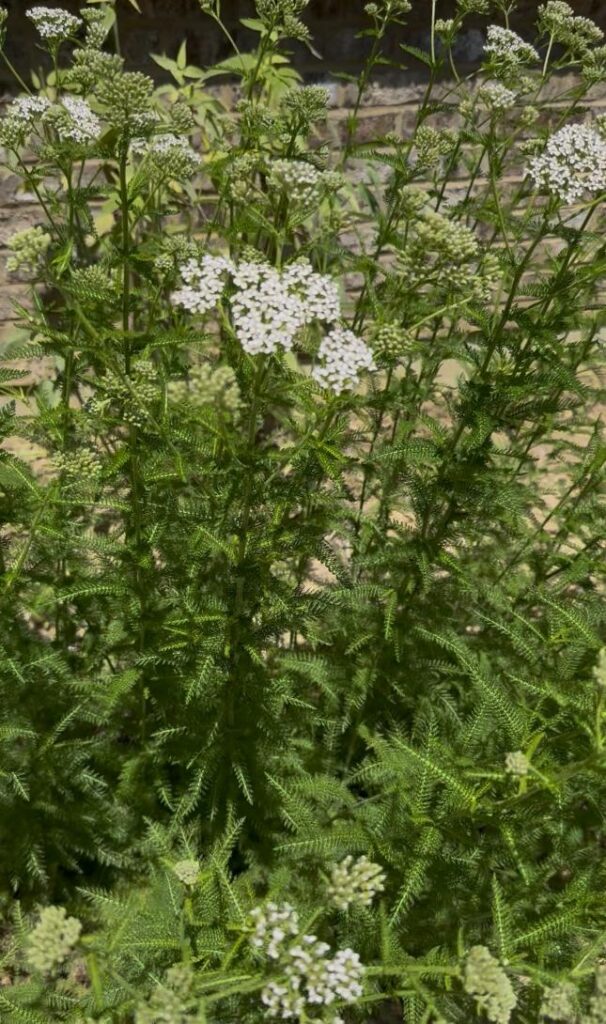
This contraction does more than deepen technical familiarity. It can also widen the range of ways we know. Extended proximity invites forms of listening that are less hurried and less extractive. Patterns of growth, scent, texture, timing, and ecological interaction begin to register not only as data points but as signals—communications that require patience to perceive. Relationships develop through repetition. Plants encountered in this way are not merely ingredients or clinical agents; they become neighbors within a shared landscape.
Such relational knowledge does not completely replace pharmacological understanding or clinical training—it complements them. Ecological literacy expands alongside sensory and situational awareness. Attention shifts from asking only, “What does this plant do and how can I use it?” to also asking, “How does this plant live here? Under what conditions does it thrive or struggle? What does a responsible relationship between us require?” These questions arise more readily when learning is localized and sustained.
Practices shaped by limitation are sometimes framed as incomplete, or otherwise less than, particularly when they unfold outside sustained apprenticeship or institutional programs. However, from an ecological perspective, they can be understood differently. Systems under pressure recalibrate. They conserve energy, strengthen local networks, and adapt within available limits. Learning shaped by fluctuating capacity operates similarly. It emphasizes durability over acceleration and sustainability over scale.
Distinct folkways often arise in these contexts. Seasonal return becomes a method of study: observing the same plants across years rather than pursuing novelty. Small-batch medicine-making encourages attentiveness to process instead of optimization for volume. Localized study centers common and bioregional plants like dandelion (Taraxacum officinale), plantain (Plantago spp.), mullein (Verbascum thapsus), goldenrod (Soledago canadensis)—species that thrive in disturbed soils and model adaptation in real time! Reading practices shift as well, moving laterally across field guides, ethnobotanical accounts, and oral histories so that knowledge layers gradually rather than resolving quickly.
These folkways privilege proximity over distance and continuity over rapid expansion, but they can also complicate conventional measures of advancement. Depth within limitation does not always translate into broader clinical scope or commercial scalability. A practitioner who knows a handful of plants intimately may appear less expansive than one who commands an encyclopedic materia medica. Yet intimacy fosters pattern recognition, ecological literacy, and relational accountability that are difficult to cultivate through accelerated accumulation.
Importantly, sideways learning does not reject lineage or structured education. Many practitioners move between formal programs and informal study across a lifetime. Constraint does not replace tradition; it reshapes how inherited knowledge is inhabited. Prior training may later narrow into a sustained relationship with fewer plants. Technical skills may give way to a slower, more attentive practice. What changes is not commitment, but orientation and expression.
This shift carries ethical implications. When learning is localized, long-term responsibility becomes immediate. Overharvesting a familiar patch has visible consequences. Soil compaction, pollinator absence, and drought are no longer abstract concerns but observable realities. Reciprocity moves from principle to practice. Limitation can foster restraint: harvesting less, gathering closer to home, honoring and working within seasonal rhythms rather than against them.
Contemporary herbalists live and work in a time marked by instability—climatic, economic, bodily. Many of us now walk this path while simultaneously navigating chronic illness, precarious work, caregiving responsibilities, or other limits on time, mobility, and energy. Under such circumstances, sideways learning may not be peripheral to the future of plant knowledge transmission, it may be one of the ways knowledge persists. When learning contracts, attention intensifies. When proximity replaces expansion, listening deepens, and what once seemed silent begins to register as exchange. Expanding our understanding of how plant knowledge forms, including relational, place-based, and sensory ways of knowing, is essential to sustaining both herbal practice and the relationships that make this powerful medicine possible.
Emily Little is a community herbalist, educator, and writer based in Southern Ohio. Her work centers ecological thinking, seasonal living, storytelling, and contemporary plant folkways. Drawing from intergenerational learning and long-term place-based practice, she explores how herbal knowledge adapts to changing conditions. She is the founder of Witching Hour Farm, where she focuses on herbal education and cultivating reciprocal relationships with land.