By Susan Leopold, PhD
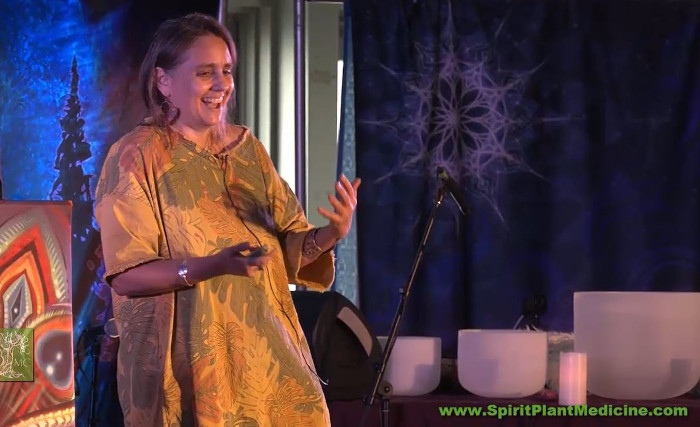
For a few years now Zoe Helen of Cosmic Sister, an environmental feminist collective that supports women’s creative journeys, has encouraged me to consider speaking at the Spirit Plant Medicine Conference. So, in the fall of 2023, I journeyed to British Columbia, first spending a week on Vancouver Island to visit Chanchal Cabrera and taking time to explore the majestical forests and hot springs. Chanchal and her husband have been nurturing the Innisfree Farm and Botanic Garden, a 7-acre internationally registered botanic garden specializing in food and medicine plants where they host apprenticeships in sustainable food production, herbal medicine, and horticultural therapy. Together we formally dedicated Innisfree farm as a new member in the United Plant Savers Botanical Sanctuary Network. After a truly inspiring week on the Island, I headed over to the mainland to give the opening address at the Spirit Plant Medicine Conference in Vancouver. I decided to give a talk I had never given before titled, “From Personal to Planetary Healing.” The talk was an opportunity to reflect on my path in the spirit plant realm and my voyage of becoming a passionate defender of biodiversity. A few days before my trip while looking for inspiration, I decided to rummage through boxes of old photographs and several carousel trays of slides—yes slides, the key to giving talks before power point. Until I held the slides up to the light to see the images, I had not thought about my first seed collecting adventure for a very long time and what really put me on my path.
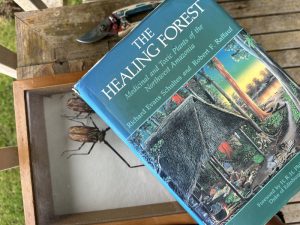
I remembered how I stumbled across the book, The Healing Forest by Richard Evan Schultes in a box of discounted books at the Science Museum in Boston. It was my first exposure to the term ethnobotany, the study of people and plants, and the idea that I could become an ethnobotanist, one who studies the relationships between people and plants. I also discovered in Schultes a mentor who valued the importance of the relationship between plants and cultures and was passionate about the conservation of the natural world through this lens. His book gave me a road map that aligned my soul’s work and an epistemology from which to navigate my passion. It all clicked. Reading his book, I became determined to study ethnobotany and travel to the Amazon.
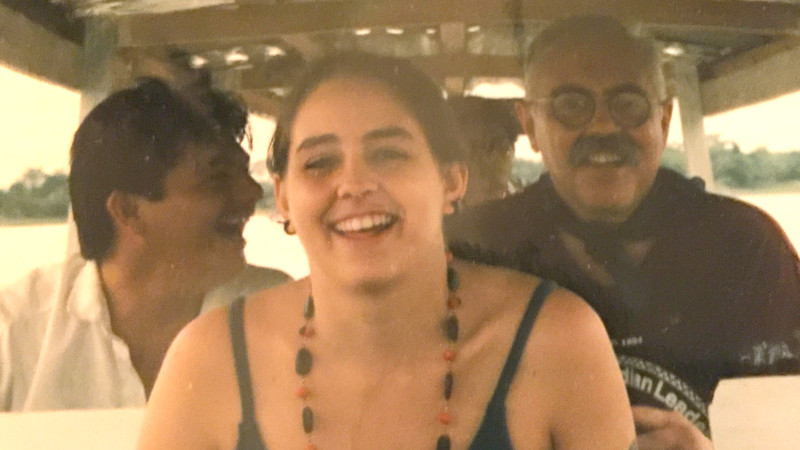
It took a few years, but I then I read in the Bioneers newsletter about the work of Kathleen Harrison of Botanical Dimensions, where she described helping Francisco Montes at the Sacha Mama Ethnobotanical Garden in Iquitos, Peru. I wrote to Kathleen, who introduced me to Francisco Montes’ family, and I went to live in Iquitos for nearly two years. During that time, I was hired by an anthropologist named Joseph Winter to take him down tributaries of the Amazon to collect native tobacco seeds—my first seed collecting adventure! Winter taught me that tobacco is a complex species that has formed an inexplicable relationship with human species that pierces the veil between the living and spirit realm, essentially the other side. Winter also said that life is a tapestry that weaves itself together: and that just like seeds, there is a timeless journey that is shaped by the influences and interactions with our environment.
My own seed tapestry with Joseph Winter started in a village called Pucallpa on the Ucayali River where I met an artist named Pablo Aramingo, who had started an ethnobotanical garden on an island in the river but had come under pressure of the Shining Path to close the garden during this tumultuous time. Pablo took us to the Chullachaqui Ethnobotanical Garden and provided several suggestions for villages to visit to collect tobacco seeds. We also visited Usko-Ayar (spiritual prince) art school where Pablo taught children for free. When I gave my talk in Vancouver about this adventure, I met Mauro Reategui Perez, who had flown up from Pucallpa to sell his art at the conference. He could relate to my talk because he was a student of Pablo Aramingo and had attended the art school, and he brought with him an amazing grandmother tobacco painting that brought back memories of my trip with Joseph Winters that had inspired my talk.

I then returned home from Vancouver to find a package in the mail, a copy of the latest issue of Spirituality + Health. Online S+H editor Brenna Lily had asked me for a press pass for our International Herb Symposium and had sent me a print copy of her article, “Become an Herbalist” inspired by her time at the symposium. Flipping through the magazine I was instantly taken by the article, “Why Crush an Ancient Stone Pipe?” And lo and behold, in the second paragraph, the author and editor Stephen Kiesling quoted Joseph Winter from an interview he did nearly 25 years ago.
“Dr. Winter had found ancient tobacco seeds at Native American archeological sites, and he knew from his own family heritage that tobacco smoke traditionally carried Native American prayers to the Creator. Winter then went to local Pueblos hoping to collect live tobacco seeds and to learn more about traditional tobacco practices. What he found instead is that the old sacred seeds had become rare, so he threw himself into cultivating sacred tobacco and ceremonies with the fervor of a Benedictine monk growing grapes.”
I had a moment where the power of three completed itself and I could feel the chills through my entire body, and I was reminded to remember. 1) I was asked to give this talk at the conference in Vancouver where I gathered the photos of this trip with Winter to collect tobacco seeds; 2) I connected with the artist and the tobacco painting; 3) I opened the magazine to read about Joseph Winter. I instantly sent Stephen an email about his interview with Winter and asked if he knew what had happened to him and his seed collection. Stephen did not know what happened to Winter, but he encouraged me to write this story.
I felt like this story was important for me to write because Winter was a teacher for me on my plant journey, and tobacco itself is a master teacher and a huge part of why I have dedicated my life to the conservation of native medicinal plants. Tobacco embodies the synergistic relationship between plants and people and lessons of how we navigate being human. Winter’s research proposes that wild tobacco was one of the early and possibly first plants domesticated by humans in the new world and that its addictive properties and hallucinogenic powers figured prominently in this process. Taking his theory further, Winter hypothesizes that early Native Americans harnessed its power through domestication and then used this knowledge of plant cultivation to domesticate corn, potatoes, and other food plants.
I went to the Amazon to save the plants, but the Amazon became my teacher and sent me home with the skills of a seasoned ethnobotanist. I was a solo female living alone on the Malecon River in Iquitos, Peru, and now I live on the banks of the mighty Ohio, in a little town called Pomeroy that somehow shares a similar vibe with Iquitos in the old architecture of days gone by. Just as the Amazon is known for its abundance of medicinal plants, so are the Appalachian Mountains. In the Amazon the medicine is in the vines and the epiphytes and in Appalachia, it is the roots and barks. The Amazon is so alive that to cure sickness it often takes purging. In Appalachia it is the change in seasons, so the herbs are supportive to the immune system. Of course, these are broad strokes, but there is something to the bioregionalism of medicinal plants. Seeds are no different—they are an expression of the elements and their environment, the wind, the rain, the sun, and the soil.
I am now the executive director of Plant Savers, a small grass-roots organization that is celebrating 30 years of activism. We are unique because we are not a conservation organization focused on land/species conservation, but an organization that recognizes how humans have deep connections and relationships with plants. We advocate for reciprocal relationships with plants and believe that collecting seeds and propagating plants bring us into awareness of the natural world. As Winter hypothesizes that tobacco was a gateway plant to humans learning how to domesticate food crops, I often say that herbalism is the gateway drug to activism. We see habitat destruction of the natural world taking place at alarming rates, and we do a variety of things to help solve the problem.
As you have been following, last year we launched a new project, Seeding the Future, to create a native medicinal plant seed bank. We intend to extend our model of seed collecting and engage our network of Botanical Sanctuaries across the country. Stay tuned as we embark on this groundbreaking journey for medicinal plant species.