Photography by Kris Curtis Morse
Introduction:
Participating in the Deep Ecology Artists Fellowship program at United Plant Savers Center for Medicinal Plant Conservation and Botanical Sanctuary in Rutland, Ohio, a two week artist’s residency from July 22 to August 5, 2024, was both a cathartic and transformative experience. It was here that I was able to explore three “green” photographic processes in depth for my Natural Affinities portfolio project and to connect with inspirational artists, herbalists, and activists while living at The Brickhouse Apothecary in nearby Pomeroy.
World Anthotype Day took place shortly afterward on August 17, which would have been my mother Elizabeth’s 82nd birthday. Not long after her death from Parkinson’s Disease in 2023, I embarked on the Natural Affinities project. The resulting portfolio of images includes Anthotypes, Chlorophyll prints, and digital photographs. Anthotypes have a textural quality and Impressionistic color palette like the landscape paintings Elizabeth admired that inspired her own painting style. The Chlorophyll prints include images of my mother from a collection of old family photographs. Natural Affinities was created using my preferred artistic medium of photography, the photogram technique, direct sunlight, and herbal and medicinal plant specimens and is representative of my mother’s joy of gardening, our nature walks together, and her dedication to both a decades-long career in nursing and care of her family. The process has been one of healing for me, and I am grateful that one of the Anthotype images from the project “Monarda fistulosa (Wild bergamot)”, which was made with a mushroom foraged from the Sanctuary’s Medicinal Plant Trail, has since been included in the book, Anthotype Emulsions, Volume 3, by author Malin Fabbri.
My Deep Ecology Artist Fellowship project plan was to create Anthotypes (“flower prints”) and Chlorophyll prints (leaf prints) using organic, non-toxic photographic techniques where intriguing images are developed by the sun through the action of photosynthesis on leaves or on paper pre-treated with light-sensitive natural emulsions made from plants. The title for this project, Natural Affinities, refers to the qualities living beings possess that connect us to each other and reflects the evolutionary inter-dependence of all life on the planet, tracing back to our common ancestors, and the critical importance of finding a balance in that relationship. Most of the necessary equipment and materials were prepared at home and brought to the Sanctuary; however, I collected plants on site for the Chlorophyll prints and photo emulsions as they lose their photosensitivity if prepared too far in advance. With permission from the Sanctuary staff, I foraged from the most abundant or non-native plants. It takes only a few leaves, berries, or flowers to make each emulsion.
At The Brickhouse Apothecary, I mixed the plant-based emulsions and used a dark closet in my studio space to drip-dry the freshly coated papers.
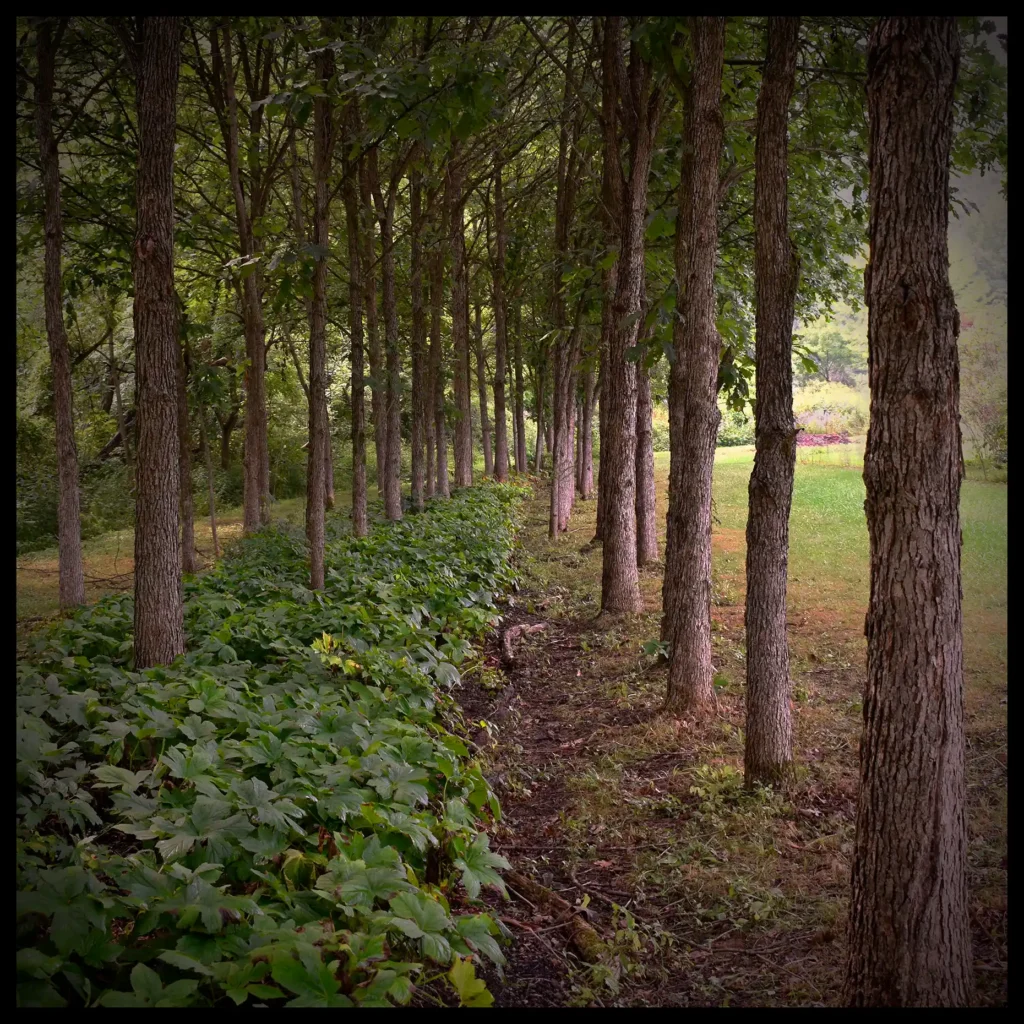
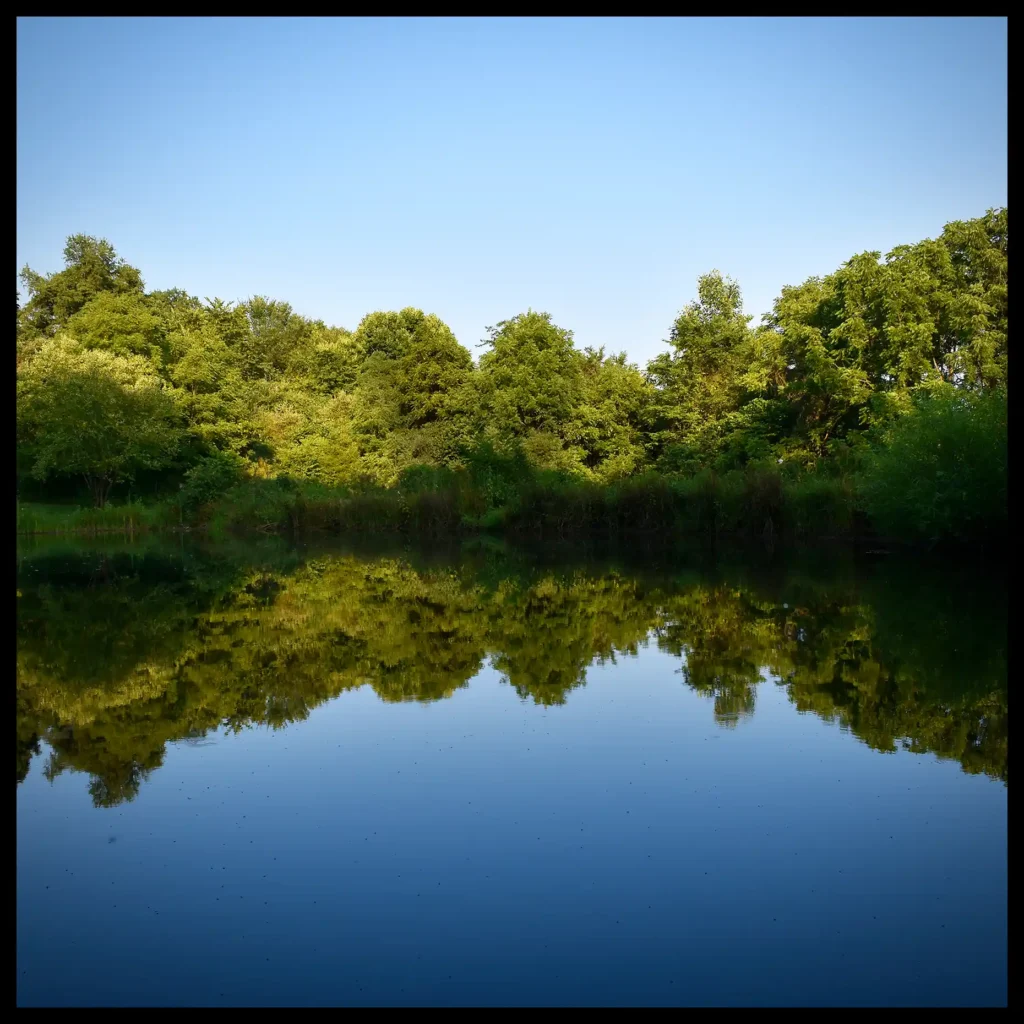
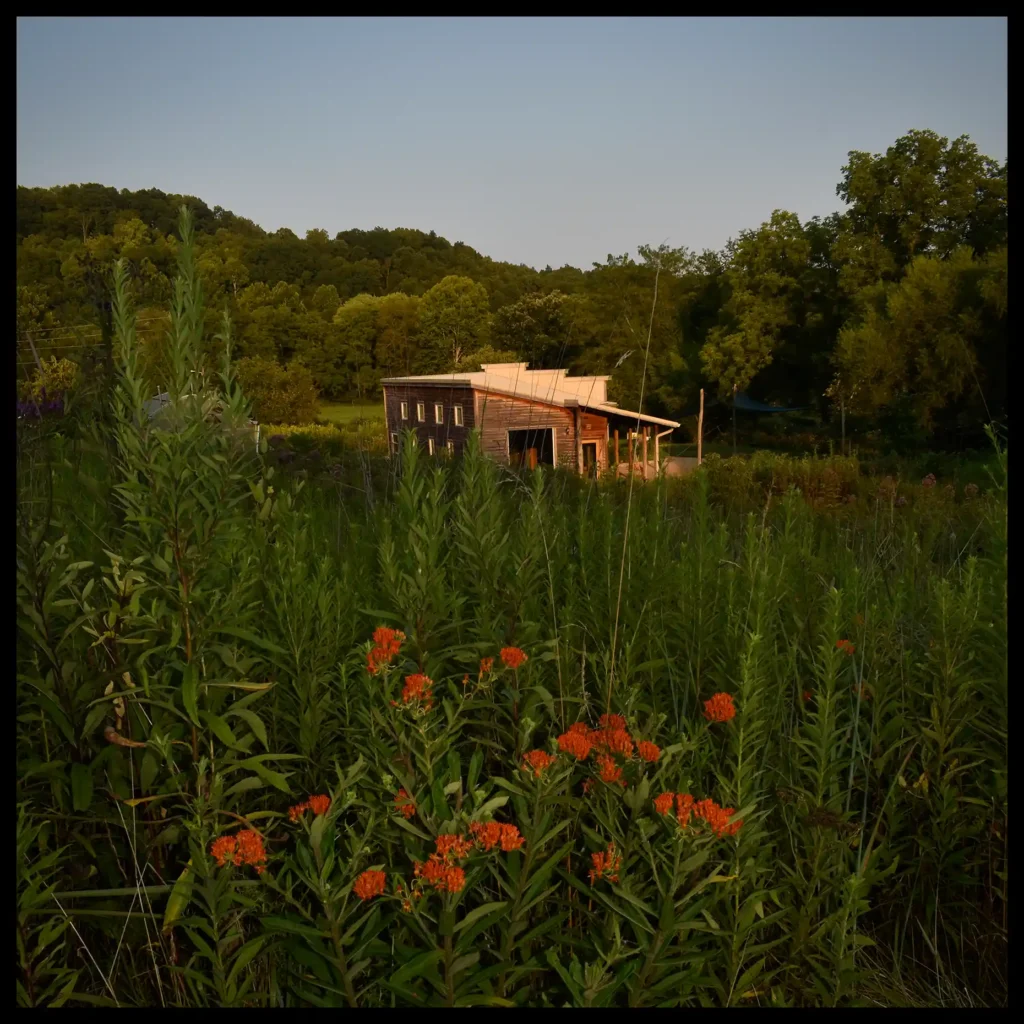
Using a DSLR camera and Photoshop editing tools on my laptop, I documented the Chlorophyll and Anthotype prints, which are impermanent, and rendered images of the Sanctuary and medicinal plants in ways that attempt to capture both the sense of wonder I experience when immersed in the beauty and magic of the ever changing natural landscape and my constant awareness of its ephemerality.
Using a DSLR camera and Photoshop editing tools on my laptop, I documented the Chlorophyll and Anthotype prints, which are impermanent, and rendered images of the Sanctuary and medicinal plants in ways that attempt to capture both the sense of wonder I experience when immersed in the beauty and magic of the ever changing natural landscape and my constant awareness of its ephemerality.
At the end of my residency, I exhibited these works with a small temporary and interactive installation on site at the Sanctuary’s Duke Library and in a community art exhibition at the school where I teach. The interactive aspect of the installation encourages people to reflect in the moment, in their own words and images, on personal experiences in which plants have been part of their own healing process or sense of well-being and how they can reciprocate in developing a relationship to these plants by learning more about ecology and our vital role in diversity and sustainability.
As a teaching-artist, I educate teens that artists and art-making have the power to heal, inform, and to foster positive change and joy in life. If students express concern that one person can’t make a difference, I encourage them to look more closely, to seek the extraordinary hidden in day-to-day experiences — including their own abilities and possibilities. It’s easy for us to put down our own abilities because they seem so ordinary but, like an unremarkable seeming “weed” that contains powerful healing properties, we all have the ability to make changes for good. It is my hope that in using non-toxic darkroom processes, documenting healing plants and the beauty of our natural environment, educating my audience about the mission of UpS, and engaging in this collaborative process with the greater community, I will model for the next generation how we can make the world a better place, beginning with our ways of seeing and thinking and with the plants in our own backyards.
Anthotype Process- Historic Process, Recent Images
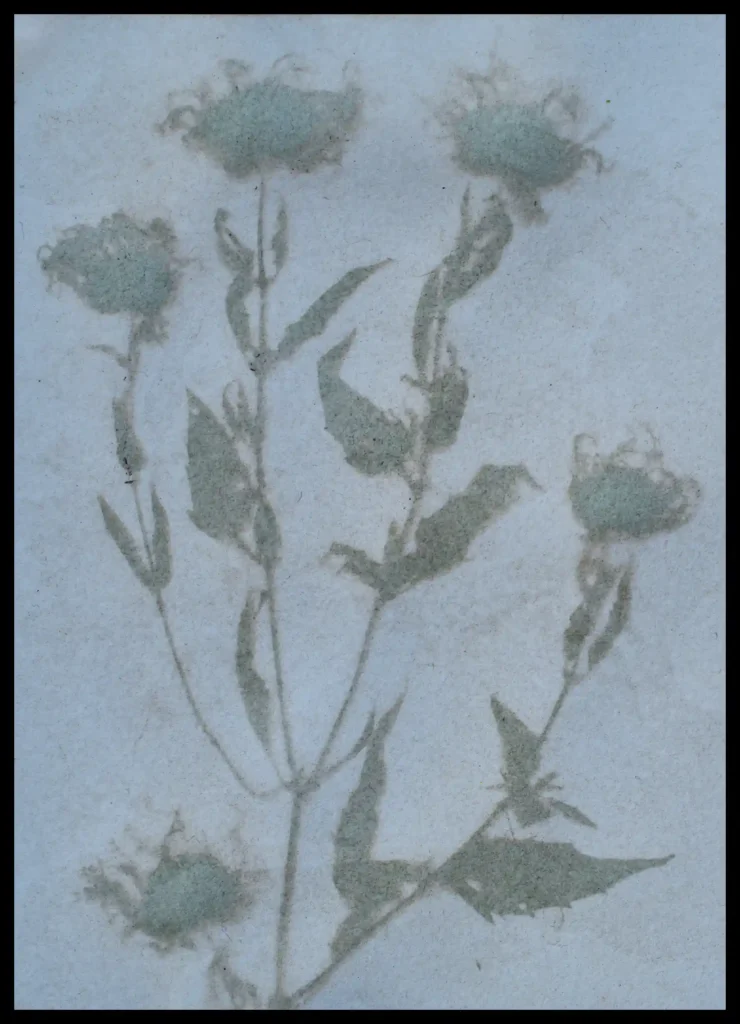
The word Anthotype is derived from the Greek word “anthos” for flower and is used to describe an image created using photosensitive material from plants, including flower petals, leaves and fruit. Henri August Vogel discovered that juices from poppies and violets were sensitive to light. Sir John Frederick William Herschel (b. 1792, England) was key in discovering that emulsions made from crushed plants could be applied to paper and used to create photographic images. He coated sheets of paper with the emulsion and then allowed it to dry away from direct light. An opaque object or a transparent photo positive is placed in direct contact with the top of the paper and the paper is then exposed to sunlight. An image forms when the part of the paper not covered by the object or positive is bleached by the sun. The color remains in the areas blocked from light. Anthotypes do not create a “fixed” or permanent image as the dry emulsion remains sensitive to light and will gradually fade or disappear if it is exposed to more sunlight.


Ocimum tenuifl orum
Chlorophyll Prints– Historic Process, Recent Images
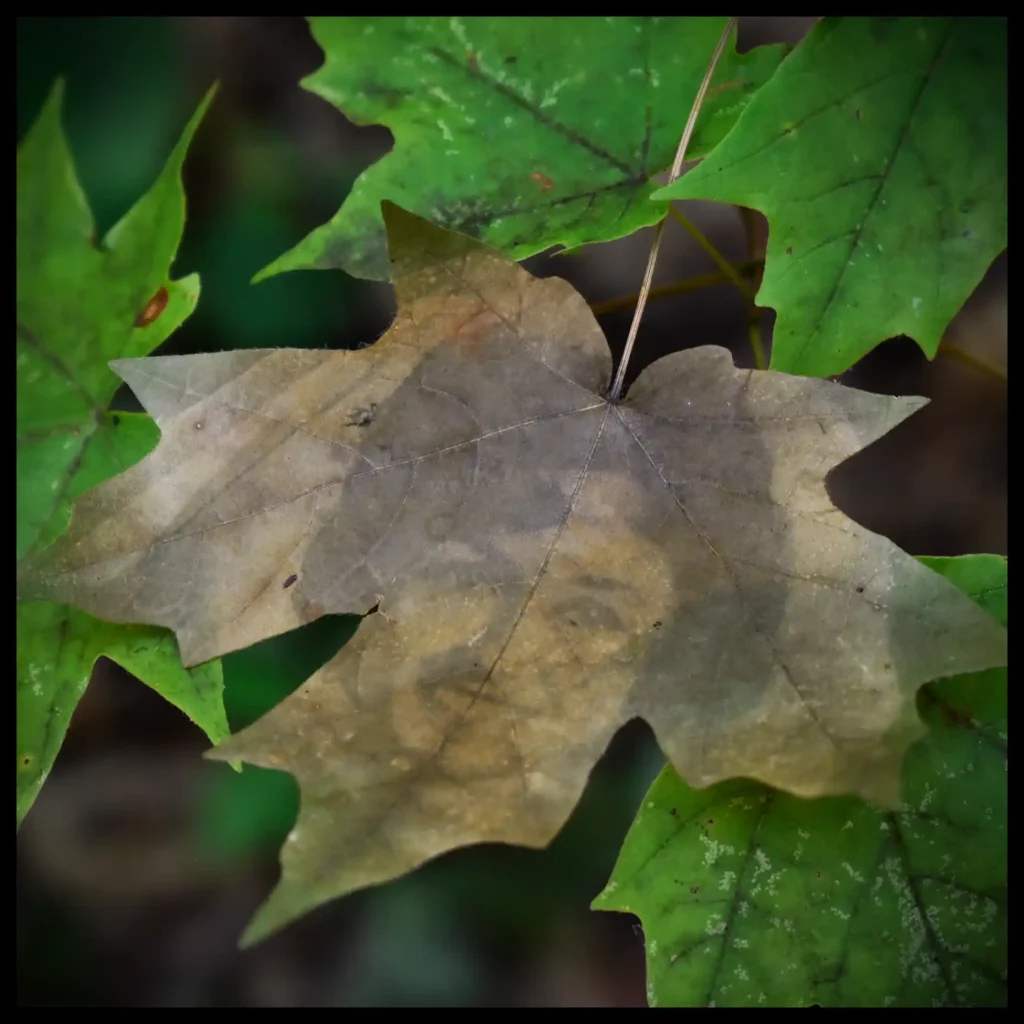
The origins of this photographic process can also be attributed to the experiments of 19th century British scientist Sir John Herschel who discovered the photographic properties of chlorophyll. Chlorophyll is the pigment in green plants that gives them their color and absorbs sunlight to begin the process of photosynthesis. Plants, through the process of photosynthesis, use sunlight and carbon dioxide to produce energy compounds. Too much light can destroy chlorophyll and result in bleaching or fading of the leaf. Similar to the process of creating Anthotypes, Chlorophyll prints are created when a transparent photo positive is placed on top of the leaf in a contact-printer and then exposed to direct sunlight.
An image forms when the part of the leaf not covered by the positive is bleached by the sun. The color of the leaf remains green or fades less in the areas blocked from light. Like Anthotypes, Chlorophyll prints are not “fixed” or permanent images as the green image remains photosensitive and will gradually fade or the leaf turn dry and brittle if it is exposed to more sunlight and air.
Digital Photography- Modern Process, Recent Images

Digital Photography – Modern Process, Recent Images
In the late 1980s, photography transitioned from an analog medium that relied on manual cameras and the development of light-sensitive films and papers with darkroom chemistry to one using digital technology for image capture and storage with the introduction of the first consumer digital cameras. The original version of Adobe Photoshop, a program for adjusting and manipulating digital images, was released in 1990. The program adopted many of the traditional tools of darkroom photography but expanded photographers’ options for manipulating images and for using processes that do not require the use of toxic chemicals for developing film and paper.
“Natural Affinities” Portfolio Presentation- UpS Duke Library, August 4, 2024
Interactive presentation of Earth-friendly photographic processes and collaborative journal writing as multi-sensory tribute to Ancestors, Native & Medicinal Plants, Herbal Folk Medicine, and Ancestral Knowledge.
On Table: Healing Plant Story Journal, Dry Herbs, Herbal Dream Pillow, Calendula Candle, Grandmothers’ China, Hand-embroidered Altar Cloth with Family Tree.

Prints; Unframed: Photos from 3 Generations of Family Albums
Kris Curtis Morse is an art educator, nature photographer, and herbalist. A lifelong creative and naturalist, she was encouraged to draw and paint, write stories, garden, and play outdoors during childhood. Kris is inspired by relationships such as art and learning, culture and adventure, flora and fauna, light and life, mystery and wonder, and history and human potential.