By Kalani Baer
Imagine…what began as an abandoned orchard, is now a flock of apple trees enshrined with layers of cardboard, compost, and ramial wood mulch. The soil flourishes with life.
It’s nearly Spring. Blue Oyster mushrooms poke their heads up to taste the incoming warmth and shake the spores from their gills. Green tufts of comfrey and spiny mounds of lemon grass dance with the wind. Our beloved elderberry bushes grow in the space between trees. Sweet shrub seeds that were cast during the cold winter months are beginning to sprout and take root. A wavering canopy develops season by season as crows fly overhead.
This is a food forest and a sanctuary for life forms of all kinds. We humans feed the soil; we rub the wounds of the trees and pour water around their trunks. We pour water around all the stems we see and in return, the forest feeds us. What began as a collective dream transforms into material reality. The trees were always there, waiting for us to show up.
Where there are seeds and hands to plant them, there is work to be done.
This food forest will feed us. No matter what happens to the grain fields of the west, or the orange trees of the south, we have a native food forest here in our community. We support and nourish life in the food forest that in turn, feeds our bodies with edible fruit, roots, leaves, and medicines. As the oppressive systems of old continue to crumble, our food forest reminds us of what is possible. As our mother Earth communicates sorrow from centuries of abuse, our food forest inspires us to reconcile with the land, ourselves, and one another. As our present and future generations ebb and flow with hope and despair, our food forest heals us with unending love. This is our dream; let us show you how the food forest will feed us.
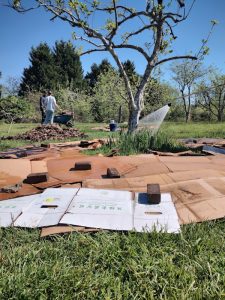
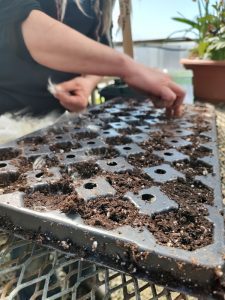
This piece was written by people who believe in the dream of food forests. The food forest you see in these pictures is stewarded by students and teachers at Blue Ridge Community College located in Flat Rock, NC. Currently, there are potential plans to bulldoze a rare native forest that stands adjacent to our holistic orchard garden. It’s a forest full of native medicine plants and mature trees of all kinds. They protect our gardens and orchard from flooding and disease. And they teach us what a healthy forest looks and feels like. We care deeply about this rare forest, as it stands as one of the last remnants of its kind. The picture on the following page is of the campus forest.
The Blue Ridge Rare Forest Preservation Initiative is a coalition that formed in response to the risk of losing our campus forest. If you would like to help us advocate for our precious forest, consider writing (see template below contact info) to the Blue Ridge Community College president. Her name is Dr. Laura Leatherwood, and this is the contact info for her office:
President’s Office
(828) 694-1705
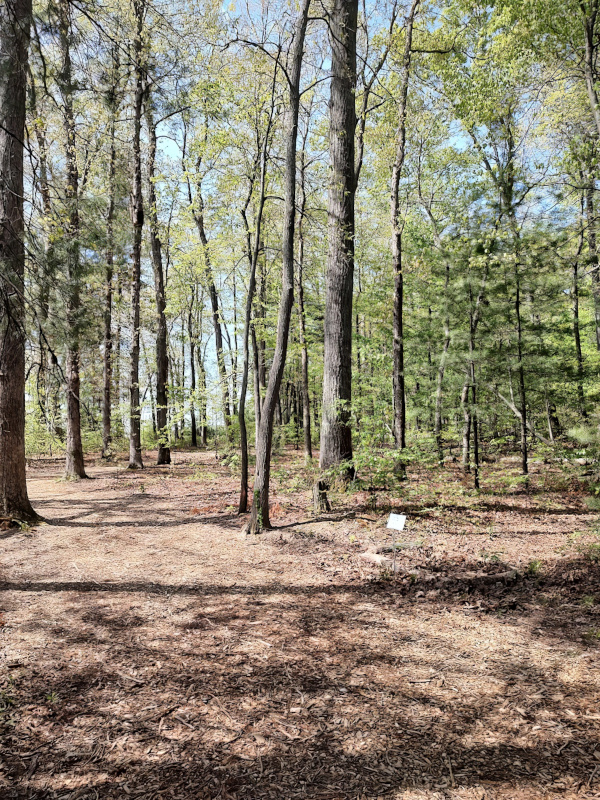
Here is a template for your convenience:
Dear President of Blue Ridge Community College, Dr. Laura Leatherwood,
I am writing to you today to express my concern with the potential plans to destroy part of the Blue Ridge Campus Arboretum Forest in favor of constructing a maintenance building. The campus forest is both an actively used outdoor classroom for the Horticulture Department and community space, where people walk, run, and enjoy the serenity of a natural area. It is also home to a host of native plants that are rare and endangered. In the face of climate change and rapid urbanization, it is profoundly important that we acknowledge the inherent value of our native plants and trees. They help anchor our soils, prevent flooding, and feed us in so many ways. Ultimately what is decided now in regards to our native forests will have exponential consequences for future generations of BRCC students, staff, and members of the wider community.
Once the forest is gone, it is very difficult to undo and get back. As an advocate of native plants, trees, and healthy human communities, I hope you receive the heart of this message in favor of protecting the forest as a body of life that is respected and beloved by students, faculty, and the wider community.
Thank you for your time.
Sincerely,
NAME HERE