By Lauren Ann Nichols-Sheffler

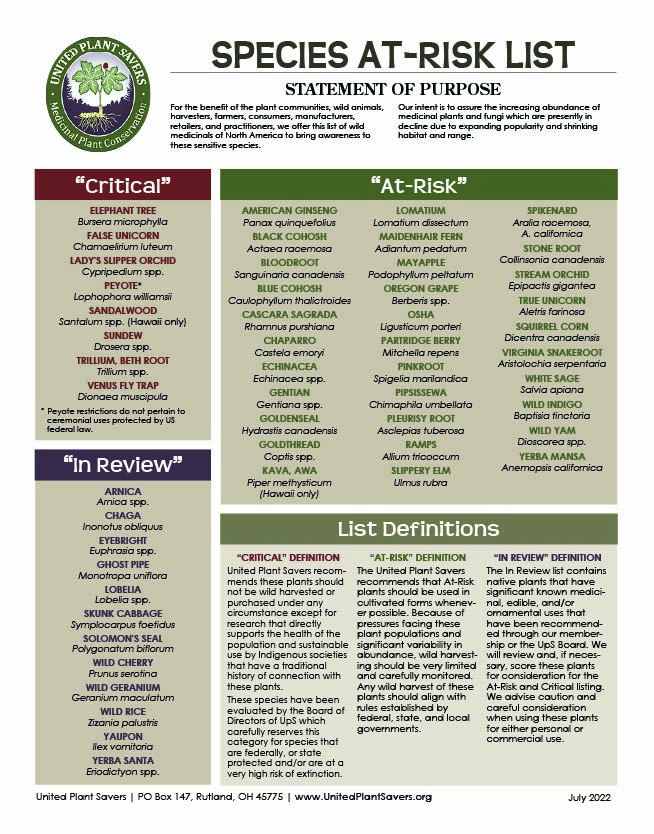
When plants reach out to us, their messages can be as fleeting as a quick dream or as loud as a wake-up call when we are sick or injured, guiding our recovery. Among these plants, the wild yerba mansa (Anemopsis californica) stands out for me, honored for its southwest traditional use and potent medicinal properties. Knowledge keepers or honored elders who have long worked with yerba mansa know its benefits and the art of ethically wildcrafting it—ensuring that this precious plant continues to thrive for future generations. To many, the idea of communicating with plants may seem strange, yet it is akin to learning a new language—the language of plants. Have you ever started learning a new language and found yourself dreaming in it? Engaging with plants, such as yerba mansa, can offer a similar experience, opening a channel to ancient wisdom, magical plant journeys, and sustainable futures.
As a professional herbalist nurturing my relationship with plants by cultivating a diverse array of medicinal species in my urban botanical sanctuary, my path diverged with untamed whispers that captivate many herbalists. While dreaming about a year ago, the call of yerba mansa stirred something profound within me. In my dream, I held a yerba mansa root while standing beneath the relentless sun and vast azure skies of the southwest terrain, the backdrop of my childhood. Cottonwood (Populus fremontii) trees blurred the edges of my vision, yet the root in my hand sharpened my focus, imbuing me with a poignant mixture of urgency and premonition. As the senior procurement manager for a prominent herbal tincture company, the challenge of sourcing this plant often haunted me due to its extremely unique growth habitat and origins. Yet, I felt the promise of an impending journey.
It took a couple of months to fully grasp the dream, but it lingered in the back of my mind like an old friend awaiting a long-overdue call. Joining the Sustainable Herbs Initiative (SHI) with Ann Armbrecht, author of Following the Herbal Harvest, was my aha moment! I was inspired by how Ann brought together top leaders in the herbal supplement industry to connect with plants and people on a deeper level than usual Zoom calls or staring into the abyss of Excel sheets. It felt like going back to herb school or exploring an invisible path in herbalism within our herbal supplement industry. When the Wild Plants Group at SHI was mentioned within her nonprofit, I immediately thought of yerba mansa for our case studies. Could it be that yerba mansa called me to record its growth habits and document stories from its knowledge keeper and wild steward?
Indigenous Legacies
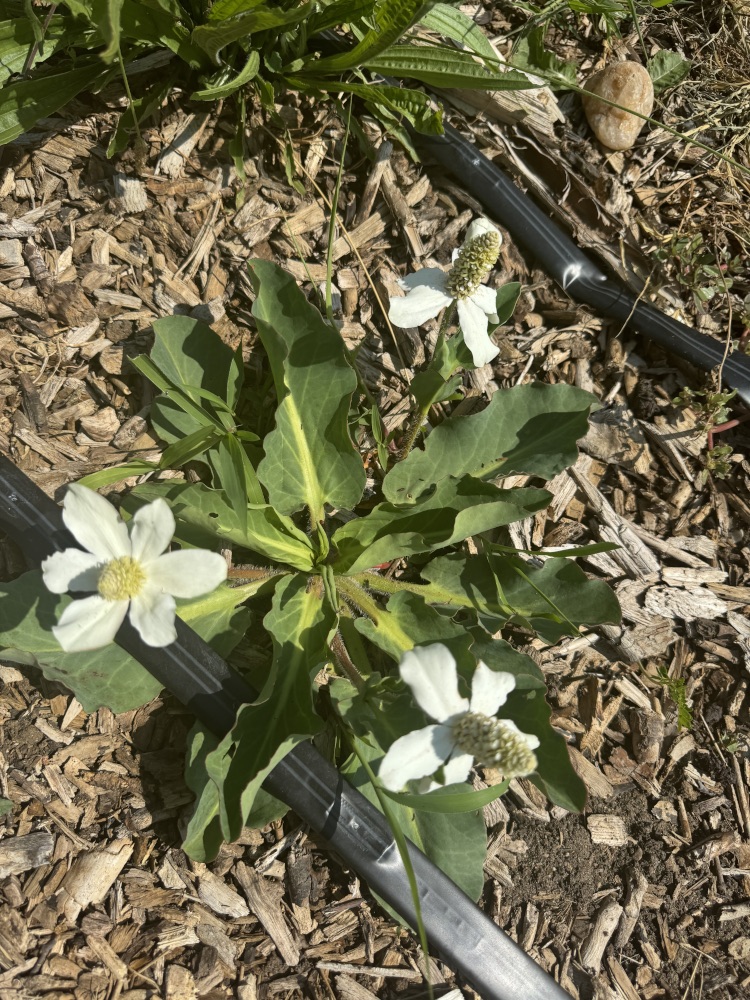
Throughout the Southwest, First Nations have long cherished yerba mansa’s spirit, also known as Yerba Del Manzo, or “Lizard Tail,” for its curiously long, red stolon runners. It is endearingly termed “Swamp Root” because of its preference for the moist, marshy conditions along the Rio Grande wetlands (Hicks, 2024). Traditional practice of wildcrafting yerba mansa in the southwest serves as a vital link between people, their ancestral heritage, and the land. For generations, yerba mansa has been an honored herbal remedy, traditionally used as medicine for treating colds, flu, and stomach discomforts—a testament to its enduring role in indigenous healthcare practices.
Beneath the layers of modern botanical understanding, yerba mansa emerges as a noble heirloom of indigenous plant wisdom. Its selection unveils diverse applications across various tribes, celebrating the plant’s profound cultural echo. The Cahuilla utilized it as a remedy for colds, while the Isleta cherished its leaves for blood medicine. The Mahuna revered it for dermatological benefits, and the Papago crafted emetic decoctions from its foliage. The Pima, embracing a broader spectrum, turned to its roots to alleviate ailments such as colds, coughs, tuberculosis, and stomachaches and even crafted disinfectant washes (Moerman, 2020). Beyond its healing powers, the integration of yerba mansa’s leaves, seeds, and roots into daily diets illustrates its foundational role in the nutritional practices of these communities (Hicks, 2024). Their profound desire to use and cultivate relationships with yerba mansa not only roots its legacy but also highlights the critical need to safeguard this ancestral knowledge for the well-being of future generations.

The Mansa Man
As a bio-regional herbalist and the senior Sourcing & Purchasing Manager for WishGarden Herbs, I am devoted to pioneering solutions that tackle the complexities of modern medicinal wild plant sourcing. A cornerstone of my strategy has been to meticulously document and honor elder knowledge for plant preservation, coupled with defining ethical wildcrafting in SHI’s wild plants working group—a tribute to our respected wise elders like Richard McDonald. I tenderly name him The Mansa Man, honoring his deep-rooted expertise and sacred bond with harvesting and stewardship of yerba mansa. Further, when mansa whispered to me from my dreams, calling me to look deeper into its lineage, I understood its message was not simply to trace origins but to invite me to propagate time-honored wisdom and uphold the cherished responsibility of preserving wild stewardship.
Richard McDonald pursued his education at The Southwest School of Botanical Medicine under the tutelage of Michael Moore during the 1990s. Upon completing his studies, he embarked on a career as a clinical herbalist. He established Silver City, New Mexico’s only food co-op, which included an apothecary and clinic under his sole supervision. He would gather wild plants for his products on weekends, initially guided by his indigenous neighbors. He has been committed to practicing ethical wildcrafting and creating a range of potent herbal products such as tinctures, teas, and various topicals for his company, Desert Bloom Herbs, especially during his food co-op days. He supplemented sourcing herbs from Pacific Botanicals, his favorite supplier at the time, but most impressively, he harvested all wild plants himself for the majority of his inventory.
For 32 years, he has served as a dedicated steward to the Southwest’s wildlands. Notably, he has specialized in collecting yerba mansa roots from the bosques along the Rio Grande River. His extensive herbal expertise and commitment to sustainability have consistently provided herbal companies with high-quality plant materials for several decades, affirming his sustainable practices. Though Richard has championed herbal business, his focus remains on making traditional plant medicine accessible paired with his reverence for the land. When I asked him what he most enjoys about wild harvesting, he replied “Conversations with the plants and being where they are. It’s not a spoken conversation; it’s conversation you have in your head. It brings my attention to certain things. It reminds me to chew on it for my gums. It’s a positive connection; we want to know you. We want you to take us and discover what we do. Maybe at some point, you don’t think, and it’s an idea of how to use the plant in a different way. I feel like that’s how we get to know what to do with plants and modern testing, of course. But it’s important to BE with the plants.”
His special stewardship not only preserves but also propagates the legacy of yerba mansa, ensuring its survival and flourishing amongst the wild bosque for generations to come. When discussing his retirement and one last harvest, I knew exactly why mansa had brought Richard and I together; the calling had manifested into a generational passing of working with yerba mansa onto myself. I had freely received mansa’s message in my dream, affirming through conversations in my head, with Richard’s words echoing, “It’s important to be with the plants.”
Mansa Metamorphosis
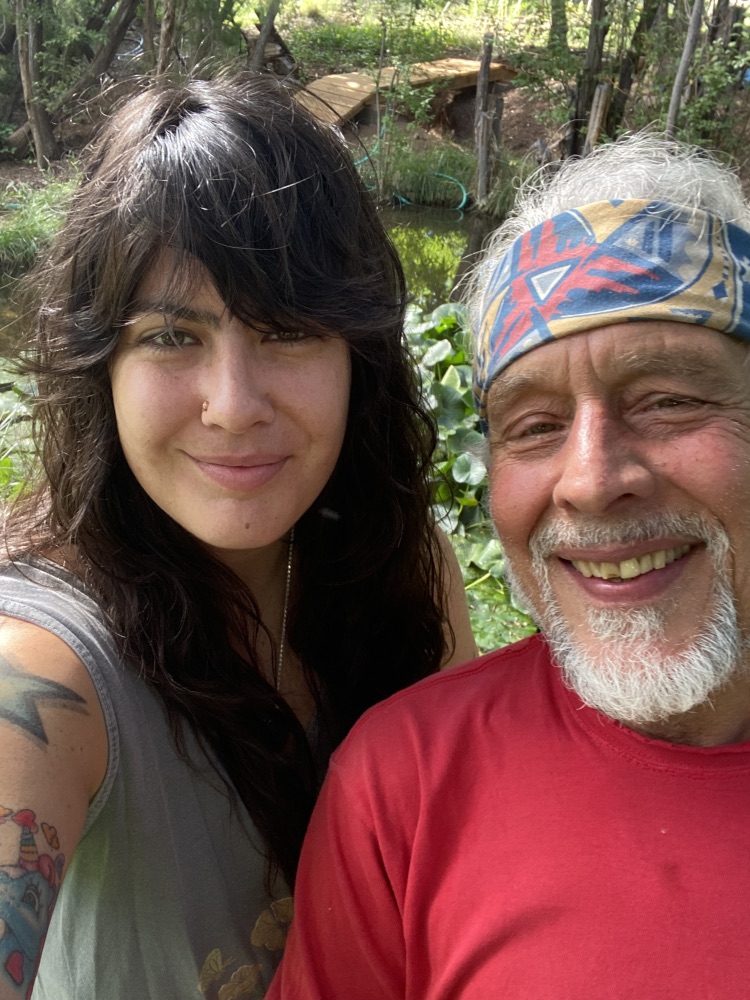
I flew from Denver, Colorado to discuss one last harvest and conduct SHI’s wild plants case study. Upon arriving in Silver City, I immediately noticed its uniqueness compared to the rest of New Mexico. This small city was greener, boasting a diverse selection of high desert trees and shrubs situated at an elevation of 6,200 feet. Finding Richard’s house was a challenge as GPS failed to locate it; I had to rely on spotting a red truck parked in front of his very tall chain-link fence adorned with old, faded prayer flags. He greeted me with smiles and hugs, clearly excited to have company and show me around his adobe self-built house and botanical sanctuary. As an herbalist myself, I was delighted to spot hyssop (Hyssopus officinalis), catnip (Nepeta cataria), peppermint (Mentha x piperita), and others on our way to the front door. I was equally eager to meet an expert elder wildcrafter because very few remain in the Southwest region of the United States.
We later sat by his expansive pond, encircled by mature, cultivated yerba mansa plants and towering lily pads, with a variety of trees providing shade, as we ventured into various aspects of herbalism. At one point, I noticed a large, slightly iridescent orange dragonfly perched under a yerba mansa leaf, alongside an exceptionally unattractive dark bug. Richard explained the dragonfly’s metamorphic changes, which propelled us into another profound discussion. As I listened, I couldn’t help but wonder how I had arrived at this magical, transformative moment, feeling honored to become his student. Was it the call of the mansa that led me here? Yes indeed, it was through ancestral plant spirit communication, I began to transform into a wild steward myself. I eagerly anticipated my first official root harvest. Yet, it was tinged with sadness, as it would mark Richard’s final large-scale mansa harvest before passing on his knowledge and sacred lineage of stewardship to me.
Into The Wild
I led a small team under the sage advice of Richard into the wild as the early days of September unfolded, their cool embrace settling over the New Mexico bosque. The air, filled with lingering warmth from summer sun rays, infused our wildcrafting excursion with unexpected warmth. This seasonal transformation not only heralds a time of tangible change, but also ushers in a period of renewal and profound enlightenment beneath the expansive canopy of the ancient cottonwood bosque. Armed with shovels, water, backpacks, harvest bags, and hearts full of noble intentions, we ventured one mile into the bosque. We followed a sandy trail framed by willow trees and towering wild sunflowers. At the trail’s end, we found our cherished botanical ally, yerba mansa. Its intoxicating, spicy-carrot-like scent enveloped me, transporting me to a sacred communion with mansa—as if greeting an old friend who jests, “What took you so long?”
For three decades, Richard has stood as the steadfast guardian of this vast wild mansa stand. Throughout the years, he has cultivated a regenerative practice of harvesting, taking only what the earth offers freely and always returning or propagating a percentage of the roots to the nurturing embrace of the soil. When asked how he decides the amount to harvest, he explained, “If it gives to me liberally, I take liberally. The mansa plants are resilient and can thrive abundantly year after year. Sometimes, conditions like drought or excessive rain make harvesting impossible, and you have to be prepared to walk away if the environmental conditions aren’t right, which I have done.”
His approach has taught me to be mindful of the land’s health where mansa flourishes and to understand the synergistic and sacred connection required to work with wild plants. It emphasizes the importance of respecting biodiversity and heeding the soil’s cues. Does my shovel slide freely into the sandy ground, or is it hindered by impenetrable thick clay around the roots? Richard repeatedly stressed that sandy soil conditions are crucial for working with mansa roots, allowing for easy replanting of saplings and propagation of new starts. Beforehand, scouting a stand requires following rhythms of weather patterns, and understanding the flow of the nearby river will guide you toward the right environmental conditions, ultimately ensuring a sustainable harvest.
The foliage of mansa, tinged with hues of orange and red and displaying the last of its blooms, starkly contrasted the vibrant green leaves of the overhead cottonwoods, which provided cool shelter from the intense desert sun. As Richard began our lesson in the delicate art of uprooting yet conscientiously replanting 40% of what we excavated, large red-winged blackbirds soared above as he guided us to tread lightly, saying, “Make it look like you were never here.” A gentle breeze caressed my face, carrying the rhythmic rustle of cottonwood leaves and enriching the air with the wisdom of Richard’s mentorship. At one point, I held an unearthed yerba mansa root with remaining aerials against the clear blue sky and realized my dream had come to fruition, though my feelings had evolved. I was filled with optimism, wisdom, and courage, the courage to carry Richard’s knowledge torch forward into our uncertain wildcrafting future.
As we left the bosque on our final day, I carried a deeper understanding of stewardship and what it means to truly care for our earth and its offerings. However, I understood that our road ahead would undoubtedly have obstacles.
Modern Challenges
In the modern tapestry of ecological and cultural shifts, yerba mansa stands as a fortress of ancient wisdom amidst a landscape increasingly shaped by climatic disturbances and diverging water resources. This respected plant faces some of the challenges of our time, where the lineage of medicinal herbs is overshadowed by the drive for profit. For sectors like the supplement industry, which I source herbs for, and which continue to grow annually, these dynamics present a significant threat to the fragile equilibrium between commercial pressures and the conservation of plant lineages in their natural environment.

Traditionally, foraging wild herbs like yerba mansa is a practice woven into the essence of human connection with the land, particularly revered among the First Nations of North America. These communities have upheld legacies of ethical harvesting with profound knowledge passed through the echoes of generations or safeguarded by designated knowledge keepers. Yet, the magnetic pull of urban life offers alternative career paths that draw younger generations away from the ancient arts of medicinal plant collection. This migration toward urban communities and conventional employment is subtly eroding the threads of traditional wisdom, even as the demand for herbal medicines escalates. It is not that elders are withholding their wisdom, but a matter of the current scale of knowledge transmission being unable to satisfy the expansive needs of the natural product industry.
Cultivating Lizard Tails
These contemporary challenges require a layered strategy. We can take intentional actions by applying the enduring principles demonstrated by Richard McDonald, having a career in herbalism dedicated to balance, reciprocity, and profound respect for the wild. When sitting with Richard and his cultivated yerba mansa plants, he poetically showed me the way forward. He explained how yerba mansa reveals its regenerative secrets through long, slender red stolons—suitably named “Lizard Tails.” These vibrant extensions swing and search, finding new ground where they can root themselves and sprout new life. When living in close companionship with plants, we uncover straightforward solutions and paths forward. Once these tails securely anchor themselves in the soil, Richard performs a ceremonial cut, similar to cutting an umbilical cord, allowing each newborn plant to flourish independently, ultimately creating strong populations. Within a mere 6-9 months under favorable conditions, a thriving population blossoms during the warmer months, marking a new chapter of life in cultivation—a sustainable future born from the wisdom of the past. When Richard ended my cultivation lesson, he exclaimed, “Cultivate! Cultivate! Cultivate!”
Create Cultivation Initiatives
By cultivating at-risk wild plants, we can secure a controlled and sustainable supply, thus relieving pressure from wild populations and strengthening conservation efforts. To date, I have successfully initiated partnerships with Colorado farmers to cultivate yerba mansa and other plants on a larger scale in collaboration with WishGarden’s founder and president, Catherine Hunziker.
After many years, Richard and Catherine reunited, reminiscent of their botany field trip days with Southwest School of Botanical Medicine’s, Michael Moore. Now we have reintroduced young mansa plants for cultivation on farms, such as Friends Farm in Lafayette, Colorado. This effort aims to preserve the future of yerba mansa and honor its legacy.
Create Educational Programs and Botanical Sanctuaries
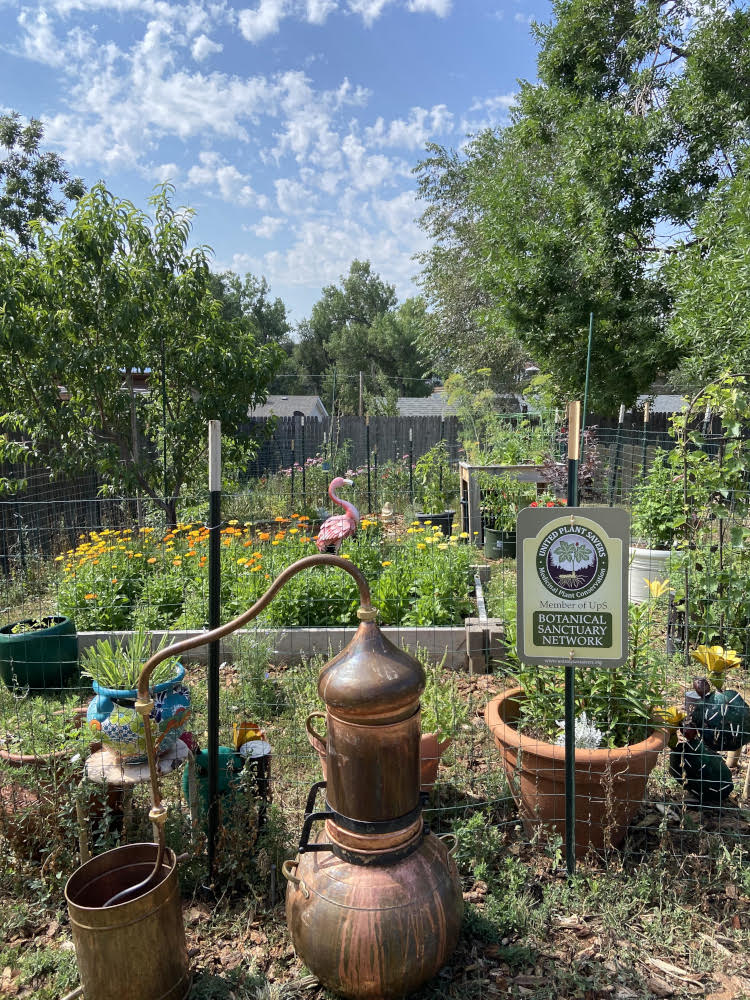
By creating educational platforms through classes and botanical sanctuaries, we can carry on essential traditional knowledge and skills, drawing in both local and urban participants to partake in the stewardship of wild medicinal plants. My registered United Plant Savers Botanical Sanctuary, Blue Yarrow Herbs, offers more than just a refuge for plants; it provides a tranquil haven within our bustling city for individuals to nurture their connections with plants like mansa. I consider it crucial to cultivate and establish the very plants that beckoned me to herbalism, as a way to honor their sacred callings.
As stewards of plant conservation and biodiversity, we are called to raise the storyteller’s torch, advocating for ethical collection and respecting traditionally used herbs. Let us journey the wild paths, capture the stories passed down by elders, and weave these enduring legacies with the dreams of future herbal guardians. Yerba mansa has become one of my spirit guides, imparting messages of ancestral wisdom and resilience. Together, with a deep commitment to its reliance on synergistic biodiversity, we dedicate ourselves to the thoughtful stewardship of this plant. In doing so, we ensure that yerba mansa, along with the ancient knowledge it carries, continues to flourish and enrich our collective future.
WORKS CITED
– Hicks, Sam. “Desert Plants and People – Part 1.” The Southwest School of Botanical Medicine. Accessed 10/28/2024. http://www.swsbm.com.
– Moerman, Daniel E. Native American Ethnobotany. Timber Press, 1998, p. 73.
– Saville, Dara. “Anemopsis californica (yerba mansa) Monograph.” Journal of the American Herbalists Guild, vol. 18, 2020, pp. 33-41.
– USDA, NRCS. Anemopsis californica. Accessed 12/21/2024. https://plants.usda.gov/DocumentLibrary/plantguide/pdf/pg_anca10.pdf.
Lauren Ann Nichols-Sheffler graduated from The Colorado School of Clinical Herbalism, where she earned her certificate in medical herbalism. She owns Blue Yarrow Herbs, also known as Herbal Vice, a company that practices bioregional herbalism by cultivating plants and sourcing locally. Passionate about education and advocacy, Lauren is dedicated to promoting plant sustainability. She also holds the Senior Sourcing & Purchasing Manager position at WishGarden Herbs.