By Marc Williams
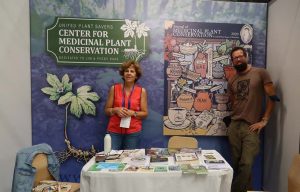
The International Union for the Conservation of Nature (IUCN) met in September of 2021 in Marseille, France for the typically every four years conference that helps set the agenda for global monitoring and preservation of species on land and sea as well as the ecosystems that support these biotas.
The trip started for me with a flight from Atlanta, Georgia to Paris, France. During my limited time in the French capital my agenda was to visit the legendary centuries old Jardin des Plantes botanical gardens and attached main Natural History Museum founded in the 1600s. This garden is broken up into a bunch of sections including an ethnobotanical garden with food, medicine, and craft plants and an extensive taxonomic garden with many other medicinal and unusual plants. Other sections include an alpine area, arboretum, conservatory, natural gardening demonstration, and various ornamental plantings. It is always such a great honor, pleasure, and privilege to walk in the footsteps of folks who have treasured nature for centuries!
The next day i headed by high speed train to Brussels, Belgium, which is home to the world class Meise Botanical Garden, located on a centuries old fusion of royal estates. The garden, which is in the Flemish, Dutch speaking part of the country hosts a fascinating array of plant collections across hundreds of acres. A specific garden is dedicated to medicinal plants and other collections focused on various aspects of plant diversity. Some cool medicinal plant examples included crampbark (Viburnum opulus), nutgall tree (Rhus chinensis), and rowan (Sorbus spp.).
While there a primary focus beyond botanizing was to meet with the director of research Xavier Scheldeman, who focused his PhD investigation on the rare papaya relatives from the Vasconcellea genus located in the Andes of South America. After our time together with a couple other colleagues, i toured the grounds alone for hours and then together with Dr. Scheldeman inside the conservatory complex before he dropped me off at the tram to catch a ride back to Brussels. Next it was off by high-speed train to the Mediterranean city of Marseille.
Marseille
Marseille is a city with an over 2,600-year history going back to its founding by Greek traders. One of the main thoroughfares called the Canebiere was named from the Provençal word “canebe,” meaning hemp. The botanical garden is named the Jardin Botanique Edouard-Marie Heckel. Due to Covid-19 protocols, booking ahead online was necessary after initially spending considerable effort to visit there without an entry pass to my chagrin. The garden had an extensive medicinal plant section. Some interesting species included a plant from the nettle family (Pilea petiolaris), a fairly common temperate genus but not commonly used for medicine in my experience. A common ornamental shrub (Loropetalum chinense) appeared as well. The exotic invasive and wonderfully fragrant sweet breath of spring (Lonicera fragrantissima) was intriguingly featured, too. It has one of my favorite scientific names but is one of the more exotic invasive shrubs around Asheville, NC where most of my time is spent. This sparks my interest to research the potential medicinal benefits. Hundreds of hours of my life have been spent trying to compile uses for exotic invasives. Out of the approximately 300 species considered exotic invasives in the southeastern USA, my work has documented uses for about half, but this has not been one of them until now.
Despite such displays in their gardens, France is much more regulatory to the discouragement of herbal practitioners from what conference participants shared with me. A number of people mentioned how one must be careful in France around acting as an herbal practitioner. That said, Marseille is famous for soap manufacture and is located close to the lavender fields of Aix-en-Provence, and therefore a certain amount of innate herbal traditions continue though less so than in the past. The famous Savon de Marseille consists of olive oil, sea water, and the ash of glasswort (Salicornia spp.). This plant is also an edible that grows in salty to brackish wetland environments all over the world.
Another example of embedded traditional herbalism includes the world-famous anise-based liqueur called Pastis which has a rich history of production here. That said it was hard to find any great diversity of types. La Maison du Pastis was one establishment that had a wide array of options. Pastis Henri Bardouin is one famous variety, and their website as well as a store display allude to some of the 65 ingredients they use including anise, black pepper, cardamom, cinnamon, clove, grains of paradise, green cardamom, licorice, mace, nutmeg, tonka bean, and white pepper. Local plants like mugwort, rosemary, sage, and thyme from the famous Lure Mountain region are included as well.
Presentations
One theme for a group of presentations attended was Saving Plants Saving the World.
Steve Bachman from KEW gardens in London gave a fascinating talk about the technology regarding modern plant conservation strategies. One example is a toolkit for the Global Strategy for Plant Conservation (GSPC) from Botanical Gardens Conservation International (BGCI) www.plants2020.net. These endeavors also include the work of the Global Biodiversity Information Facility (GBIF), the Geospatial Conservation Assessment Tool (GeoCat), and World Flora Online headed by KEW. He also gave some examples of machine learning approaches to conservation assessments including, for instance, orchids.
Philippe Bardin gave an overview of the work of Planta Europa, which has a focused agenda for meeting the goals of the GSPC. Some of their publications are great models for what can be accomplished in other bioregions.

Maite Delmas from the Museum National d’Histoire Naturelle spoke about the GSPC in the context of the New post-2020 Biodiversity Framework and presented examples of work around the world. I found the publication entitled North American Botanic Garden Strategy for Plant Conservation of particular interest.
A presentation from the Royal Botanic Gardens of Jordan was also given by her Royal Highness Basmah Bint Talal. Among other things she talked about were the endangered and endemic black iris (Iris nigricans) and rock oregano (Origanum petraeum). She also referred to an annotated checklist for the plants of Jordan which is always a great foundation for conservation of any biological unit under consideration.
Dustin Wolkis, the seed bank and laboratory manager at the National Tropical Botanical Garden (NTBG), spoke inspiringly about innovation in plant conservation in Hawaii. He offered the staggering statistics that 90% of native Hawaiian plants grow nowhere else on earth, and 53% of endangered plants for the whole USA occur in Hawaii. This is somethings mirrored in the flora of many islands in particular (Whittaker & Fernández-Palacios, 2007). He spoke especially about improvements in ex situ conservation to try and maintain a diversity of genetics. A particular challenge to tropical flora is that the seeds often cannot stand freezing. He also detailed a plan for an online flora for all the known plants of Polynesia.
Paul Smith detailed the prodigious work of Botanic Gardens Conservation International in the space of forest restoration in particular. BGCI has a new publication called The Global Tree Assessment out as well in this regard. He rounded out his presentation with a discussion of trees regarding carbon sequestration.

Domitilla Raimondo from the South African Biodiversity Institute offered some tangible examples from work on the ground with plant conservation in this biodiversity hotspot area (Mittermeier et al., 2005; Zachos & Habel, 2011). She detailed the specific threat of exotic invasive plants to native fl ora and the challenges of poachers seeking succulent plants.
The most dynamic and inspiring presentation of all was given by high school student, Janique Marcil from Kauai, Hawaii. She demonstrated in a very multi-media way the future of environmental education. From video making to smart phone QR code sign integration, this young person is a walking example of what we need the future to be in order to bridge the realms of nature and technology.

During the conference there also was a meeting of North American IUCN members including Healy Hamilton and Shawn O’Brien from Natureserve. Tracy Farrell is the new president of the North American region of IUCN and is based in Washington D.C. All these folks gave short presentations about their work in the conservation space. Following was an open floor discussion about some of the potential priorities at the IUCN regarding North American representation. As is currently common, a robust discussion about proper representation for people of color was part of the focus.
One of my favorite parts of the conference from an interpersonal level was daily plant walks with Paul Eguia, who is a graduate of the KEW gardens horticulture program. He also works with sustainable sourcing of plant materials. It was interesting to see plants from all over the world as well as the native flora interspersed within the grounds and reflect on their potential ethnobiological applications. Some of the woody plants included hackberry (Celtis spp.), pomegranate (Punicum granatum) and tree of heaven (Ailanthus altissima). Herbaceous things put in planters included pigweed (Amaranthus spp.), Petunia spp., Rudbeckia spp., coleus (Solonstemon spp.), spider plant (Chlorophyllum comosum, and sweet potato (Ipomoea spp.).
Media wise UpS was featured in a short video produced by former Rosemary Gladstar student, Tasha Goldberg and the Earth Negotiations Bulletin.
One of the biggest interests of the hundreds of people i interacted with at the conference was the United Plant Savers system of Sacred Seeds Sanctuaries. This is a program that was inherited from the Missouri Botanical Garden and was formerly largely a project headed by renowned ethnobiologist Rainer Bussmann. Numerous articles about the sanctuaries are on the website and within issues of the UpS Journal for Plant Conservation. Hopefully through some of our contacts and possibly this article we will be able to grow this network of crucial sanctuaries around the world for the medicinal plants and their knowledge essential to the societies therein.
Below is a chart that represents the location of current sanctuaries and thereby clearly elucidates areas for further growth and engagement.
| Asia | Africa/Middle East | Central/North America | Europe | South America |
| China (1) | Ghana (1) | Costa Rica (1) | France (1) | Bolivia (1) |
| India (2) | Nigeria (1) | Canada (1) | UK (1) | Colombia (2) |
| Kyrgyzstan (1) | Uganda (1) | USA (9) | Peru (3) | |
| Laos (2) | Israel (1) | |||
| Sri Lanka (2) | Turkey (1) |
Resources/Partner Orgs
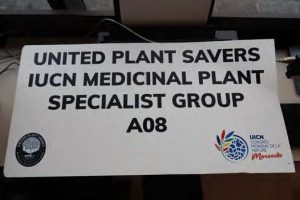
A number of organizations were represented at the conference including some that share directly overlapping goals with those of United Plant Savers. Some examples include the Regional Invasive Species Climate Change (RISC), Fair Wild, Traffic and the Union for Ethical Biotrade.
While at the IUCN conference, i also found out about a novel network of French speaking botanists called Tela-botanica.org. This would be such a cool initiative to have in every country.
The UNESCO Man and the Biosphere project had quite an impressive booth as well.
Journal Articles
The IUCN is the source of a mind-bending amount of literature beyond the famous Red List of Species. They have recently developed a Green List as well to document successes in species preservation too.
Some of my most frequent contacts at the conference were Nzingha Clarke, who among a number of endeavors works with Indigenous folks in Mexico and Bernadette Montanari, who is a Kent trained Ethnobiologist who works in Morocco, Portugal, and the UK. Both of these folks feel like prime candidates to write future articles for the UpS Journal as well as the people involved with the Saving Plants Saving the World symposium.
Food
Most of my food came from local natural foods stores, which tended to be clustered in more upscale areas. That said, a wide selection of affordable organic food was available, and a delicious array of breads, cheeses, pickles, and sauces constituted my main diet. Public transportation is also thankfully ubiquitous in Western Europe regarding access to any necessities. Main food stores like Carrefour and Franprix had organic options, but I tended to favor natural food stores like Biocoop and My Bio Delicious. The selection of probiotic drinks like kombucha and kefir as well as local beers was a particular delight. The Fernand et Lily establishment in Marseille had an astonishing array of locally produced beverages and snacks.
Paris
Another garden i visited upon my return was the Jardin des Serres d’auteuil. It is the site of the French Open along with a world class collection of greenhouses that unfortunately were closed due to Covid 19 protocols. Nonetheless, the outside portions of this garden host an arboretum with an impressive array of diverse trees and shrubs from around the world. It is also part of a much larger park complex similar to Central Park in New York. Another botanical garden in France that has a connection to medicinal plants that i did not get to visit is linked following www.plantarium.eco.
Conclusion
The IUCN conference is an opportunity for folks from all over the world to compare notes and further the agenda of species protection. It serves as an incredible networking and educational opportunity as well as a tangible forum for making decisions on the conservation agenda largely based on an ever more holistically scientific approach. The Marseille Manifesto was one outcome from the event. An increasing openness to input from often marginalized groups like Indigenous folks from around the world is certainly overdue. Yet rhetoric like “Nature Based Solutions” looking at the environment as a resource to be extracted albeit “sustainably” is often counter to such traditional wisdom. The main focus is clearly on animals, though there are so many more plants! The majority of known medicinal plants have not even been characterized for their level of threat through the IUCN rubric. Given the enthusiasm I experienced from attendees and the relative dearth of plant-focused booths out of the hundreds present, there is clearly room for growth in this arena. The best change, of course, starts at home as well. May we all find the balance between acting locally in our gardens, forests, and fields and keeping track as we are able on what global conversations like this yield.
References
- Mittermeier, R. A., Gil, P. R., Hoffman, M., Pilgrim, J., Brooks, T., Mittermeier, C. G., Lamoreux, J., Fonseca, G. A. B. da, Seligmann, P. A., & Ford, H. (2005). Hotspots Revisited: Earth’s Biologically Richest and Most Endangered Terrestrial Ecoregions (2nd ed.). Conservation International.
- Whittaker, R. J., & Fernández-Palacios, J. M. (2007). Island biogeography ecology, evolution, and conservation. Oxford University Press. http://site.ebrary.com/id/10272951
- Zachos, F. E., & Habel, J. C. (Eds.). (2011). Biodiversity Hotspots: Distribution and Protection of Conservation Priority Areas. Springer.
Ethnobiologist Marc Williams has taught hundreds of classes to thousands of people about plants, humans, other life forms, and their interface. His training includes a B.A. in Environmental Studies/Sustainable Agriculture from Warren Wilson College with a minor in Business and a M.A. in Appalachian Studies/Sustainable Development from Appalachian State University with a minor in Planning/Geography. He has over 20 years of experiences working at various restaurants and farms and travels throughout 30 countries in Central/North/South America and Europe as well as all 50 states in the USA. More information can be found at www.botanyeveryday.com and www.plantsandhealers.org.