By Marc Williams
Introduction
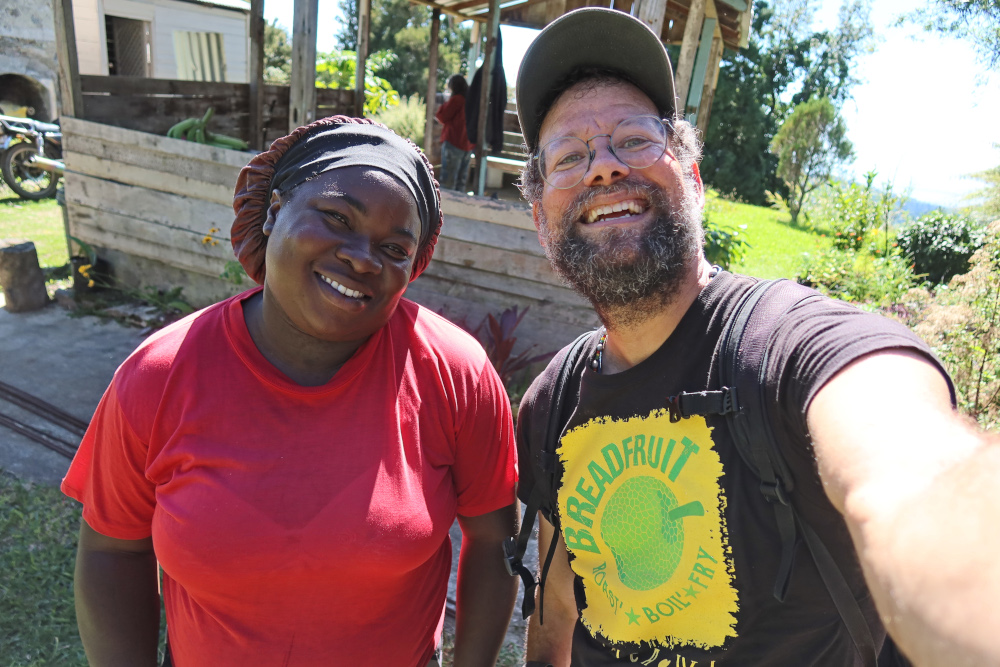
In January of 2024 a group of folks traveled to Jamaica in large part on behalf of United Plant Savers (UpS). The core group for this experience was UpS Executive Director Susan Leopold and longtime UpS contributors Kelsey Siekkinen and Marc Williams. The mission was very multi-faceted.
One main aim was to visit as many botanical gardens as possible and assess their current conditions. We made it to 15 gardens that had at least some degree of signage located in various parts of the island in total and a number of other Permaculture projects with great plant collections but no formal signage. The size and states of the gardens varied widely. Numerous copies of Common Medicinal Plants of Portland Jamaica were distributed to various plant enthusiasts we met along the way.
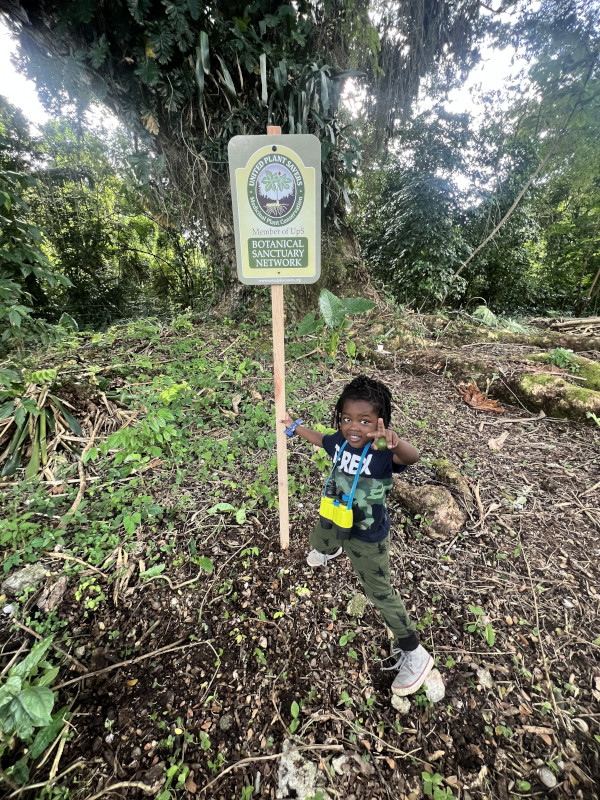
The main bulk of the focus though was to help with the Source Farm project and the Guango Wild Garden Conservancy (GWG Organic Research Station), which is the first United Plant Savers botanical sanctuary in the West Indies and second along with Punta Mona and Finka Luna Nueva from Costa Rica located in the Caribbean. Our support of the Source took on a number of different activities from helping facilitate a Permaculture Design Certification Course (PDC) to being part of the leadership team that orchestrated a Bioblitz on the new GWG sanctuary land. Bioblitzes are a group activity whereupon a piece of land is selected and all life forms possible are identified within a specified amount of time. For us that was most of the day on Saturday, January 24th.
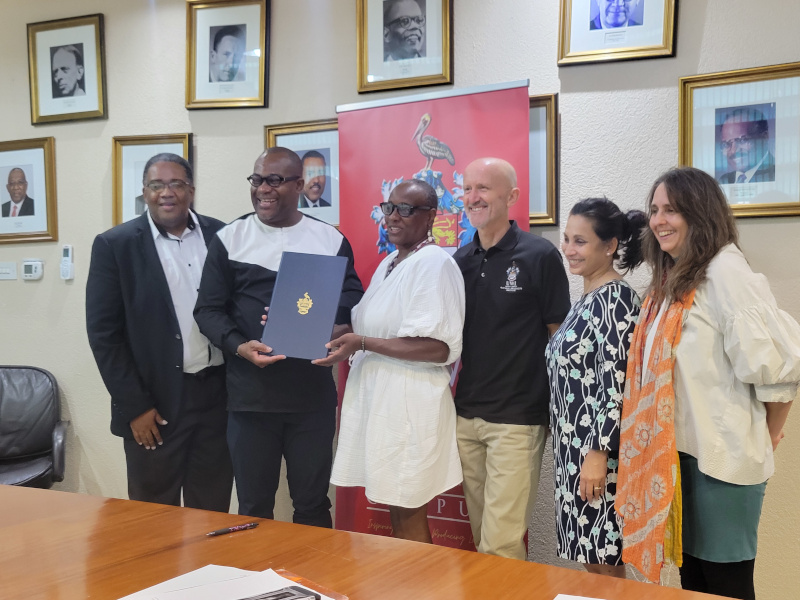
Another aspect of our work was to help substantiate further connections between the Source farm project and The University of the West Indies in Kingston. Dr. David Picking from the Caribbean Center for Research in Bioscience (CCRIB), formerly the Natural Products Institute (NPI), was a pivotal figure for the bulk of our work and journey for the rest of our time in this endeavor and on the island in general. One major event that coincided with our time was the signing of a memorandum of understanding (MOU) between The University of the West Indies (UWI) and the GWG to establish it as a research station. While on the campus we also wanted to visit the Mycology lab run by the University and in particular Dr. Rupika Delgoda.
One major event that coincided with our time was the signing of a memorandum of understanding (MOU) between The University of the West Indies (UWI) and the GWG to establish it as a research station. While on the campus we also wanted to visit the Mycology lab run by the University and in particular Dr. Rupika Delgoda. Other institutional outreach included a visit with the botanists at the Institute of Jamaica (IOJ) about potentials for collaboration especially in regards to medicinal plant biogeography and conservation as well as working on articles for the legendary Jamaica Journal and development of a Jamaican Ethnobotanical database.
We worked with the media in a number of ways to get out the word about United Plant Savers and the need for plant conservation more widely. Susan was featured on local CVM Television morning news show. Marc was also a guest on a morning radio show, Farm Talk on Power 106 FM with host Althea McKenzie.
A particular focus throughout was the continuance of adding to an ethnobotanical plant list for Jamaica started eight years ago with a few hundred species and now totaling close to a thousand species and one third of the total flora.
In Search of Gardens
The ethnobotanical adventure began in earnest for Kelsey and myself with some labeled plants at the port of Falmouth and a trip down the Martha Brae River. The top of the Martha Brae experience did have a small botanical garden. Aloe vera Duppy Gun (Ruellia spp.), Jack-in-the-Bush (Chromolaena odorata), Leaf of Life (Bryophyllum pinnatum), Search mi Heart (Rhytidophyllum tomentosum), Shame a Macka (Mimosa pudica), and Spirit Weed (Eryngium foetidum) were a few plants featured. We also did a short plant walk with the proprietress of our lodging called the Fisherman’s Inn located on the Luminous Lagoon as well.
After that we moved along to Runaway Bay to stay with Susan. Botanical gardens are the densest in this northeastern part of the island. We proceeded to visit a progression of them over the next few days each with a unique story to tell.
The former Shaw Park up the hill from Ocho Rios has now been divided into a number of individual unique gardens. The part that has gone by the name Turtle River Falls and Gardens is currently in a totally dystopian and broken down state. We were fortunate to get a bit of a tour from a local who holds space in the parking lot for just such an occasion. Apparently, the combination of the Covid-19 pandemic and passing away of the proprietress led to the descent of the infrastructure into a state of disrepair and decay. Interestingly, the world class waterfalls so famous from this region remain. Susan even went under one and as the legend attests purportedly emerged ten years younger so we will have all the more time to experience the amazingness that is her!
Konoko Falls formerly Coyaba Gardens and Mahoe Falls were by far in the best condition of the Shaw Park sections with good signage and an intriguing little museum featuring artifacts of the indigenous Arawak and Taino cultures. It also has a bit of a zoo-like collection of various animals. The main waterfall is one of the most breathtaking of the hundreds I have been blessed to visit and behold with sweet swimming spots at the base. Some special plants witnessed included Chocolate (Theobroma cacao), Fevergrass (Cymbopogon citratus), Mahoe Tree (Alectryon macrococcus), and Traveler’s Palm (Ravenala madagascariensis). The heart of the former Shaw Park, which is separate apparently can be accessed from here as well, but it is mostly walled off and derelict looking in general.
The next garden on our list is on the other side of Ocho Rios closer to Runaway Bay and definitely more tucked away. It is called Cranbrook Flower Forest and was formerly an old estate. We got to see one of the endemic hummingbirds known locally as Doctor Birds (Trochilus polytmus) and water gushing straight out of the mountain. Some sweet swim spots are all along the river below though the current was rather strong. There was not much signage, but we had a nice, guided tour whereupon a prolific amount of interesting ethnobotanical information was shared by multiple guides. The Riverpear (Grias cauliflora) and Torch Ginger (Etlingera elatior) were some notable plants.
The following day we hiked to Dunn’s River Falls. Someone told us if you have not been to Dunn’s River Falls, you have not been to Jamaica, so we were all happy to accomplish this feat. The path to the falls features some nice signage on the woody especially, and we also had a good time conversing with a local caretaker. Some highlights included Beach Almond (Terminalia sp.) and Guinep (Melicoccus bijugatus). The incredible crafts are made from Bamboo, Lignum Vitae (Guaiacum officinale), Palms, and all sorts of other plant material. We were gifted some necklaces that featured Job’s Tears (Coix lacryma-jobi) prominently in particular. We were glad to get there right at the opening as it becomes overrun with folks very quickly and we had the whole falls practically to ourselves albeit shortly.
The roadside fruit stands are particularly prolific in this part of the island, and we found some nice quantities of June Plum (Spondias dulcis), Naseberry (Manilkara sp.), Papaya (Carica papaya), Soursop (Annona muricata) and had a particularly intriguing encounter in the purchase of some Water Apples (Syzigium spp.)
A highlight of the whole tour both botanically and flavor wise was the Taste of Jamaica experience. On our way we went through the legendary Fern Gully, which was planted long ago in various types of its namesake flora. Upon arrival it was clear that the Taste of Jamaica folks had some of the best botanical garden signage on the island and it included ethnobotany with not just names but also applications which is so rare in the hundreds of such situations my work has taken me to. Some plants featured included Devil’s Horsewhip (Achyranthes aspera), Insulin Plant (Chamaecostus cuspidatus), Madam Fate (Hippobroma longiflora), Monkey Fiddle (Pedilanthus tithamaloides), Jointer/Black Betty (Piper amalgo) and two of the Strongbacks (Desmodium incanum and Morinda royac). They have a diverse food forest orchard going as well. The food was tasty especially the Star Apple (Chrysophyllum cainito), Strawberry Banana, and other special fruit varieties as well as the meal and beverages served up after.
From Runaway Bay we headed towards the far western extent of the island near Negril. We got to see a sweet little folk garden with upcycled reused items and lots of blooms and birds at the café known as Just Natural. However, we decided to skip the Hummingbird Garden due to its expense and size as well as the time of day. We also went in pursuit of a swimming hole that Bob Marley used to frequent and witnessed some beautiful basketry as well as the legendary community known as Orange Hill.
The trip over to St Thomas parish is not very far distance wise being about 160 miles, but it took us about eight hours of driving and a very long day making some sweet stops along the way including the Peter Tosh Museum and a roadside stand for some more fresh fruit. We passed the Jamaica Zoo and Waterfalls in Lacovia, St. Elizabeth Parish but didn’t have time to stop. In Kingston we visited the shopping mall known as the Sovereign Center for groceries and any potential ethnobotanical literature that could be found at the Sangster’s bookstore. No such luck on the latter though.
We arrived at the Source Farm right in the midst of their most recent Permaculture Certification Course that has been happening for well over a decade. Some field trips we participated in included traveling to visit Durga’s Den Farm and then the Stush in the Bush farm-to-table experience, both places paying tribute to the influence of the Source Farm on their successful development. I also facilitated a fermentation class on kraut making.
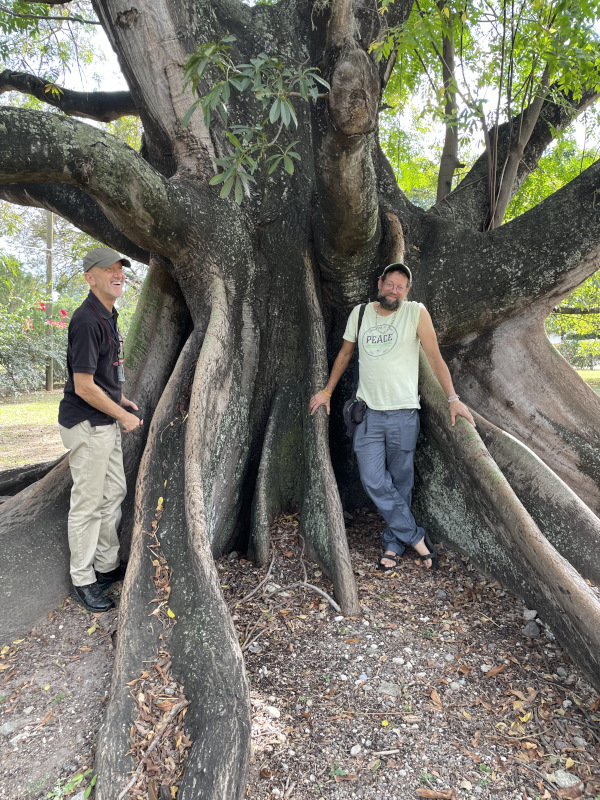
For sure one of the more profound visits of our time on the island included a walk through Bath Botanical Garden, where we had an intense interaction with some of the local “guides” and a real sweet interaction with some school kids. We also spent some time at Bath Mineral Baths including a delicious meal with old time classic foods like bammy made from Cassava (Manihot esculenta). The trip back down “Industry Road” almost defies definition in regard to adventure as does to some degree much of the driving conditions around the island.
It was sweet to witness the graduation of both the Permaculture class that we had participated in and helped facilitate as well as a sister program in Organic Farming. Susan gave some remarks for the graduation. The food at the Source is truly out of this world—good in general, but especially nice that day.
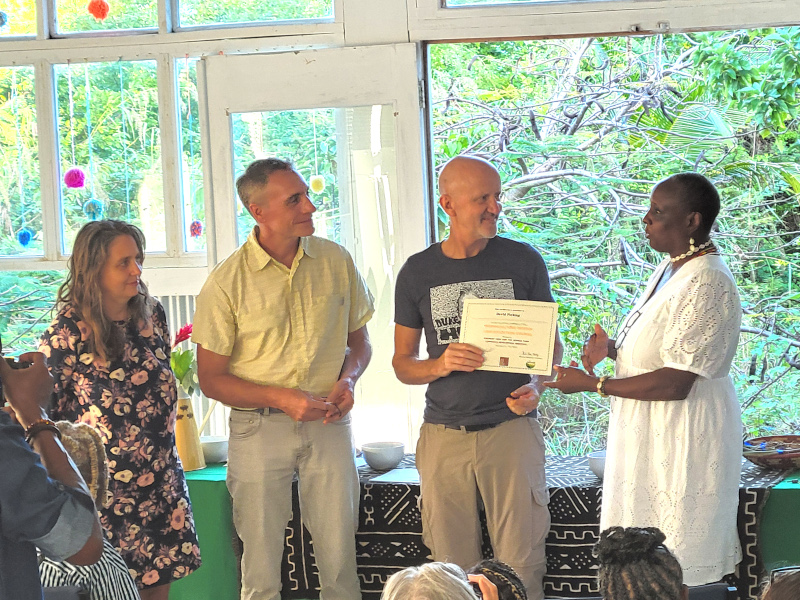
Our next agenda item was to make a trip to Kingston. We had an action packed visit to the University of West Indies. The signing of the MOU between the UWI and GWG was a top priority. Our time also included a tour of the Mycology lab. Owen Zecca is a mycologist who has spent years working at the Source farm in his own lab and was our chief focused fungi finder for the GWG Bioblitz. He was particularly interested to interact with Professor Delgoda as the UWI is somewhat short staffed in this department. It was interesting to see other work from the affiliated CCRIB on plants for ailments like cancer, dengue, and malaria as well.
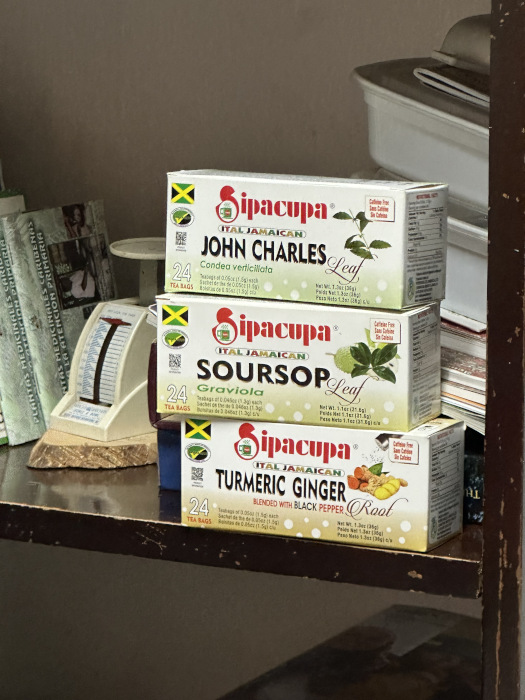
After that we had a short visit to the legendary Hope Gardens with caretaker and educator Christopher Creary and garden manager Mrs. Myrie. We finished our time for the day with a tour of Perishables Jamaica Ltd tea factory, with their managing director, Mr. Norman Wright. They are manufacturers of the indigenous Jamaican tea brands, Tops & Sipacupa. They have a sweet little botanical garden featuring many of the plants in their teas and a number of other traditional medicinals as well. Some plants included Cullen Mint (Lippia alba), John Charles (Conea verticillata), and Rice Bitters (Andrographis paniculata).
We stayed up in St. Andrew just below the famous Strawberry Hill with the parents of a friend of mine from Warren Wilson College at Dustry Farms and Cottages in the world renowned Blue Mountain Coffee region. The folks here turned us on to the existence of the Natural History Society of Jamaica.

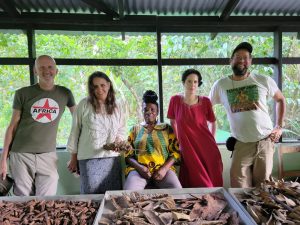
The next day we met with David Picking for a trip to the Coronation Market in search of root tonic sellers in particular. We collected ten types in total with an intriguing array of ingredients many purporting to include Ginseng (Panax spp.) one of the most near and dear plants to UpS. Names of different aisles were all after popular plants like Breadfruit Lane, Callaloo Mews, Gungo Walk and Otaheite Apple/Habanero ways. Most of it is outdoors in a bewildering maze of flapping tarps and small stalls.
Melinda Brown’s Rokatown Apothecary that was under construction and also functions as an art studio was an interesting urban oasis where we had a great homemade stew.
The day rounded out with an enlightening visit to the Kingston Night Market. Various special tonics and all sorts of intriguing foods were on offer. It also featured one of the best bookstores for ethnobotany that could be located on the whole island—a mobile pop-up called I-Nation Books and Necessities. Books are very expensive on the island though.
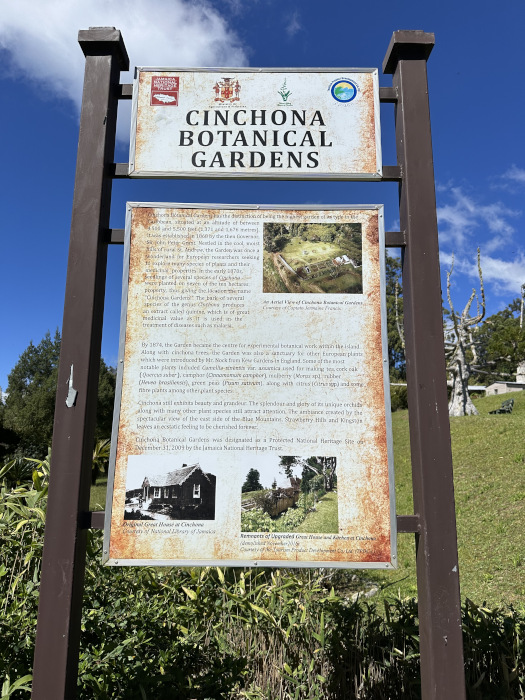
The road to Cinchona Botanical Gardens is not for the faint of heart or someone without a four wheel drive. We were fortunate to go with some great naturalists including Andreas Oberli, Liz Andrew, and brothers Kennedy and David Cruickshank. Andreas worked to help restore the garden decades ago so was a choice companion in particular. This high elevation area had an intriguing native flora that it would be nice to explore more. An article explores the history of this legendary space (Edwards, 2014).
Before leaving Kingston, Susan was featured on CVM Morning TV show with Source farm director Nicola. After that we headed out for a quick visit to Castleton Botanical Garden which completed the tour of all the four classic colonial gardens. This one like the others could really benefit from more signage in particular. Interesting to compare the current state of the gardens with a classic little book that describes them from decades ago (Eyre, 1966).
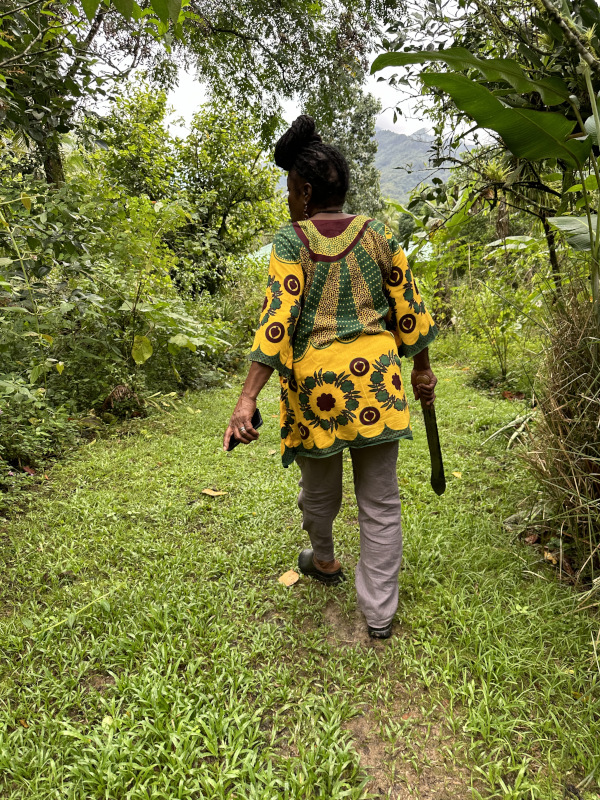
We spent the afternoon with multi-generational healer Ivelyn Harris who is a true force of nature and a descendant of the only female Jamaican national hero Nanny of the Maroons (Gottlieb, 2000). Ivelyn’s people originally come from Ghana where she has also visited and participated in research in the past (Ragosta et al., 2015). It was a pleasure to donate to her library a book on the Woody Plants of Ghana that was an extra copy from the Jim Duke book collection maintained by UpS. Some of the plants she talked with us about include Balsam (Ocimum gratissimum), Mary Goules (Sphagneticola trilobata), and Red Water Grass (Zebrina pendula). She also described the practice of gathering Philodendron roots to make woven wickerwork. Gratefully we were able to get some signed copies of the newest edition of her book while there (Harris, 2021). Ivelyn is currently working on a cookbook which UpS may assist in publishing and mentioned the possibility of working on a book of the rare plants specifically eventually. One threat she mentioned to many plants is the use of herbicides indiscriminately.
That evening we stayed in the legendary Frenchman’s Cove formerly vacation home to many famous folks but now rather understated and a bit in disrepair as the march to ever newer bigger resorts moves on. Nonetheless, it has quite a few striking woody plant specimens and a good bit of signage to go along with them. The Alexandrian Laurel (Calophyllum inophyllum) on the beach there was a new one for me.
Before leaving the area of Port Antonio we visited with Dr. Ben of Halleluyah Lifestyle in Port Antonio. This included a trip up to his nascent community land that was rich in members from the Melastomataceae in particular as well as tree ferns. We started to catalog some of the plants with I-Naturalist but it was rather rainy so that will remain to be some work for another day. Upon our return we visited his office and i got some interesting herbal formulations that he creates. On my last trip Dr. Ben and i had some good time with Ivelyn in her garden, which was very fertile ground for conversation on comparing plant knowledge. Upon leaving Port Antonio for the Source we visited the very intriguing lodging establishment known as Great Huts.
We arrived back at the Source just in time for the GWG Bioblitz which was very successful with approximately 40 participants. It was nicely multi-generational and diverse in a number of other ways as well. We made a project for it in I-Naturalist that included 343 observations of 125 species by 22 people. We had an initial Link to a preliminary GWG plant list from June 2022 and were able to add numerous species to that plus many other organisms from other kingdoms of life as well. In total our Research Grade proportion of noted lifeforms included 70 observations of 40 species by 17 observers verified by 28 identifiers to date. Many experts pitched in for this endeavor including the aforementioned Owen for the fungi as well as Demany Calder and Treya Picking for animals and Julia specifically for birds. Kelsey pitched in with the plants as did a number of people from the Forestry department in particular Mr. D’Owen Grant as well as our associates from the Cinchona trip Andreas, David, Kennedy, and Liz. We had a table full of books and other literature and realized that would have been an awesome opportunity to have books for sale as well. Other improvements for future iterations could include a set up to aggregate and download photos. Having living plant material labeled for some common or notable plants would be great as well. Some challenges we faced were getting people up to speed with the function of I-Naturalist and taking enough high-quality clear pictures for each observation in particular. Internet access was spotty as well.
After the Bioblitz, we worked towards wrapping up things at the Source. Would be nice for such assessments to be standard practice everywhere as it is always important to get a baseline of where one is biodiversity wise upon a property that you are charged to steward. Ideally one will detail what is rare, special, and in need of protection as well as what is potentially invasive and problematic. After this baseline establishment then a plan of what new life forms, especially from the local environs that would be happy in the locale is a logical next step. Though Bioblitzes are popular in the USA and some other parts of the world, this is a nascent movement in the Caribbean so far. In general, they have been happening since at least 2012 in Trinidad and Tobogo in particular with Jamaica more recently joining in the year 2022. (Deacon et al., 2023; Rutherford et al., 2012, 2013). A more recent one happened at Holywell park in Jamaica in March of 2024 as well.
Kelsey was able to establish Digital Library on the free service Library Thing. Contributions from me to this library began in 2016. On this trip 15 new books were added, and this is now one of the best ethnobotanical collections anywhere though some remain to be cataloged online. Some new edition highlights include Endemic Trees of Jamaica, Jamaica and its Butterflies, and Manual of the Grasses of the West Indies. However, it bears mentioning that maintaining books in the tropics is a hard game to play.
We took one last hike to the lower part of the property along the creek with Owen and made quite a few new observations for the Source I-Naturalist project especially among the fungi and the ferns. This brought our total up to 118 observations of 99 species by the three of us with further confirmations by 35 identifiers. These projects effectively act as virtual field guides and also can host ethnobotanical knowledge within the comments of each observation as well.
We finished up our time on the island by first heading back to Kingston and staying the night at David Picking’s for a strategy session about how to move our collective work forward. A journal article about the GWG Bioblitz is our initial focus with other potential publications as previously discussed and elucidated further below to come thereafter.
Further Work
There is much more work to do in the space of Jamaican ethnobotany potentially and my hope is to return in early December to further move the ball along more directly. One big goal will be to explore the establishment of other UpS botanical sanctuaries especially in various habitats across the island. The land of Dr. Ben and Ivelyn Harris both outside of Port Antonio would be prime potential places as well as the already established network of botanical gardens throughout the island.
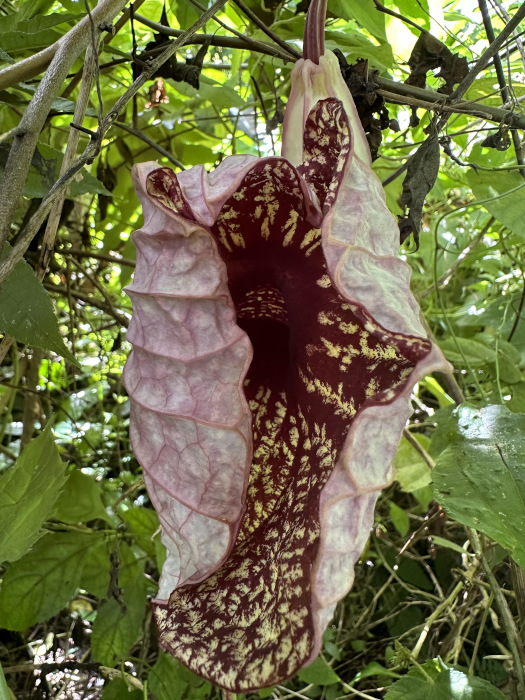
Potential future articles include ones on the role of various teas in Jamaican society and the Ethnobotany of Jamaicense and Jamaicensis species for the Jamaican Journal. An article on Plants for the Apocalypse i.e. after a major disaster like a hurricane is probably more germane than anything to the essential thrival of the people on the island in the long term in particular. Other potential articles include ones addressing the possibility of common name confusion whereupon different plants share the same vernacular name i.e. Bitterwoods, Pepper Elder, Spiritweeds, Strongbacks, and also the term Duppy used across a wide array of island taxa. Addressing the sustainability of making use of weedy plants and not rare ones as well as the threat of the use of herbicides to biodiversity in general are two topics that could certainly use some further exploration. Poisonous plants in traditional medicinal use could help to avoid potentially damaging practices across the island with often common plants including Cerassee (Momordica charantia), Red Sage (Lantana camara), and members from the Aristolochiaceae particularly. An article specifically addressing the botanical gardens and elucidating the potentials for improvement could also possibly lead to an updated overall guide to such places across the island.
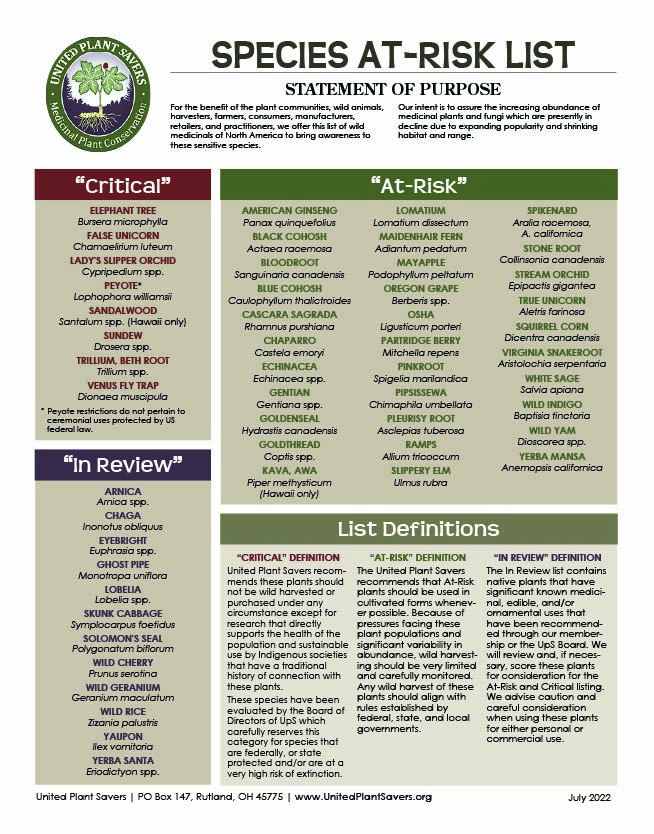
United Plant Savers would like to also assist in the realm of medicinal plant characterization by generating a top ten plants at risk list now and then have a follow up of a more extensive list in the Journal of Medicinal Plant Conservation for 2025. We anticipate collaborating with Tracy Commock, Keron Campbell and Janet Morris at the Institute of Jamaica in this pursuit. Referencing the work of folks at the University of the West Indies (UWI) and especially Dr. Ina Vandebroek in regards to Mountain Cinnamon (Cinnamodendron corticosum), and Dr. Sylvia Mitchell in regards to Chainey Root (Smilax balsisiana) and both regarding the use of root tonic beverages across the island. From our time on the island for this trip and previous visits and literature review, Mountain Cinnamon (Canella winterana), Lignum vitae (Guaicum officinale), Dendropanax spp., Bitterwood (Picrasma excelsa), Pimento (Pimenta spp.), Puron (Prunus occidentalis), Dysentery Bark (Simarouba spp.) and Yellowwoods (Xanthoxylum spp.), seem like some candidates so far.
Dr. Vandebroek and Dr. Picking are also leading up a new major in Ethnobotany at the UWI, so many potential collaborations exist moving forward with the professors and student scholars within that program. An International Union for the Conservation of Nature (IUCN) training for threatened plant characterization just happened there as well, and we have also promoted the UpS Species At Risk Assessment tool for potential rapid recognition of threatened plants. The work of both these programs can help fold into this process of medicinal plant status characterization.
A good start in the direction of guides will include within the year a Field Guide to the Major Plants of the Source Farm. This has already been implemented virtually in project form through I-Naturalist. Part of this process will also include the implementation of signage at the Source and similar endeavors at the sister project GWG. Future Bioblitzes on both properties at different times of year and also incorporating different times of day will help flesh out this endeavor.
Ultimately a Jamaican Ethnobotany Database similar to the Native American Ethnobotany Database of Dr. Dan Moerman or even Plants for a Future Database started by Ken Fern is a goal. A cell phone adapted or even an app like citizen science interface would be amazing especially for engaging young people. Kew Gardens also has an inspiring database for medicinal plant names that may help inform the process.
Conclusion
UpS executive director Susan Leopold was offered a prominent role throughout the trip that we made together for most of this past January. She was the keynote for the Permaculture graduation at the Source farm. She gave remarks at the signing of the MOU between GWG and the UWI and was even featured on a morning news show. This helps extend the reach of UpS internationally which has increasingly been a focus in recent years. The fact that Susan rented a car also let us access many places that would have been much harder otherwise.
A slogan we saw and heard throughout our time on the island was “Nuh dutty up Jamaica” as in don’t trash this lovely island. Unfortunately, we did bear witness to quite a bit of trash and the burning of garbage and toxic items like plastic in particular.
Nonetheless, throughout the island we found people dedicated to the preservation of the environment and education of the populace about the essential role nature plays in the lives of all. It was an honor and a pleasure to pitch in with a multitude of organizations working in the space of conservation during our few weeks stay on this legendary Caribbean island, and we are very much looking forward to further collaborations in the years to come.

References
- Adams, C. D. (1973). Flowering Plants of Jamaica. University of The West Indies.
- Deacon, A., Arneaud, L., Renoir, A., Baboolal, L., Bridglal, N., Mannette, K., Mannette, R., Mohammed, R., Warren-Gittens, & Wheeler, R. (2023). Buccoo Bioblitz Final Report 2023. Trinidad and Tobago Field Naturalists Club.
- Edwards, D. (1961). Report on an economic study of small farming in Jamaica. Institute of Social and Economic Research, University College of the West Indies.
- Eyre, A. (1966). The botanic gardens of Jamaica. Deutsch.
- Gottlieb, K. (2000). The Mother of Us All: A History of Queen Nanny, Leader of the Windward Jamaican Maroons. Africa World Pr.
- Harris, I. (2021). Healing Herbs of Jamaica (2nd ed.). Ian Randle Publishers.
- Higman, B. W. (2008). Jamaican food: History, biology, culture. University of the West Indies Press.
- Mitchell, S. A. (2011). The Jamaican root tonics: A botanical reference. Focus on Alternative and Complementary Therapies, 16(4), 271–280. https://doi.org/10.1111/j.2042-7166.2011.01124.x
- Mitchell, S. A., & Ahmad, M. H. (2006). A review of medicinal plant research at the University of the West Indies, Jamaica, 1948-2001. West Indian Medical Journal, 55(4), 243–269. https://doi.org/10.1590/S0043-31442006000400008
- Mitchell, S. A., Kitson-Walters, K., & Mitchell, A. (2020). Valuing Caribbean Biodiversity Knowledge. In Changing Ecosystems and Their Services (p. 154). IntechOpen. https://econpapers.repec.org/bookchap/itopchaps/171786.htm
- Payne-Jackson, A., & Alleyne, M. C. (2004). Jamaican folk medicine: A source of healing. University of the West Indies Press.
- Picking, D., Delgoda, R., Younger, N., Germosén-Robineau, L., Boulogne, I., & Mitchell, S. (2015). TRAMIL ethnomedicinal survey in Jamaica. Journal of Ethnopharmacology, 169, 314–327. https://doi.org/10.1016/j.jep.2015.04.027
- Ragosta, S., Harris, I., Gyakari, N., Otoo, E., & Asase, A. (2015). Participatory Ethnomedicinal Cancer Research with Fante-Akan Herbalists in Rural Ghana. Ethnobiology Letters, 6(1), 66–79.
- Roberts-Nkrumah, L. B., Bekele, I., Duncan, E. J., & Mohammed, M. (2016). Commercialising breadfruit for food and nutrition security. The Faculty of Food and Agriculture, The University of the West Indies.
- Rutherford, M., Alemu, J., Ali, A., Arjoonsingh, V., Bhukal, R., Deacon, A., Kanhai, L. D., Mangal, E., Nelson, H., Oatham, M., Phillip, D., Sewlal, J.-A., Sookdeo, K., & Starr, C. (2012). Tucker Valley BioBlitz 2012 Final Report (p. 36). University of the West Indies.
- Rutherford, M., Bhukal, R., Deacon, A., Farrell, A., Kanhai, L. D., Mohammed, R., Murphy, J., Parasram, S., Rostant, L., Sewlal, J.-A., Sookdeo, K., Starr, C., & Sang, J. W. (2013). Arima Valley BioBlitz 2013 Final Report (p. 40). University of the West Indies.
- Vandebroek, I., & Picking, D. (2020). Popular Medicinal Plants in Portland and Kingston, Jamaica. Springer.
- Vandebroek, I., Picking, D., Tretina, J., West, J., Grizzle, M., Sweil, D., Green, U., & Lindsay, D. (2021). Root Tonics and Resilience: Building Strength, Health, and Heritage in Jamaica. Frontiers in Sustainable Food Systems, 5. https://www.frontiersin.org/article/10.3389/fsufs.2021.640171
- Austin, S., & Thomas, M. (2009). Common Medicinal Plants of Portland Jamaica (2nd ed.). CIEER, Inc.
- Brown, F. M., & Heineman, B. (1972). Jamaica and its Butterflies. EW Classey Ltd.
- Campbell, K. C. St. E. (2010). Endemic Trees of Jamaica. Institute of Jamaica.
- Edwards, T. (2014). Towards an historiography of the Hill Gardens at Cinchona, Jamaica. 19, 69–88.
- Hitchcock, A. S. (1936). Manual of the Grasses of the West Indies. U.S. Government Printing.
- Irvine, F. (1961). Woody Plants of Ghana, with Special Reference to their Uses. Oxford University Press.