Utilizing sustainable forest herb farming to save a disappearing Iowa biome
By Wendy M. Welder
Abstract
The Midwest oak savanna is a rare ecosystem disappearing rapidly from North America. Once covering millions of acres, the long ribbon of oak trees running from Mississippi to Canada is disappearing due to deforestation, overgrazing and wildfire suppression. The Midwest oak savanna is a transition point between mountains and plains and named for the predominantly occurring tree, the oak. Scattered throughout eastern Iowa, pocket biomes are all that survive of what was once a massive ecosystem dominated by different oak species running from the southern United States to Ontario. That ecosystem loss brought by human expansion involves more than trees. Some of the most potent medicinal herbs native to this continent and also native to the Iowan midwestern oak savanna, including American ginseng (Panax quinquefolius), black cohosh (Actaea racemosa), goldenseal (Hydrastis canadensis), and bloodroot (Sanguinaria canadensis), are disappearing as well. Once abundantly growing under the shaded canopy of the oak savanna, these plants are endangered. This ecosystem encompasses a large piece of the North American medicine cabinet. Preserving the savanna through medicinal herb farming is a potential tool to save a small portion of the North American Pharmacopeia and the environments that best support it. Restoring and conserving the Midwest oak savanna by sustainably farming endangered forest herbs may be the answer to save the plants, the medicine, and a biome for generations to come.
Key terms: Midwest oak savanna (MWOS); agroforestry; wild-simulated (WS) forest herb cultivation; non-timber forest products (NTFPs); American ginseng; black cohosh; goldenseal; bloodroot
Introduction
The remnants of the ecosystem known as the Midwest oak savanna (MWOS) border the tall-grass prairie in south-central Iowa. Characterized by prairie grass with widely spaced trees, (Dey & Kabrick, n.d.) the North American oak savannas have historically supported forest or woodland herbs including goldenseal, black cohosh, bloodroot, and American ginseng. All of these plants are native to the Iowa portion of the MWOS and are disappearing. The reason for this is the loss of habitat and irresponsible, often illegal, harvesting practices. The declining forest herb occurrence is secondary to the oak savanna ecological disappearance that those herbs grow in best. Bur and white oaks as the over-story protector of Iowan medicinal forest herbs (“Quercus macrocarpa – Plant Finder,” 2018; [appendix one]) provide crucial over-story protection in the form of light, shade, and nutritional soil requirements. The MWOS is disappearing and now inhabit only 0.02 percent (Nuzzo, 1985) of the original size making it the most endangered ecosystem on the planet. Without ideal or preferred growing conditions, the medicines that thrive beneath the protective oak canopy are quickly disappearing, too. Add over-harvesting without any sustainable long-term conservation plan, and extinction for all of those plants is imminent. The ecological destruction of the MWOS is a round-robin spiral to forever gone for every plant and tree discussed. This makes the project specifically relevant to the Iowan MWOS and adds to what will become a longer sighted way to save both the over-story bur oak savanna and the plants that grow in their shade.
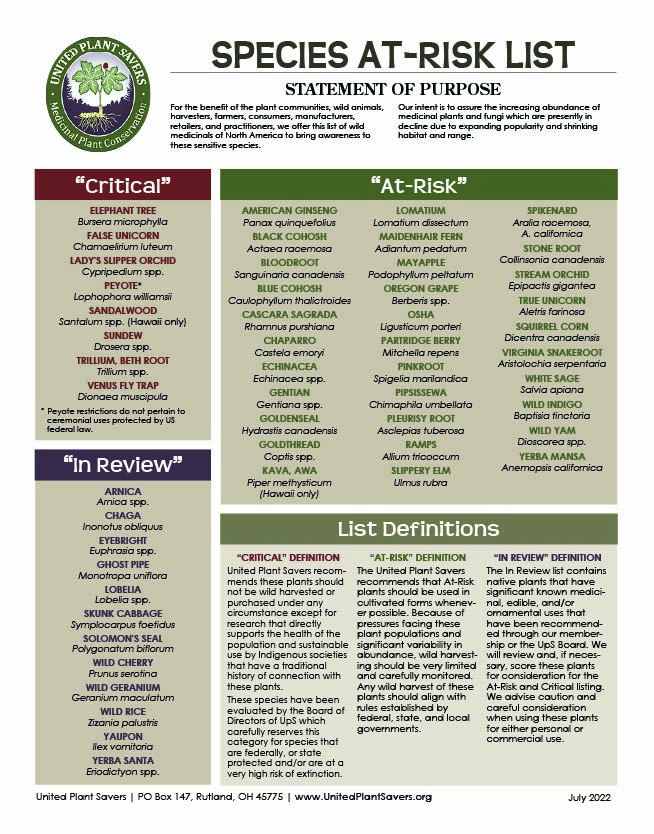
Forest herb farming is concisely summed up as intentional planting and propagation of plants that thrive within or at the edge of tree stands utilizing light to shade ratio requirement that has symbiotically evolved for thousands of years (Hanberry et al., 2017). Keeping this and other ideal growing requirements in mind, it can and has been postulated that some of North America’s most potent herbal medicines traditionally have been those of the forest. Understory forbs and foliage include a moist-earth, forest-class of medicinal herbs that are not credited enough for the efficacy and variety of multi-system use on a human health level. Strong medicine takes time. The four highlighted herbs are root crops and on average require five years of growth to be harvested as dictated by the United States Department of Agriculture (USDA) nationally and the Convention on International Trade in Endangered Species (CITES) (“Convention on International Trade in Endangered Species (CITES),” 2019) internationally. Forest herb farming is more technically known as wild-simulated forest herb cultivation and sustainable forest herb production (Workman, 2013). These concepts are essential to plant species survival due to how rapidly forest medicinal herbs are disappearing. The four highlighted plants are on the United Plant Savers (UpS) high-risk for extinction list (“The future of ginseng and other forest botanicals,” 2017; “United Plant Savers: Species At Risk List,” 2019) [appendix two]).
The magnitude and impact of the problem from a human perspective encompasses and revolves around the rising cost and failure of many pharmaceutical antibiotics generated by allopathic medical industries. The dual crisis of a world-wide multi-drug resistant organisms (MDROs) epidemic drives the need for new and creative cure solutions once again found among botanical sources. Unfortunately, sources for the next class of life-saving medicines are being found among a quickly disappearing source and encompass plants and their incumbent constituents. Herbal constituency research and phyto-pharmaceutical expansion into allopathic medical systems cannot occur with an extinct plant species.
Methods
There are vast amounts of information regarding both the MWOS and forest herb farming but not much on either within the context of Iowa (“Forest Farming – Forest Gardening Growing Alternative Crops Under a Forest Canopy | UGA Cooperative Extension,” 2019). Though not well known, the MWOS ran along the center of what is now Iowa as a transition between geographically and topographically occurring phenomenon left over from the Minnesota glacier (Erke, 2019). This study investigated the geographical and environmental likelihood explicitly for forest herbal occurrence within south-central Iowa as part of the MWOS. This study is an applied research project regarding the feasibility from both a financial and conservational perspective of MWOS restoration and medicinal herb conservation. The overall goal is the establishment of a medicinal forest herb farm that within five years is a fiscally self-supporting biome and plant reserve for all plants discussed for generations to come.
An extensive review of current local and national savanna restoration projects and sites as well as telephone conversations with local conservation custodians and conservators in the southern Iowa area took place and were greatly appreciated (“Bur Oak Land Trust – Bur Oak Land Trust,” 2019; [Appendix one]). Materials and information within proximity of the planned site selection were paramount and sought from leading Iowa subject matter experts in both MWOS restoration and forest herbs farming. Research and literature reviews focused specifically on plant and biome requirements and long-term MWOS understory and overstory biome restoration fiscally supported by the chosen forest herbs (Delong & Cooper, 1996; Adam, 2004). Hands-on site selection and planting of highlighted herbs in a historically verified portion of the Iowan MWOS with area maps and topographical studies of the chosen site geographically fall within the oldest Iowa map verification available (circa 1875) (“ArcGIS Web Application,” 2019; [appendix three]).
This applied research investigation focused primarily on the feasibility of forest herb farming and the natural growth conditions required for agroforestry in the south-central Iowan portion of the MWOS. There is a large amount of hands-on oak savanna restoration data in Iowa and the surrounding states (Nuzzo, 1985). The forest herb farming concept has also been around for several years with early beginnings in the Appalachian and Ozark regions of the United States (Chamberlain et al., n.d.). First research criteria were evaluated for quality of methodology, date of publication, and institutional source. Books, websites, organizational affiliations such as United Plant Savers and The Bur Oak Land and Trust were considered ideal. Other sources included; governmental organizations, universities, and reputable professional websites not commercially affiliated or financially biased. In-state Iowa sources naturally weighed in as heavily as those already mentioned. Attention to geographically relevant sources with the necessary long-term goal of savanna restoration through sustainable herbal farming was used to determine which sources to keep. Feasibility and resources were a primary concern regarding identified herbs for the chosen area and narrowed to ecologically appropriate growing conditions and how endangered the highlighted herbs are. Explicitly concerning American Ginseng, Iowa laws surrounding farming and sale must be followed to the letter to not only remain legally viable but ethically transparent.
Results
Within the scope of this exploration, herbs were chosen according to their natural occurrence within the south-central Iowa portion of the MWOS. There are nuances of understory plant occurrence within the ecosystem of the MWOS that allows for plant diversity and includes American ginseng, black cohosh, bloodroot, and goldenseal. Though there are fewer and smaller native stands of all the studied herbs, they are all found in Iowa where the conditions that support them survive in small pocket biomes that were once part of a much larger MWOS ecosystem (Cech, 2002). There is strong theoretical and practical evidence based on the over-story light to understory shade ratio in conjunction with environmentally present growth conditions that American ginseng, black cohosh, bloodroot, and goldenseal are natively occurring. This makes the proposed endeavor a realistic possibility that all will thrive in the south-central Iowa site chosen when wild-simulated savanna farming is utilized (“Geography of Oak Savannas,” 2018; Delong & Cooper, 1996; “BONAP Maps by States and Provinces County distribution map of Panax quinquefolius – American Ginseng,” 2014).
Understory and Overstory Midwest oak savanna restoration in South Central Iowa is well established as it is throughout the eastern half of the United States with multiple organizations actively advocating for savanna restoration. Iowa is one of nineteen states that have regulations and guidelines regarding ginseng hunting, growing, and selling (“Ecoregion’s of the United States – Ecoregion’s – RMRS – US Forest Service,” 2018; [Appendix four U.S. ecosystems]). There are several restoration societies in Iowa. Geographically speaking there are well developed and established resources surrounding forest herb farming specific to Iowa (Nuzzo, 1985).
The overarching means to conserve what has shrunk from an ecosystem of millions of acres to rare pocket biomes surrounded by fields lies in sustainable forest herb propagation. As a practical financial and private restoration project, wild-simulated growth of medicinal herbs is a concretely legitimate means to obtain MWOS long-term survival. To harvest, grow, or sell American ginseng requires a trip to Walmart and thirty-five dollars (“Iowa State Ginseng Laws,” 2018). It is the same process as purchasing a fishing license and good for five years for the production of ginseng (Chamberlain et al., n.d.) so not only geographically and environmentally feasible but economically supported. The number of professional resources in the local area as well as clear guidelines set by the Department of National Resources that thoughtfully flow from national to the international watch group CITES. CITES ensures that country-specific regulations are built into international trade laws regarding the use and sale of endangered species both plant and animal (“Convention on International Trade in Endangered Species (CITES),” 2019). This makes the likelihood of forest herb farming as a business success easily possible once medicinal herb stands are established. There is a strong political push to continue Iowa’s long farming history, and legislation was recently extended to specialty crops to include American Ginseng (“New Farm Bill Includes Provisions on Raw Ginseng Labeling and Eligibility of Herbal Crops Under Grant Program,” 2008). Plant choices, environmental conditions, and local political climates are not only encouraging for the success of herbal root propagation success in the Iowan MWOS and further supported by specific site selection conditions for this project.
The selected site for this sustainable MWOS forest farming project has soil and sunlight versus shade requirements for all of the understory plants discussed. Though each plant tolerates different light to shade requirements, the soil selection and environmental temperature requirements are close enough to ecologically grade plant placement from heavier overstory canopy sun exposure to lighter (Davis, 1997) by using the natural curvature of the landscape. Once environmental requirements are met, soil can be amended as needed, or plants can be grown in raised beds and still within the plant’s preferred environment. The site selection conditions in conjunction with organically based protective practices will allow for chemical. pesticidal, and fungicidal free forest herb propagation.
Though a slow growing, finicky plant, once established, ginseng rootlets and seeds can be transplanted after five years to increase bed size and to conserve this well loved but disappearing American forest herb (Cech & Cech, 2017, p. 82). Ginseng grows best in well-drained, rich, and loamy soil that is facing north to east in a mixed hardwood forest environment (Cech & Cech, 2017 pp. 73-77; Davis, 1997). Light to shade requirements are the most important factor in American ginseng propagation with a seventy percent shade to thirty percent sunlight ratio with overstory canopy (Cech & Cech, 2017 p.74). This process has included clearing overrun areas of invasive and noxious plants, including wild raspberry, multi-flora rose, and poison oak. Initial plantings of both stratified ginseng seed and propagated rhizomes were planted in October, 2018. American ginseng requires twenty inches of rainfall or more a year for healthy growth (Cech & Cech, 2017 p. 75). Site selection average annual precipitation is slightly over thirty-seven inches (Data, 2019) making slope and grade for needed ginseng propagation essential to avoid root rot (Cech & Cech, 2017).
Goldenseal has historically grown next to American ginseng in hardwood forests with a light to shade ratio of 60 to 80 percent (“Goldenseal (Hydrastis canadensis L.) – eXtension,” 2019). Often described as hydrophilic or water-loving, goldenseal does best in well-drained, high nutrient soil (Cech & Cech, 2017 p. 93). Propagated by either rhizome division or direct seeding, the plant prefers loamy soil high in calcium carbonate. Mulching is necessary to ensure that soil water content is maintained until the plants are well established. Once established goldenseal is relatively low maintenance and very resistant to disease and pests, though some protection against slugs and small rodents is advised. As with ginseng, shade-cloth forced cultivation increases the incidence of fungal infections (Upton, 2001).
Of the four forest herbs reviewed, black cohosh is the most flexible regarding light requirements tolerating a much broader range up-to full sunlight as long as moisture content is high. As with the other forest roots discussed, black cohosh prefers moist soil rich in organic material. Light to shade ratios are important for the first two years and dependent on whether the plant is grown from seed or is a transplanted rhizome. A 65 or more percent shade coverage is needed for seeds sown directly. If rhizomes are used for transplant, black cohosh can tolerate much less shade, while larger, heartier roots and plants can tolerate full sun (Cech & Cech, 2017, pp. 17-25). The most effective and least labor intensive propagation method is by rhizome division (“Black Cohosh (Actaea racemosa L.) | NC State Extension Publications,” 2019). Preferred rhizomes are those that have associated rootlets and at least one bud. Younger rhizomes are preferred since the older, woodier roots are prone to rot (Cech & Cech, 2017, p. 18).
The only member of the Sanguinaria genus (Cech & Cech, 2017, p 36), bloodroot prefers mixed hardwood forests, dappled sunlight, and a humus or clay soil. Mulching the rotting leaves of the trees bloodroot grows under increases herb stand survivability and overall plant propagation (Cech & Cech, 2017, p 31). Propagation by directly seeding should be done in well-drained soil to decrease the chances of seeds rotting but must be done before the seeds dry out after harvesting. To avoid Alternaria leaf blight and root rot, overcrowding of seeds or rhizomes when planting is discouraged. Ensuring site selection has good air circulation is also advised (“Bloodroot (Sanguinaria canadensis L.) | NC State Extension Publications,” 2019). Approximate time for seed collection is June in most areas once the seed pods are harvestable. Once seeds are harvested, immediate random and manual scattering of the seeds will ensure plant propagation and genetic biodiversity (Cech & Cech, 2017, p. 31). If rhizomes are being harvested, be sure to wear gloves and wash hands often since the sap is caustic. Bloodroot has traditional Native American Indian uses for warts and skin conditions as well as for making bright red dye (“Sanguinaria canadensis L.,” 2019).
There are several limitations to this applied research project. There will be little evidence of successful forest herb success for at least three years, so business success is in no way guaranteed. In that time, herbal markets and nutritional supplemental laws can change and most likely will. Though there are multiple strong indicators for MWOS forest herb farming success from those highlighted in this study (US Forest Service, 2018); [Appendix four – North American ecosystem]), there are no guarantees in farming especially when it comes to slow growth medicinal herb propagation. There has been a strong political swing in favor of herbal medicine use with recent medicinal marijuana laws changing the face of herbal medicine. The downside to this trend is that politics in the United States have a historical trend of changing every four to eight years from one opposing political ideology to the other. This applies to how the United States government honors ecological circumstances and can most eloquently be seen with oil pipelines being built from the far north border of the country to the southernmost portions of United States borders with little regard of the environmental impact those projects entail.
Discussion
Applicable at the time for the preservation for access to herbs for human health and healing, the overall repercussions of the Dietary Supplement Health and Education Act of 1994 (DSHEA) (“Office of Dietary Supplements – Dietary Supplement Health and Education Act of 1994” DSHEA, 1994) has not helped in the arena of environmental and plant conservation. First world societies use herbal products for much different psychological or physiological reasons with more emphasis on how one looks externally then feels internally. Third world nations, on the other hand, depend heavily on herbal medicine because it is often cheaply available and historically used by the local culture generationally. Though the second reason is more ethically justifiable than the first, both situations are pushing more plants to the brink of extinction. Whether justifiable or not, illegal and unethical harvesting practices are destroying entire plant species and losing the next potential answer to a new generation of human life-saving medicine derived from the same place our ancestors knew.
Part of the issue with the trade of herbs is the biological treatment of high dollar botanicals in economically depressed regions. This is a worldwide phenomenon and spontaneously happens everywhere that a naturally occurring product is freely available with a dollar amount attached. There are multiple ways to grow botanical material for medicinal use with repercussions and benefits attached to each (Hankins, 1997; Beyfuss, 1998; Stoltz, 2015 [appendix three – Forest Herb Farming]).
Wildcrafting – This method is probably the most destructive of any foraging practice in modern times and often done by herb hunters who see the plants as purely profit. Yanking perennial root plants up in their entirety kills the plant leaving nothing for later and prophetic in context to today. The concept of taking half, replanting some, and leaving the rest is not the norm. The other perspective to this method is that wild-crafted medicinal herbs are traditionally thought to be stronger in constituency when mature but made more so with the care of hands-on, careful husbandry and not easily dismissed (Hankins, 1997; Chamberlain et al., n.d., “Good Stewardship Harvesting of Ginseng,” 2019). With wise stewardship, wildcrafting is strong medicine because of the overall human imperative to survive. There is an ancient connection between a traditional herbalist and wildcrafting medicinal herbs. There is also the deep and sad knowing that not everyone that harvests herbs does so wisely or well-intended. With these admissions there is a growing trend for other ways to conserve nature’s medicine. This feeling is shared among cultures and why wildcrafted or wild-simulated ginseng fetches much higher prices than shade-cloth grown ginseng (Hankins, 1997).
Intensive forced cultivation – Forced shade-cloth cultivated herbs are inferior in several ways. Planting under artificial conditions may work for some forest plants but not usually for perennial MWOS root crops. Mother Nature seems to rebel against the concept of “you will.” Intensive forced cultivation methods that force something to grow are often botanically inferior and produce low-quality herbs. This is specifically important to those that practice and formulate Chinese medicine (Hankins, 1997). Ginseng is highly prized in Chinese medicine and valued for its age and aesthetics. Blight and disease spread quickly through forced cultivated ginseng beds which are more likely with this form of farming while being incredibly expensive to start. Initial investment stakes are monetarily high with a great likelihood of crop loss from blight and fungal infections that spread quickly throughout the entire bed and a result of planting methods. The crops that are produced are easily differentiated by practitioners that recognize the heavier root without the concentric age rings associated with harvestable ginseng. Shade cloth cultivation methods for growing medicinal herbs are expensive with an average start-up cost estimated to be between 20-30 thousand dollars with inflationary cost plus twenty years depending on the market price for materials (Hankins, 1997). Though this method has the advantage of growing ginseng quickly, there are several drawbacks, including increased incidence of blight and disease. There is often the heavy use of chemical pesticides and fungicides to protect an already expensive investment but driving the end-product price down (Hankins, 1997). Within the context of “natural medicine” chemically formulated herbicides and insecticides are rarely natural and are more detrimental for herbal medicinals than they are for any allopathic counterparts.
Wild-simulated growth – For those who are patient, wild-simulated forest herb farming is a middle way to long term forest herb survival and propagation. There is the danger of plant poaching making harvest time, especially for ginseng, dangerous for forest herb farmers (Khimm, 2016). Though the plants placed in a wild-simulated area may or may not survive, those that do are hardier with similar, if not precisely, the same level of constituents as the wild counterpart. This method has the benefit of improving forest diversity and making highly sought-after forest botanicals more readily available while working to conserve wild stands of herbs to the furthest extent possible. CITES is the international watchdog group for trade in any endangered or at-risk species, plant or animal, and regulates what is traded as well as how those listed as endangered are treated (“Convention on International Trade in Endangered Species (CITES),” 2019).
Extinction is permanent and often the result of habitat destruction, human encroachment with subsequent unethical harvesting and growing practices, and over-harvesting or grazing.
Small cottage industry herbal cultivators, harvesters, and medicinal herbalists must face many dangers with forest herb farming. For those farms that have beds of well-established forest herbs, poaching and theft with subsequent bed destruction are highly possible. Poaching medicinal forest herbs, both on privately or publicly owned land is illegal in the nineteen states that have ginseng growing, harvesting, and sale guidelines (“American Ginseng,” 2018).
It is no secret that medicinal forest herbs are increasingly endangered. Forest herbs specific to a disappearing ecosystem require ideal growing conditions. In the case of the North American oak savannas, it is disappearing at a rapid enough rate to become extinct within a few more decades. Once covering millions of acres, the MWOS is the least known and most endangered ecosystem on the planet (“Geography of Oak Savannas,” 2018; [Appendix one: bur oak site picture]). Shrinking ecosystems ultimately have a more significant impact than ever thought when those environmentally delicate places were first ventured through by humans. Deforestation from human expansion led to the eventual population encroachment by full-time settlers with subsequent environmental effect and disruption (Dey & Kabrick, n.d.). Oak savanna disappearance is thought primarily due to the loss of fire as a necessary tool for MWOS ecosystem health. Fire is a necessary component of MWOS wellbeing and to the medicinal herbs that grow under the MWOS canopy (“Bur Oak Land Trust – Bur Oak Land Trust,” 2019; “Geography of Oak Savannas,” 2018). The loss of an ecosystem eventually and ultimately results in the extinction of the plants dependent on the surrounding environment. The loss of the MWOS has snowballed downhill to result in the potential, and real loss of native North American herbal medicine used successfully as crude botanicals either alone or in conjunction with others native forbs to the oak savannas (“Forest Farming – Forest Gardening Growing Alternative Crops Under a Forest Canopy | UGA Cooperative Extension”, 2019). Ecosystem and forest restoration is one of the few propagation methods successfully utilized when it comes to indigenous native North American forest herbs. To save the ecosystem that American ginseng, bloodroot, black cohosh, and goldenseal thrive in is to not only ensure the survival of the oak savanna but the medicine that grows beneath its branches. Restoration of the MWOS has the symbiotic purpose and relationship utilizing sustainable forest herb farming to ecologically and economically support both.
There is a plethora of oak savanna research in the state of Iowa. Multiple organizations support natural resource conservation but also agriculture that comes with being one of the breadbasket states. The Midwest Oak Savanna restoration societies give detailed information on the mechanics and technicalities of savanna restoration as well as multiple resource links for further subject exploration (“Geography of Oak Savannas,” 2018; Hanberry et al., 2017; “Quercus macrocarpa – Plant Finder,” 2018). Technical and logistical support received via telephone and email regarding the details of prescribed burning and oak savanna restoration with Jason Taylor of the Bur Oak Land Trust included discussions regarding ethically sustainable forest restoration alternatives and the potential for medicinal herb farming (“Bur Oak Land Trust – Bur Oak Land Trust,” 2019).
As previously mentioned, forest herb farming is defined as an intentionally sustainable garden plot planted among trees (“Training Manual for Applied Agroforestry Practices – 2015 Edition”, 2015 [Appendix three – Forest Herb Farming]). This often alludes to perennial medicinal plant and root propagation. It includes the intentional placement of forest herbs in the closest sort of environment where they would naturally thrive (Workman, 2013). This is not an endeavor easily or cheaply done under most environmental conditions. When researching sustainable forest herb farming, the first and often only plant that comes up in the search hit is American ginseng (“Plants Profile for Panax quinquefolius (American ginseng),” 2019; “Natural Medicines – American Ginseng,” 2018).
Only nineteen states in the United States authorize the propagation, harvesting, and sale of American ginseng, and Iowa is one of them (“Iowa State Ginseng Laws,” 2018; “Ginseng Regs Factsheet – Iowa Regulations for the Harvest, Cultivation, and Sale of Wild American Ginseng,” 2016). Only those states that participate in the international watchdog organization for the ethical trade and use of endangered species are authorized by the United States Department of Agriculture to trade for the profit of American ginseng (“Convention on International Trade in Endangered Species (CITES),” 2019).
American ginseng has been grown, used, and traded to the Asian markets since the early eighteenth century. Though traditionally used by multiple North American Indian tribes medicinally (Polizzi, 2018), most of what has been historically harvested was for commercial sales to Far East Asian herbal medicine practitioners (“American Ginseng”, 2018; “Comprehensive Report Species – Panax quinquefolius”, 2014). Panax ginseng has an ancient and traditional Chinese medical (TCM) history and documented use. Derived from the word panacea, Panax means “all curing” and has been used liberally in Asian traditional medicine for at least the last two millennia (Wee, Park & Chung, 2011). Asian ginseng and American ginseng have the major constituency complement of ginsenosides and saponins in varying degrees (Qi, Wang & Yuan, 2011) . There is some irony in what is understood of the panacea cousins from a TCM perspective in their formulation and use. American ginseng is considered “cooling” (“Natural Medicines – American Ginseng”, 2018), while Asian ginseng is considered “warming” but both highly valued by TCM practitioners. Both versions of ginseng have honored places in TCM, and that is one of the reasons that American ginseng is going the way of Asian ginseng. Both plants have been exploited intercontinentally for centuries and are equally endangered in the environment that makes them the most efficaciously strong. Panax ginseng has been harvested to extinction throughout most of China.
It is somewhat ironic that the three other identified root herbs for this investigation are just as valuable on the international and mostly Asian medicinal plant markets (Polizzi, 2018). Black cohosh (“Actaea racemosa L. | Plants of the World Online | Kew Science,” 2019) has been studied to the extent that nurse midwives and women’s health practitioners recommend its use for easing menopausal symptoms (Mohammad-Alizadeh-Charandabi, Shahnazi, Nahaee & Bayatipayan, 2013; Ross, 2014). Actaea racemosa L. Is known by many names on the North American continent including black snakeroot, rattlesnake root, cohosh nigra or noir, Sheng Ma, and squaw root (“Natural Medicines – Black Cohosh”, 2019) and give some indication of the worldwide popularity of the forest herb with Native American “roots”. Interestingly, most of the U.S. black cohosh harvest goes to Europe and is prized highly for its medicinal value in women’s health. Though studies have not proven menopausal symptom relief efficacy, there is a substantial body of evidence that justifies its use for female reproductive complaints with anecdotal evidence of symptomatic relief of menstrual and menopausal symptoms (Polizzi, 2018).
The superbug antimicrobial resistance age sparked the near extinction of a much loved Native American Indian root medicine, goldenseal and is a time-honored remedy for respiratory and wound infections (“Goldenseal (Hydrastis canadensis L.) – eXtension,” 2019; Hutchens, 1992). Within Cherokee and Iroquois tribes, goldenseal root was prized for the bright yellow dye that can be easily extracted but as well is used for respiratory, wound, and gastric illnesses (Upton, 2001; Asmi & T, 2013). Goldenseal is often found growing alongside ginseng from eastern Canada through to Missouri. The bright orange roots’ main constituents include the isoquinoline alkaloids hydrastine, berberine, and canadine (“Goldenseal (Hydrastis canadensis L.) – eXtension,” 2019). Often used in conjunction with echinacea (Echinacea spp.) as an immune stimulant and antiviral remedy, seed propagation in favorable settings produces harvestable roots around five years. Once established it is easily propagated and one of those plants that need ethical harvesting regularly to decrease the incidence of rot and fungal infestations of older rhizomes (Adam, 2004). Native goldenseal stands took a hard hit after the 1994 DSHEA enactment took effect, and unethical wild-crafting almost drove the plant to near extinction, partially blamed on the wildly inaccurate belief that goldenseal use masks illicit drugs on urine analysis (Adam, 2004). Seed propagation is difficult without a sustainable farm process that ensures constant seed moisture, so it is advised to start initially with cut rhizomes. Once established goldenseal is an ideal sustainable crop (“Goldenseal (Hydrastis canadensis L.) – eXtension,” 2019)
Goldenseal has growing conditions very similar to black cohosh, ginseng, and the last root crop proposed for study, bloodroot (Sanguinaria canadensis). Traditionally used in some Native American cultures for the bright red to pink dye it produces, there is some evidence that bloodroot may have been utilized as a wound closure as well as skin tag and melanoma removal (Upton, 2001). Perennial bloodroot grows best in light to medium well-drained soils that are pH 5.5-6.5. Seventy to eighty percent shade and enough moisture for growth are critical. Flowering in May and considered a myrmecochorous plant, the seeds are spread primarily by ants. Major constituents include sanguinarine, chelerythrine, berberine, and oxysanguinarine. Goldenseal is used as an antiseptic and anti-inflammatory (Upton, 2001), traditionally by Native American Indian tribes to treat ulcers, ringworm, and skin infections as well as a wart remover (“Bloodroot (Sanguinaria canadensis) – United Plant Savers,” 2019). Bloodroot is natively occurring from the state of Kansas to the east coast. Bloodroot propagation is an example of a multi-layered victim of human progress and population expansion. This is illustrated in the loss of how bloodroot seed dispersal depends on insects much like human medicine depends on plants. One of the many plant and creature microcosms that exist in the Midwest oak savanna is between bloodroot and ants as well as one of the many things affected by savanna loss (“Bloodroot (Sanguinaria canadensis) – United Plant Savers,” 2019).
An accurate market analysis specific to each botanical covered is a cost versus benefit ratio equation divided by local environmental feasibility. Seeds per half acre cost with time/labor intensity per fiscal year from October to September as a cottage industry using wild-simulated practices is difficult to project since all discussed root crops will not be harvestable for at least three to five years. Basing profits off of ginseng alone is practical since that is the most popular and well-known plant globally of those discussed. This projection will fiscally justify and support MWOS restoration in south central Iowa as well as increase the long-term survivability for human utilization for much longer than is expected now. One restoration and conservation project naturally feeds and supports the other. The irony of the highlighted forest herbs is that U.S. allopathic medicine ignores what foreign markets pay top dollar to obtain.
Conclusions
The Iowan midwestern oak savanna is a vital ecosystem and resource. The natural occurrence of the discussed herbs makes sustainable forest farming of American ginseng, black cohosh, goldenseal, and bloodroot a way to successfully finance oak savanna restoration in the south-central MWOS portion of Iowa saving the state’s piece of an endangered ecosystem. Employing creative financial and farming solutions to save ecologically endangered areas is found within the concept of maintaining what is left of a disappearing North American ecosystem with the sustainable forest herb farming methods discussed and initiated with this project. Increasing the survivability of the Iowan Midwest Oak Savanna is of paramount importance for multiple reasons from an environmental perspective as well as a human health one. Ecologically, the Iowan MWOS supports thousands of other plants, insects, and animals that are disappearing as the trees do. American ginseng, black cohosh, bloodroot, and goldenseal have been on at-risk or endangered lists for the last two decades in multiple states and are disappearing at an increasingly alarming rate as herbal medicine re-gains widespread popularity and use. To save what is left of the larger MWOS ecosystem, the highlighted herbs that currently still exist in the wild require an upside down understory to overstory approach that would fiscally support savanna restoration through the propagation of endangered forest herbs. Broader use of agroforestry, increasingly innovative and creative restoration techniques, and savanna maintenance in conjunction with non-timber forest product development as a conservational middle way to endangered species re-establishment may also financially support the cost of MWOS restoration. Innovative land-use coupled with restoration techniques highlight bring to light the idea of forest herb farming as a multifaceted but realistic endeavor to maintain the current size of the MWOS. This shrinking ecological phenomenon is now only scattered pocket biomes engulfed by farmland. MWOS restoration in conjunction with utilizing wild-simulated forest herb farming is worthy of further study as a viable means to ensure biome and medicinal plant species survival.
References
Actaea racemosa L. | Plants of the World Online | Kew Science. (2019). Retrieved from http://powo.science.kew.org/taxon/urn:lsid:ipni.org:names:316204-2
American Ginseng. (2018). Retrieved from https://www.fws.gov/international/plants/american-ginseng.html
Asmi, S., & T, L. (2013). Therapeutic Aspects Of Goldenseal. International Research Journal Of Pharmacy, 2(9), 41-43. doi: 10.7897/2230-8407.04909 **
Beyfuss, B. (1998). The Practical Guide To Growing Ginseng. Retrieved from https://ecommons.cornell.edu/bitstream/handle/1813/54771/Practical_Guide_Publisher.pdf?sequence=4
Black Cohosh Root – Herb Uses, Benefits and Side Effects. (2018). Retrieved from https://www.herbal-supplementresource.com/black-cohosh-root.html
Black Cohosh (Actaea racemosa L.) | NC State Extension Publications. (2019). Retrieved from https://content.ces.ncsu.edu/black-cohosh-actaea-racemosa-l
Bloodroot (Sanguinaria canadensis L.) | NC State Extension Publications. (2019). Retrieved from https://content.ces.ncsu.edu/bloodroot-sanguinaria-canadensis-l
Bloodroot (Sanguinaria canadensis) – United Plant Savers. (2019). Retrieved from https://unitedplantsavers.org/bloodroot-sanguinaria-canadensis/
BONAP Maps by States and Provinces County distribution map of Panax quinquefolius – American Ginseng. (2014). Retrieved from http://bonap.net/FieldMaps/Home/SingleMap?taxonId=1705&mapType=County
Bur Oak Land Trust – Bur Oak Land Trust. (2019). Retrieved from https://www.buroaklandtrust.org
Cech, R. (2002). The Medicinal Herb Grower – A Guide for Cultivating Plants that Heal – vol. 1. Williams, OR: Horizon Herbs.
Cech, R., & Cech, S. (2017). Growing at-risk medicinal herbs (2nd ed.). Williams, Oregon: An Herbal Reads Publication.
Comprehensive Report Species – Panax quinquefolius. (2014). Retrieved from http://explorer.natureserve.org/servlet/NatureServe?searchName=Panax+quinquefolius+
Convention on International Trade in Endangered Species (CITES). (2019). Retrieved from https://www.fws.gov/international/pdf/factsheet-cites-overview-2013.pdf
Data, U. (2019). Climate Oskaloosa – Iowa and Weather average Oskaloosa. Retrieved from https://www.usclimatedata.com/climate/oskaloosa/iowa/united-states/usia0653
Davis, J. (1997). Ginseng: A Production Guide for North Carolina. Retrieved from https://content.ces.ncsu.edu/static/publication/js/pdf_js/web/viewer.html?slug=ginseng-production-guide-for-north-carolina
Delong, K., & Cooper, C. (1996). A Potential Understory Flora for Oak Savanna in Iowa. Retrieved from https://scholarworks.uni.edu/cgi/viewcontent.cgi?referer=https://www.google.com/&httpsredir=1&article=1357&context=jias
Ecoregions of the United States – Ecoregions – RMRS – US Forest Service. (2018). Retrieved from https://www.fs.fed.us/rm/ecoregions/products/map-ecoregions-united-states/
Forest Farming – Forest Gardening Growing Alternative Crops Under a Forest Canopy | UGA Cooperative Extension. (2019). Retrieved from http://extension.uga.edu/publications/detail.html?number=C1029&title=Forest%20Farming%20-%20Forest%20Gardening%20Growing%20Alternative%20Crops%20Under%20a%20Forest%20Canopy#Herbs
Geography of Oak Savannas. (2018). Retrieved from http://oaksavannas.org/geography.html
Ginseng Regs Factsheet – Iowa Regulations for the Harvest, Cultivation, and Sale of Wild American Ginseng. (2016). Retrieved from https://www.iowadnr.gov/Portals/idnr/uploads/licensing/2016%20Ginseng%20Regs%20Factsheet.pdf
Goldenseal (Hydrastis canadensis L.) – eXtension. (2019). Retrieved from https://articles.extension.org/pages/68255/goldenseal-hydrastis-canadensis-l
Good Stewardship Harvesting of Ginseng. (2019). Retrieved from http://www.ahpa.org/Portals/0/Documents/ExportRules.pdf
Hanberry, B., Kabrick, J., Dunwiddie, P., Hartel, T., Jain, T., & Knapp, B. (2017). Restoration Of Temperate Savannas And Woodlands. Retrieved from https://www.fs.fed.us/nrs/pubs/jrnl/2017/nrs_2017_hanberry_001.pdf
Hankins, A. (1997). Wild-Simulated Forest Farming for Ginseng Production. Retrieved from http://www.aftaweb.org/latest-newsletter/temporate-agroforester/57-1997-vol-5/january-no-1/23-forest-ginseng-production.html
Iowa State Ginseng Laws. (2018). Retrieved from http://www.emeraldcastlefarms.com/States/Iowa.html
Khimm, S. (2016). China’s Gold Rush in the Hills of Appalachia. Retrieved from https://foreignpolicy.com/2016/09/07/the-thrill-of-the-hunt-ginseng-smuggling-poaching-boone-north-carolina-china/
Mohammad-Alizadeh-Charandabi, S., Shahnazi, M., Nahaee, J., & Bayatipayan, S. (2013). Efficacy of black cohosh (Cimicifuga racemosa L.) in treating early symptoms of menopause: a randomized clinical trial. Chinese Medicine, 8(1), 20. doi: 10.1186/1749-8546-8-20
Natural Medicines – American Ginseng. (2018). Retrieved from https://naturalmedicines.therapeuticresearch.com/databases/food,-herbs-supplements/professional.aspx?productid=967
Natural Medicines – Black Cohosh. (2019). Retrieved from https://naturalmedicines.therapeuticresearch.com/databases/food,-herbs-supplements/professional.aspx?productid=857
Office of Dietary Supplements – Dietary Supplement Health and Education Act of 1994. (1994). Retrieved from https://ods.od.nih.gov/About/DSHEA_Wording.aspx#sec2
Plants Profile for Panax quinquefolius (American ginseng). (2019). Retrieved from https://plants.usda.gov/core/profile?symbol=PAQU
Polizzi, N. (2018). 3 Powerful Indigenous Herbs From North America – The Sacred Science. Retrieved from https://www.thesacredscience.com/3-powerful-indigenous-herbs-from-north-america/
Qi, L., Wang, C., & Yuan, C. (2011). Ginsenosides from American ginseng: Chemical and pharmacological diversity. Phytochemistry, 72(8), 689-699. doi: 10.1016 j.phytochem.2011.02.012
Quercus macrocarpa – Plant Finder. (2018). Retrieved from http://www.missouribotanicalgarden.org/PlantFinder/PlantFinderDetails.aspx?kempercode=a902
Ross, S. (2014). Efficacy of a Standardized Isopropanolic Black Cohosh (Actaea racemosa) Extracts in Treatment of Uterine Fibroids in Comparison With Tibolone Among Patients With Menopausal Symptoms. Holistic Nursing Practice, 28(6), 386-391. doi: 10.1097/hnp.0000000000000055
Stoltz, L. (2015). Commercial Production of Ginseng and Goldenseal. Retrieved from https://hort.purdue.edu/newcrop/NewCropsNews/94-4-1/ginseng.html
Sanguinaria canadensis L. (2019). Retrieved from https://www.wildflower.org/plants/result.php?id_plant=saca13
The future of ginseng and other forest botanicals. (2017). Retrieved from https://unitedplantsavers.org/product/the-future-of-ginseng-and-forest-botanicals-symposium-proceedings/
Training Manual for Applied Agroforestry Practices – 2015 Edition. (2015). Retrieved from http://www.centerforagroforestry.org/academy/2015/chp7-ForestFarming_2015.pdf
US Forest Service. (2018). Ecoregions of the United States [Image]. Retrieved from https://www.fs.fed.us/rm/ecoregions/products/map-ecoregions-united-states/
United Plant Savers. (2018). Species At-Risk List [Image]. Retrieved from https://www.UnitedPlantSavers.org
Upton, R. (2001). American Herbal Pharmacopoeia and Therapeutic Compendia: Analytical, Quality Control, and Therapeutic Monographs American Herbal Pharmacopoeia and Therapeutic Compendia: Analytical, Quality Control, and Therapeutic Monographs. The Journal Of Alternative And Complementary Medicine, 6(1), 95-96. doi: 10.1089/acm.2000.6.95
Upton, R. (2001). Goldenseal root. Santa Cruz, CA: American Herbal Pharmacopoeia.
Wee, J., Park, K., & Chung, A. (2011). Biological Activities of Ginseng and Its Application to Human Health. Retrieved from https://www.ncbi.nlm.nih.gov/books/NBK92776/
Welder, W. (2018). Bur oak tree [Photograph]. New Sharon, IA.
Workman, S. (2013). Forest Farming – Forest Gardening Growing Alternative Crops Under a Forest Canopy. Retrieved from https://secure.caes.uga.edu/extension/publications/files/pdf/C%201029_1.PDF
(CLICK TO ENLARGE CHARTS)


(“Training Manual for Applied Agroforestry Practices – 2015 Edition”, 2015)

(US Forest Service, 2018)
210 Warm Continental Division
212 Laurentian Mixed Forest Province
M210 Warm Continental Division – Mountain Provinces
M212 Adirondack-New England Mixed Forest–Coniferous Forest–Alpine Meadow Province
220 Hot Continental Division
221 Eastern Broadleaf Forest (Oceanic) Province
222 Eastern Broadleaf Forest (Continental) Province
M220 Hot Continental Division – Mountain Provinces
M221 Central Appalachian Broadleaf Forest–Coniferous Forest–Meadow Province
M222 Ozark Broadleaf Forest–Meadow Province
230 Subtropical Division
231 Southeastern Mixed Forest Province
232 Outer Coastal Plain Mixed Forest Province
234 Lower Mississippi Riverine Forest Province
M230 Subtropical Division – Mountain Provinces
M231 Ouachita Mixed Forest–Meadow Province
240 Marine Division
242 Pacific Lowland Mixed Forest Province
M240 Marine Division – Mountain Provinces
M242 Cascade Mixed Forest–Coniferous Forest—
M262 California Coastal Range Open Woodland–Shrub–Coniferous Forest–Meadow Province
330 Temperate Steppe Division
331 Great Plains-Palouse Dry Steppe Province
332 Great Plains Steppe Province
(US Forest Service, 2018)