By Abby Artemisia
I like to say The WANDER School is a different kind of Herb School. We started off a one-woman show (hi, that is me!) to offer herbal and foraging education here in one of the most biodiverse regions in the world, the western North Carolina region of Appalachia. Then 2020 happened.
The WANDER School (capitalized because it is an acronym for Wild Artemisia Nature Discovery, Empowerment, and Reconnection) became a nonprofit in 2020 to provide herbs, herbal remedies, and botanical education to underserved communities. We sent herbs and herbal remedies to our Native Lakota friends in the north. The elders did not want to leave their homes for fear of getting sick. Friend Linda Black Elk and her family were driving as much as 250 miles to hand deliver bins of traditional and favorite foods and herbs. Then we started hand delivering herbs and remedies to our Cherokee neighbors and helping them process herbs they had grown and foraged.
I started the WildCrafted Herb School course to be the herb school that I never got to go to. I hired the best plant teachers I know to teach subjects like Anti-racism and Anti-oppression in Herbalism; the Black, Indigenous, and Folk Roots of Appalachian Herbalism; Myco Herbalism, Ecology, and more.
We make foraging baskets out of invasive kudzu (Pueraria lobata). We have a Medicine Show where every student makes something to give to others. We also make what I like to call Stone Soup Fire Cider because everyone brings an ingredient (foraged, cultivated, or bought), and we combine our favorites to make a beautiful combination that will remind us of each other when we open it a month later, just in time for the start of virus season. And we talk a lot about Right Relationship with plants and people.
So much of the knowledge we have about herbs in what is referred to as North America or Turtle Island was stolen from Indigenous and enslaved people and their descendants. I truly believe we need to cultivate new, healing relationships. That can look like teaching the true history of the plants; giving back land or providing land for BIPOC (Black, Indigenous, People of Color) people to grow on; wild tending (including tasks like spreading seeds of Native at-risk herbs); harvesting invasives to make food and medicine; and providing herbs, herbal medicine, and botanical education (with scholarship and sliding scale options) for underserved communities.
When Hurricane Helene hit last fall, we pivoted and mobilized. Our focus shifted from education to Herbal Aid recovery work. Now this is how we practice Right Relationship, too.
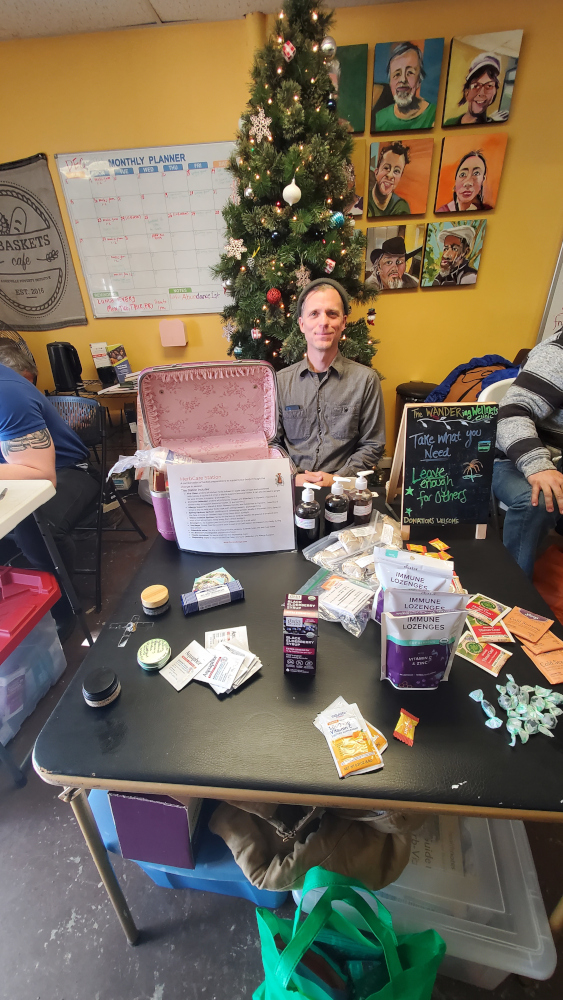
We have been receiving herbal remedy donations and distributing them at the local food pantry café, creating an herbal self-care station for relief workers, and organizing practitioners to create the free mobile Wandering Wellness Clinic. As some things start to get into the groove of a new normal, we are searching for donations, grants, and grant writing volunteers to continue this vital work and secure a donation of a larger vehicle to transport donations to clinic sites.
As the Executive Director of The WANDER School, I have learned some incredibly valuable lessons the hard way. I am hoping these will help you if you’re moved to get involved with Herbal Aid work.
- If you’re involved in a disaster, take time to decompress and practice self-care first. Let others from outside, who are more resourced, come in and help first. When there is another disaster, local helpers are burned out, or people have to get back to their “normal” lives, another wave of helpers will be needed. 2. Make sure your own needs are met first. Do you have shelter, food, healthcare, income? If we are giving from a deficit, that will not last very long. It will take a toll on our own bodies quickly, and we will become another person in need of care, taking valuable resources, instead of someone able to help.
- Make sure your own needs are met first. Do you have shelter, food, healthcare, income? If we are giving from a deficit, that will not last very long. It will take a toll on our own bodies quickly, and we will become another person in need of care, taking valuable resources, instead of someone able to help.
- Decide how you can best be of service, what is most sustainable for you, or what you feel most drawn to doing. Then do that and stick with it or change if it does not seem to be working, but realize we cannot in any way do everything and help everyone!
- Join an organization doing the work or get a solid team of volunteers to help. Share the management and delegate, delegate, delegate. If one person is doing most of the work, burnout is inevitable.
- Take it slow with lots of breaks for time off and self- care. I cannot emphasize this enough. This work takes a mental, physical, and emotional toll. Remember, others want to help and you probably need more rest than before.
- Grief and trauma are real. Even if you did not directly experience the trauma, you will most likely experience that of others. Make sure to check in with yourself
- Have a strong community that can support you when you feel alone, exhausted, overwhelmed, sick, too tired to cook, etc. We all need other Herbalists and friends. We cannot do it ourselves. And more brains are often better than less.
- Consume lots of nervine teas, tinctures, and glycerites. Take regular herbal baths. Spray yourself with tulsi (Ocimum sanctum)/rose (Rosa spp.) hydrosol often.
I was told by a group of Indigenous elders that this is only the beginning. These climate events will become more prevalent, and interdependence is now more important than ever. They said we are trailblazers, and we will have to teach others how to do this.
This work is not easy, but it is incredibly rewarding and will make us better people, Herbalists, and activists. If you would like to help, contact
You can find more information, including learning about our annual WildCrafted Herb School now open for registration, at thewanderschool.com.
Abby Artemisia is a botanist, herbalist, forager, and founder of the WANDER school. She is the author of the Botany Breakdown Virtual Course, The Wild Foraged Life Cookbook, and the Herbal Handbook for Homesteaders.
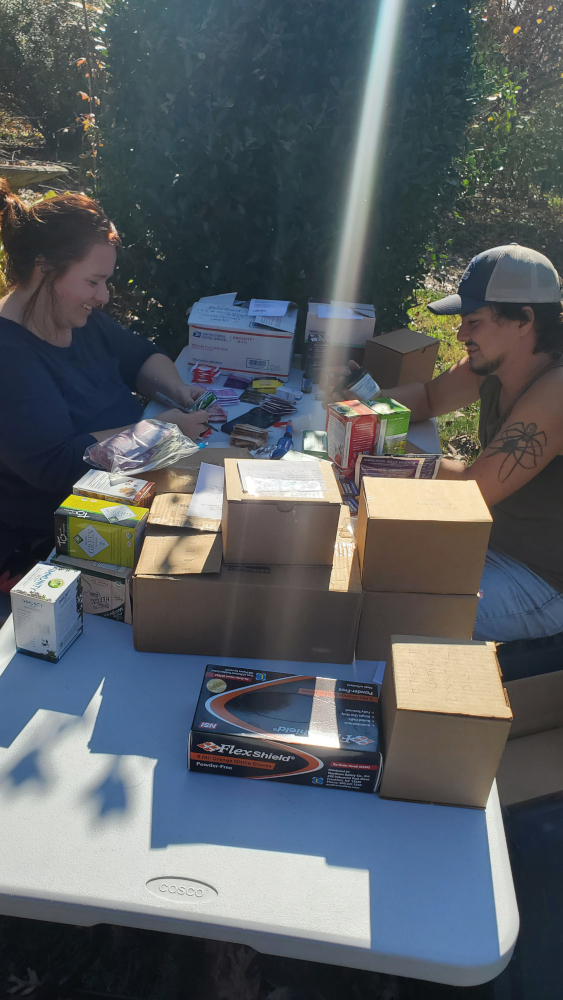
from local and national herbalists
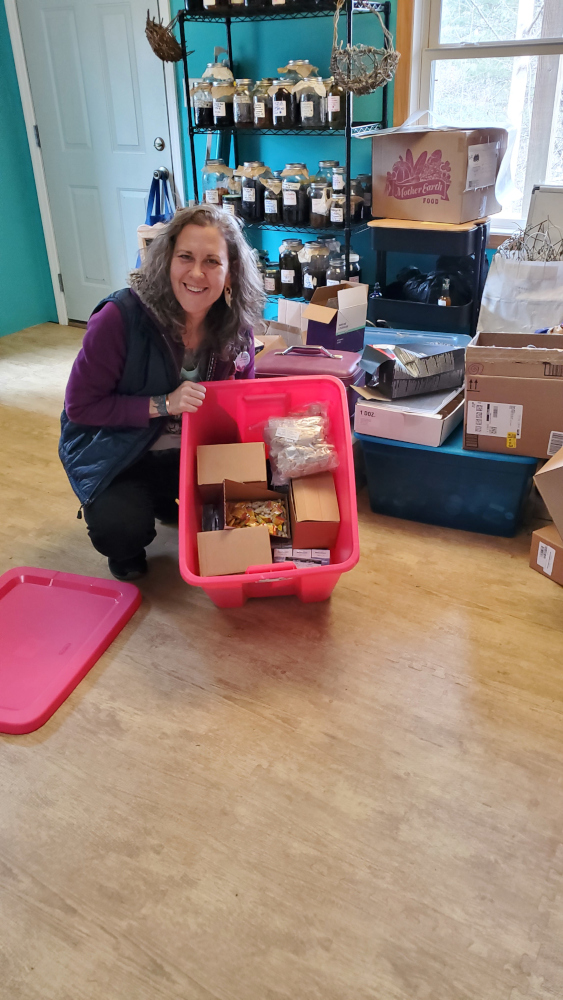
kitchen nonprofi t, 12 Baskets in Asheville
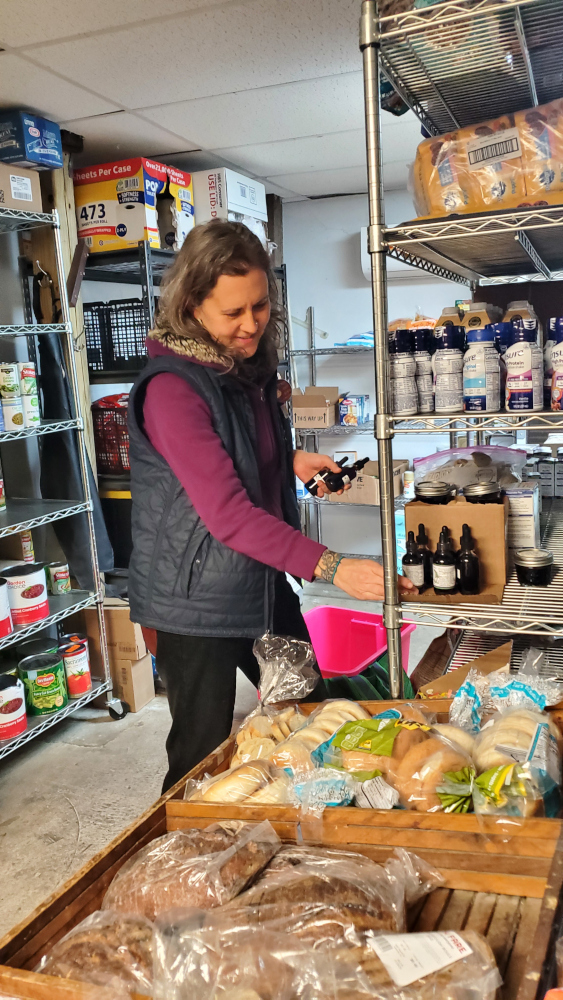
The WANDER School student volunteer set up (next to local street medics) with herbal remedy donations at 12 Baskets during the 2024 holiday season