By Keya Kai Guimarães
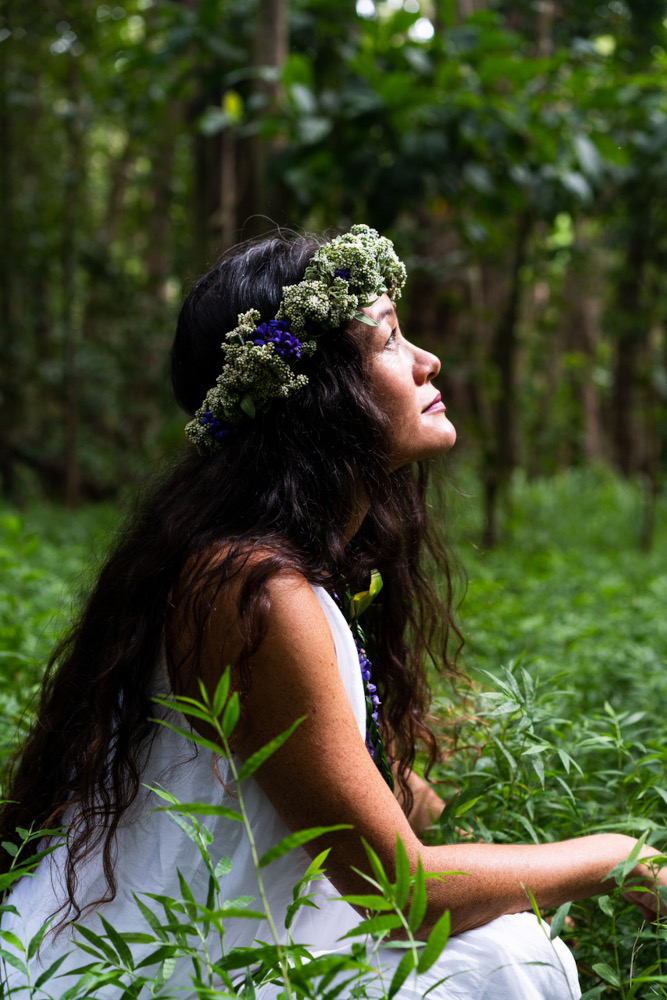
Your plane touches down on a balmy afternoon in the Hawaiian archipelago. Fantasies of your vacation swim through your mind—soft sand beaches, crystal clear waters, Mai Tai’s topped with colorful paper umbrellas, and a gaggle of smiling, graceful hula dancers, adorned with perfumed flowers along their shoulders swaying their hips as the sun sets.
Tragically, this is the image that so many people harbor of Hawaiian culture. Outdated and offensive, this manufactured myth of Hawai`i persists, and the sacred practice of making and wearing lei continues to be misplaced in the marketplace. Like so many cultural practices decimated by early colonization and modern commercialization, Hawaiian lei making was once a solemn, sacred, and revered process that required profound knowledge of the Land and her Plant emissaries. Weaving lei held medicinal power for healers, and wearing lei was to receive direct spiritual, psychological, and physical treatment from the potent and generous environment.
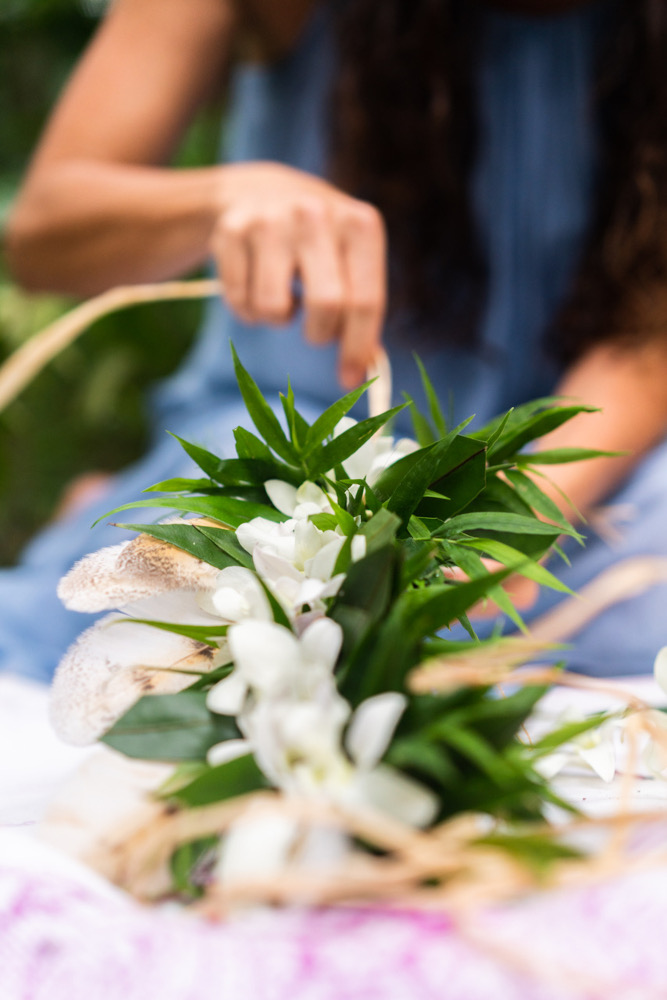
The overwhelming majority of lei that greets visitors at their Hawaiian hotels upon check in, or that is available for sale at our local stores, is imported from low paid workers in Thailand. The ubiquitous dendrobium orchid lei, strung together on thin yarn and packaged in long plastic clamshell tombs, are long lasting, hardy for travel, and cheap when imported. In my mind, no other emblem of the Hawaiian culture has been so depreciated as this living, generous, activated medicine, once thought to be your umbilical to the land itself, a direct conduit to lifesustaining energy and matter.
It has been my approach and privilege as a lei practitioner and herbalist to create healing lei for clients undergoing chemotherapy treatment, processing divorce, engaging in psychedelic-assisted PTSD therapies, suffering from Alzheimer’s effects, or grieving a loved one. The lei can also be used in bathing rituals, water births, or therapeutic soaks to release hydrophilic phytochemicals for babies, children, animals and pets, or anyone seeking a holistically gentle healing.
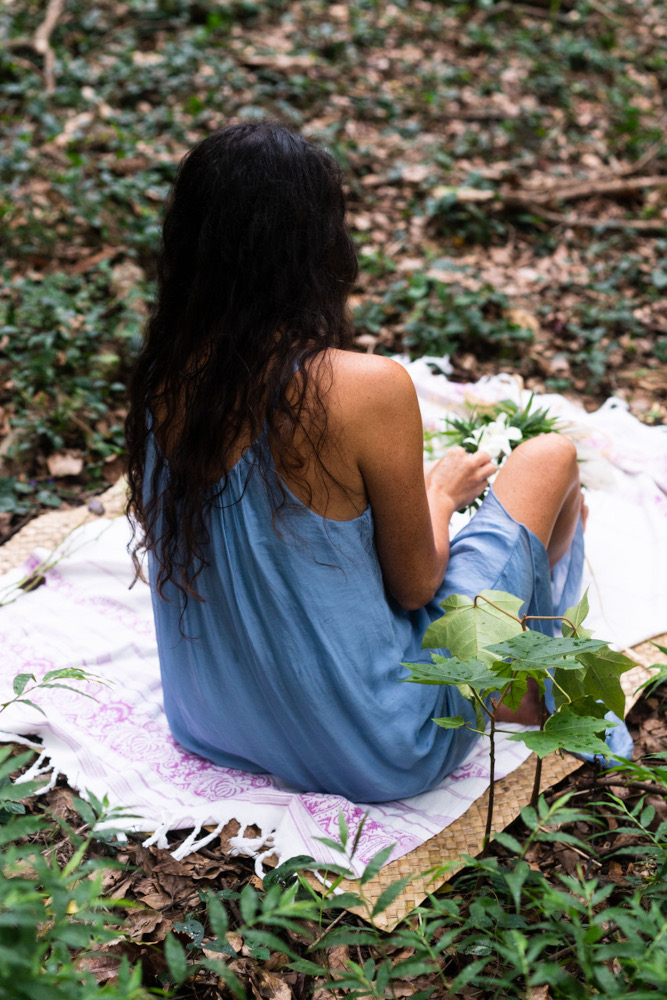
For plant folk, it is a facile leap to begin to see lei as medicine. From the process of cultivating or wild-gathering plants, to intricate protocols for harvest, to the act of weaving itself, a healing lei practice is a form of intentional ritual and alliance with the land. The reason is the relationship. The communion is the boon. The lei “design” goes far beyond a perceived aesthetic and becomes a living medicinal formula. The medicinal function of each blossom, leaf, root, or bud is amplified in the conference of all those plant allies present in the lei. Talk about the herbalist’s synergistic entourage effect!
While most weddings in Hawai`i feature lei and all graduation celebrations are filled with them, when I am honored to create lei for these occasions, I look to the transformative energies of plants and flowers to elevate these experiences onto the spiritual plane. A graduation is a rite of passage, from youth to adulthood; a wedding is the transformation of the individual into the couple; a birth of a baby is the birth of a mother, father, and family. As we pass through the portals of childhood, of maidenhood, of healing crises, and of death, we are meant to become the next evolution of ourselves. Yet how do you create this potent experience? How can you bring more mindful intention to these celebratory moments? I take great care in choosing the plants and flowers to help us ascend during these vital rites of passage.
The practice of lei was carried with the ancient Polynesians who migrated north circa 300 C.E. and found Hawai`i as their new home. Hula, the ancient religious system of casting images through movement and voice, of storytelling, of genealogy and wisdom keeping, utilized plant and flower garlands to amplify their spiritual power and connection to the realms of the gods. Like Hula, lei suffered a death blow with the coming of Christian missionaries to Hawai`i. Seen as demonic and idol worshipping, hula was degraded to a sanitized “song and dance” of the “natives.” The lei po`o (garlands worn around the skull) were replaced with flower garlands worn mostly around the neck. Hula and the plant adornments that were integral within the discipline of the religion and art were transformed over the next many decades, and much of the ancient ways, rhythms, and knowledge were sent underground or much worse, lost to the tragedy and laws imposed by the colonizers.
When I lead a group into the forests of Kaua`i, I remind them not only were the eyes and minds of the ancestors of this land able to gaze upon that verdant mountainside sheathed in plant life, knowing every individual by name, by medicinal action, by metaphor and poetic reference, and by spiritual affinity, but also how to harvest them, their myriad of uses, to which god they embodied as “kinolau” (body form). The unity of psychology, biology, and cosmology embedded in the plant realm of Hawai`i defines the intricate kinship in making healing lei that far transcends beauty.
As a distiller of hydrosols and essential oils, the aromatic effects (aromatherapy) of the plants I use in lei are foundational to the practice. Volatile oils are released when the plant’s cell walls are crushed through the weaving or degraded through heat and time. If a lei is made from lemon balm (Melissa offi cinalis) and the highly cherished Laua`e fern (Microsorum scolopendria), a naturalized fragranced fern with copious amounts of coumarin (the same intoxicating metabolite present in tonka beans {Dipteryx odorata} and sweet grass {Hierochloe odorata}), then what nervous system actions will the lei provide? As your forehead warms the tightly bound stems and leaves in your lei, a veil of aromatic purity descends around your face and enters your respiratory system and limbic system. The result? Blissful relaxation, levity, and calm for the next 4-6 hours. You experience tangible anti-anxiety, antiinfl ammation, and a boost in serotonin. The leaves begin to wilt, releasing their vitality and medicine to the wearer. This simple but potent lei has been crucial for a mother during a diffi cult home birth, for a young man sitting in the chemo chair, and for my dog on her fi rst airplane trip from Kaua`i to O`ahu.
The physical and metaphysical actions of plants become activated when woven into an intentional structure and worn for ritual, transformative moments and healing events. This is the aspect of lei making that has most suffered from the post-colonial models of seeing flowers only as adornment, yet in most indigenous cultures on Earth the wearing of aromatic leaves, blossoms, and roots is a key element in any healing process.
Like herbalism, it is always worth remembering that this tradition of weaving plants into garlands meant to be worn directly on the body belongs to no one single culture or tradition. Native Hawaiian and Polynesian peoples have certainly retained the art longer than many others, but we can recall ancient Egyptian Pharaohs empowered with the wreaths of lily and jasmine, Greek and Roman garlands made with olive leaves and oats worn on the heads of nobles, of Gaelic women at Beltane celebrating the season with spring flowers as wristlets and crowns, of American Navajo healers using willow and sage as head garments in sweat lodges, of Central American priests using marigolds as neck garlands to protect against evil. For as long as we have been collaborating with plants for medicine, we have been wearing them on our person both in life and in death. I call upon all plant practitioners—let us not forget! Sometimes to wear our medicine and allow the skin and respiratory system to deliver a plant’s healing constituents is the most gentle, sublime, and profound healing practice we can offer. Aloha pau `ole, unending aloha. n
Keya Kai Guimarães is an Herbalist and Lei Practitioner in Kaua`i, Hawai`i.