0 events found.

Enter your name and email address to download now
Geneticist, Environmentalist, Entrepreneur, Cannabis Advocate
Eleanor Kuntz, PhD, is a trained herbalist and entrepreneur who is bridging the gap between traditional herbalism and modern science. Eleanor works with plant genetics to design and implement Best Agricultural Practices for improving medicinal qualities and implementing responsible raw ingredient choices to mitigate supply chain risk for natural product companies. As a U.S. Forest Service volunteer, Kuntz researches plant population demographics and dispersal dynamics to develop guidelines for sustainable wild collection and permitting regulations in southeastern native plant populations.
Devoted to honoring the benefits of plant-based medicine, enhancing our connection to the wild world around us, and deepening our understanding of the relationship between plant, ecosystem and planet, Eleanor recently merged her two plant passions by cofounding LeafWorks Inc., a botanical verification company using genetics to improve medicinal quality, sustainability and transparency in the supply chain for the best possible plant experience. She is also co-founder of Canndor, the People’s Herbarium, the first herbarium committed to documenting and preserving cannabis cultivars and varietals along with the collective knowledge gained through community engagement.
Eleanor has a B.A. degree in Biology with a focus in Botany from Smith College and a PhD in Genetics from the University of Georgia. Her academic work focused on population diversity and gene flow, along with the evolutionary history and current genetic exchange between wild and cultivated plants. She graduated from the Sage Mountain School of Herbal Studies, where she studied under the mentorship of Rosemary Gladstar.

Enter your name and email address to download now.
Alexis Durham is the Director of Education for the American Herbal Products Association (AHPA), where she develops and manages AHPA’s educational programs in addition to planning and coordinating AHPA meetings and events. Her work ensures that members are well informed of issues impacting the industry and that members have forums to collaborate with each other and AHPA staff.
Alexis earned her B.Sc. in Herbal Sciences from Bastyr University and began teaching while serving as Education Coordinator for the American Botanical Council in Austin, TX. A desire to learn more from the plants themselves brought her to southern Oregon, where she worked for Horizon Herbs and taught for Herb Pharm’s Herbaculture internship program. She coordinated the 23rd Annual Symposium for the American Herbalists Guild and served as Bastyr University’s garden supervisor and adjunct faculty, as well as program coordinator for the Certificate in Holistic Landscape Design, teaching students to create healing landscapes with medicinal and edible plants.
Alexis spent several years working at Herb Pharm, most recently as their Director of Botanical Affairs, where she was involved with herbal education, regulatory compliance, product development and community engagement. She is passionate about plants, herbalism, and conservation, and serves on the Board of Directors for United Plant Savers. Her happiest moments are spent in nature, listening to birds and caring for her garden.
Enter your name and email address to download now.
Cris Amarillas, Ph.D., is a botanical consultant and advocate for cultivating meaningful relationships with plants. She most recently served as Chief Science Officer, Botanicals at Eurofins US Food & Feed & Quality Assurance.
Before Eurofins, she built her career with a botanical brand, leading Quality and R&D initiatives. She oversaw testing and disposition of raw materials and finished products, provided technical and herbal guidance, and supported product development from formulation through commercialization. She also established the Supplier Quality team and partnered closely with regulatory, marketing, and procurement.
She holds a Ph.D. in Chemistry from Stanford University and is a trained clinical herbalist, having completed two certificate programs at the California School of Herbal Studies. She earned her Bachelor’s degrees in Art and Chemistry.
She brings expertise in herbalism, botanical chemistry, and regulatory frameworks to her work. Cris is also a guest lecturer at CSHS and draws inspiration from nature, permaculture, and her connection to Gaia.
Coming Soon
Founding President
Rosemary Gladstar is, literally, a star figure in the field of modern herbalism, internationally renowned for her technical knowledge and stewardship in the global herbalist community. She has been learning, teaching and writing about herbs for over 40 years and is the author of eleven books.
Her work includes Medicinal Herbs: a Beginners Guide, Herbal Healing for Women, Rosemary Gladstar’s Herbal Recipes for Vibrant Health, and The Science and Art of Herbalism, an extensive in depth home study course. She is the Founding President of United Plant Savers and founder and past director of the International Herb Symposium.
With a 20-year career in the organic herbal industry, specializing in the procurement of medicinal and aromatic plants on a global scale, I take a special interest in understanding the complexities of the supply chain required to bring high-quality herbs, spices and oils to market in a sustainable way. Through domestic farm visits and international travel, I have grown to understand the barriers in collection and farming practices and have committed myself to development and outreach.
Previous efforts have led me to work on a UpS Forest Grown verified ginseng project with intention to stimulate domestic interest in American Ginseng with a vision to protect it. Currently, I am working with a UpS Forest Grown verified Goldenseal project in Appalachia as well as partnering with FairWild foundation for Eastern European botanicals. Transparency and ethical sourcing have been the root of my procurement practices while forging a future for the communities responsible for the botanicals the industry relies heavily on.
From an early age, I’ve gained knowledge and appreciation of plants and their origins. Farming, botany and plant conservation through cultivation have become lifelong pursuits. After earning a bachelors in Plant Science from Rutgers University, I specialized in propagation and agribusiness management, tropical agriculture, bioremediation and tissue culture, then continued doing research for the university and the EPA.
I have studied under various herbalists over the last two decades and am currently Alumni at the School of Spagyric and Alchemical Arts, practicing in the tradition of Paracelsus, Jean Dubois and the Philosophers of Nature.
Residing in rural Oregon I am employed by Herb Pharm LLC where I have the honor to source for a truly sustainable business model with showcase regenerative organic farmland dedicated to the cultivation of medicinal plants.
Edward J. Fletcher is the Owner and COO of Native Botanicals, Inc., a botanical raw ingredient supplier. He was born into the botanical business of his Family’s nursery Gardens of the Blue Ridge where he learned to propagate and grow a wide variety of botanical ornamental species. Continuing his journey into the medicinal botanical realm, he has accumulated a wealth of knowledge on the strategic and sustainable sourcing issues surrounding the ingredients that go into our dietary supplements.
He is an active member of the American Herbal Products Associations (AHPA) and serves on the Board of Trustees as well as the current Chair of the Botanical Raw Materials Committee. He also sits on the Board of United Plant Savers, member of the Sustainable Herbs Program Advisory Group and served on the Dietary Supplement General Chapters Expert Committee of the United States Pharmacopeia and currently on other USP advisory panels. He enjoys speaking and presenting at industry events and is happy to discuss any and all botanical questions you may have.
My introduction to herbs began with making sassafras tea during my youth in pre-paved Maryland suburbs. I later relocated to California, and my interests in health, herbs, and good food led me to be a co-founder of Venice Fruit Tramps in 1974, a retail store and accidental collective that sold fresh fruits and vegetables and bulk dried herbs in a diverse urban community. A few years later, a friend and I scraped together $2,200 and founded an herbal tincture manufacturer and marketer that turned into a successful national brand over the next 20 years. Our company joined the American Herbal Products Association (AHPA) in 1985, and I became actively involved as a volunteer for many years and was hired as AHPA’s president in 1999.
I have served on the United Plant Savers Board of Directors since 1998. I was invited to join as someone who could bring an industry perspective as a company that was buying thousands of pounds of herbal ingredients every year – including wild-harvested and organically grown North American herbs – and which had invested resources in learning to move some of these herbs into cultivation. My role at UpS continues to involve attention to the pragmatic side of things, in service to the plants.
Ruby D. comes from a creative and inventive family who were enslaved in Virginia and moved to the Southern coalfields of West Virginia to build a new life after emancipation. Ruby Daniels (“Ruby D”) refers to her heritage as “Afro-lachian.” She spent many childhood summers in Beckley with her great aunts and grandmother, learning about African American traditions, spirituality, native plants, agriculture, and herbal remedies. This motivated her to start experimenting with plants on her own and later form her business, Creasy Jane’s, named after her great-grandmother, Creasy Jane Pack. After earning her Master’s in Therapeutic Herbalism she returned to Beckley, where she works for NRCS and West Virginia Forest Farming Initiative. Her business, Creasy Jane’s, offers custom-made herbal teas and tinctures, herbal soaps, and other topical herbal remedies. Ruby’s mission is to change the narrative of African American relationships to woodland botanicals and educate others of the herbal traditions and practices African Americans have had with plants and the forest.
Thirty-one years ago I took a job as an Herb Buyer for Bread and Circus in Brighton, MA. One of my first tasks was to set up the bulk herb section for the store. Through that process, I engaged with Frontier Co-Operative and learned about the various pricing and supply of the culinary and medicinal herbs and was introduced to United Plant Savers and have been a member ever since. My career has taken me across the globe in search of sustainable supplies of medicinal plants and their products. It is imperative that if we want any supply of medicinal plants at all for the foreseeable future, cultivation, conservation and education about those plants are absolutely necessary. I consider the work that I do to support the Mission of UpS “to protect native medicinal plants of the United States and Canada and their native habitat while ensuring an abundant renewable supply of medicinal plants for generations to come” of primary importance in giving back to the community of plants that has provided so selflessly for all of us in more ways than can be counted.
Nathan Wright is a Citizen of the Sault Ste. Marie Tribe of Chippewa Indians and the owner of Herbal Lodge. Herbal Lodge creates salves, teas and herbal remedies using locally sustainably wild foraged ingredients. Wright combines both indigenous and conventional herbal knowledge into his products. Wright has diverse experiences not only as an Indigenous Herbalist, but also in business, serving in the military and as an Indigenous and Environmental activist. Wright is also a certified mycologist. He shares his knowledge as an educator focusing on plants used in Anishinabek healing, and emphasizing the traditional sustainable practices. He makes himself available for herbal and Indigenous presentations, both online and in person. In accordance with his beliefs to honor the plants and trees, Wright is also a Water Protector. In 2019, Wright founded MackinawOde, a collective group that addresses Indigenous and Environmental concerns and has garnered national attention. He has been featured in various media outlets, Water Protector music videos and a documentary. Wright likes to say, “I used to be a Marine who fought for a country, now I am a Water Protector fighting for Mother Earth.” For more info: @Spiritman | https://linktr.ee/spiritman
Seven Yeager has been studying Oregon’s flora and ecology since 1995. He enjoys botanizing, wildcrafting, and exploring the Pacific Northwest. Steven is the former co-owner of the Columbines School of Botanical Studies. He believes cultivating a relationship with plants and the natural world is vital for a healthy existence on this planet. Steven also works at Mountain Rose Herbs as the Executive Vice President. He serves on the board of directors for the American Herbal Products Association, AHPA’s Foundation for Education and Research on Botanicals, American Herbal Pharmacopoeia, United Plant Savers, and the Native Plant Society of Oregon. When not at work or volunteering with various non-profits, Steven enjoys spending time with his family, pretending to be a chef, hiking, camping, wildcrafting, and botanizing in the Cascade Mountains.
Geneticist, Environmentalist, Entrepreneur, Cannabis Advocate
Eleanor Kuntz, PhD, is a trained herbalist and entrepreneur who is bridging the gap between traditional herbalism and modern science. Eleanor works with plant genetics to design and implement Best Agricultural Practices for improving medicinal qualities and implementing responsible raw ingredient choices to mitigate supply chain risk for natural product companies. As a U.S. Forest Service volunteer, Kuntz researches plant population demographics and dispersal dynamics to develop guidelines for sustainable wild collection and permitting regulations in southeastern native plant populations.
Devoted to honoring the benefits of plant-based medicine, enhancing our connection to the wild world around us, and deepening our understanding of the relationship between plant, ecosystem and planet, Eleanor recently merged her two plant passions by cofounding LeafWorks Inc., a botanical verification company using genetics to improve medicinal quality, sustainability and transparency in the supply chain for the best possible plant experience. She is also co-founder of Canndor, the People’s Herbarium, the first herbarium committed to documenting and preserving cannabis cultivars and varietals along with the collective knowledge gained through community engagement.
Eleanor has a B.A. degree in Biology with a focus in Botany from Smith College and a PhD in Genetics from the University of Georgia. Her academic work focused on population diversity and gene flow, along with the evolutionary history and current genetic exchange between wild and cultivated plants. She graduated from the Sage Mountain School of Herbal Studies, where she studied under the mentorship of Rosemary Gladstar.
The nexus of natural history, ethnobotany, and environmental conservation has been a passion of mine since young adulthood. I worked as a naturalist and artist and became aware of the important outreach of United Plant Savers and the Goldenseal Sanctuary while studying and creating plant medicines. Perhaps it was the jars and jars of Black Cohosh in big box stores and grocery chains that further stoked my concerns and advocacy of the quickly growing herbal industry. I often wondered, “Where is all the plant material coming from and how is it managed?” As an educator and a prior Director of Jim Duke’s Green Farmacy Garden, I have shared and taught humans’ long and evolving history with plant medicine ~ the traditional uses, current scientific research, gardening with the plants, the commoditization of natural products, and the urgency of plant conservation. While growing up, I was not exposed to the wisdom of herbal medicine, but studied and deeply honored the indigenous uses of native plants. As an elder now, I am committed to seeing that current and future generations learn to respect and use native and all plant medicine with reverence ~ not only for themselves but also for the survival of the species and the biodiversity of ecosystems.
LeAnn is an herbalist, massage therapist and artist in Gainesville, FL. She has a clinical practice offering bodywork and plant medicine, and also works with mutual aid groups locally to bring herbal medicine to the underserved in her community. She spends most of her time teaching, doing plant walks, growing food, making herbal medicine, and staying creative.
For more than 15 years, Tanner has been working to promote Non-Timber Forest Products (NTFP’s) as a sustainable and ecologically-based forest management strategy for woodland owners in southeast Ohio and the central Appalachian region. Tanner graduated from Ohio University in 2005 with a Bachelor’s Degree in Environmental Geography, and a minor specializing in Environmental and Plant Biology. From 2005 to 2008, he served as an AmeriCorps VISTA with Rural Action’s Sustainable Forestry Program before accepting a staff position as the organizations Non-Timber Forest Products (NTFP) Specialist. In this role he regularly conducted workshops, presentations, and provided on-the-ground technical assistance for woodland owners interested in developing sustainable NTFP enterprises, and restoring at-risk forest herb communities. In 2015, after gaining 10 years of experience in the field, Tanner returned to Ohio University and earned a Master’s Degree in Environmental Studies for his research examining mycorrhizal symbiosis in wild-simulated ginseng roots, and the effect of mycorrhizal colonization on root ginsenoside concentrations. After completing his research, he returned to Rural Action in 2017 and continued to serve as the organizations NTFP Specialist, and ultimately Sustainable Forestry Program Director before accepting a position with United Plant Savers in 2021. In his spare time Tanner enjoys spending time with his wife and daughter, and experiments with producing forest-grown mushrooms, maple syrup, American ginseng, and a variety of other edible and medicinal forest products.
Chip has been involved with agroforestry and non-timber forest product work for the last 20 years. He began his career working with Rural Action’s Sustainable Forestry Program where he worked closely with producers growing medicinal herbs in their woodlands and helped to form the Roots of Appalachia Growers Association. At Rural Action he was also active in State and National policy work related to American Ginseng regulations and regularly consulted with lawyers, judges and prosecutors on ginseng poaching cases. He has consulted as an expert witness on ginseng and other medicinal herb crop damage claims, providing the court with lost crop values. Chip was the Assistant Farm Manager for Frontier Natural Products’ National Center for the Preservation of Medicinal Herbs where he helped manage research projects and oversaw their internship program.
He currently is the Sanctuary Steward for United Plant Savers 370-acre Botanical Sanctuary in Rutland, Ohio where he also oversees their Medicinal Plant Conservation Certificate Program. He also has been working for the United States Forest Service for the past 8-years monitoring wild ginseng populations on public lands. In 2016, Chip was hired as the Manager of Ohio Operations for American Ginseng Pharm; an agroforestry enterprise with operations in New York and Ohio.
In addition to his continued work with United Plant Savers, Chip operates his own business, Woodlandwise Botanicals. Through this, he does on-site consulting and education for landowners interested in growing ginseng and other woodland medicinal herbs. Chip’s focus has been to transition wild-harvested species into cultivation regimes in order to take pressure off of native populations of Appalachian medicinal herbs. This is being accomplished through consumer education, relationships with the natural products industry, and working directly with landowners that wish to grow these herbs.
Susan Leopold is an ethnobotanist and conservation biologist known for her work in the fields of plant conservation, sustainable agriculture, and ethnobotany. She is the Executive Director of the United Plant Savers, a nonprofit organization dedicated to protecting native medicinal plants of the United States and Canada and their habitat. Leopold is an advocate for ethical wildcrafting practices, community-based conservation initiatives, and the preservation of traditional plant knowledge.

Enter your name and email address to download now.

Enter your name and email address to download now.

Thanks for your interest in protecting At-Risk medicinal herbs.
Please join our mailing list to download this attractive 8.5×11″ printable reference chart.

Enter your name and email address to download now.

Learn forest farming cultivation and management practices, medicinal plant conservation, and sustainable market development.
Enter your name and email address to download now.
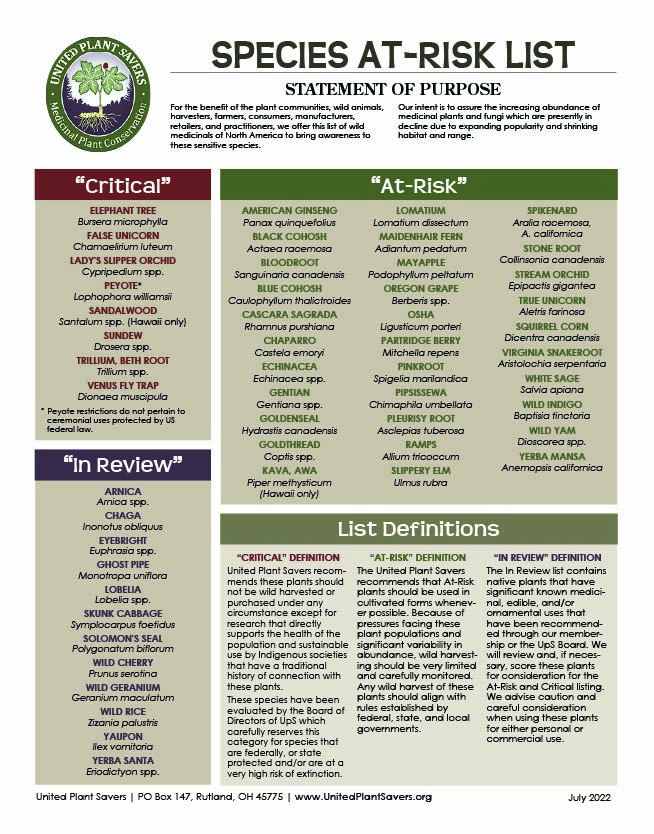
Thanks for your interest in protecting At-Risk medicinal herbs. Join our mailing list to download this attractive 8.5x11" reference chart.
United Plant Savers (UpS) is a 501(c)(3) non-profit founded in 1994 by herbalist Rosemary Gladstar to protect native North American medicinal plants from habitat loss and overharvesting. Headquartered in Rutland, Ohio, it manages a 370-acre botanical sanctuary, maintains an "At-Risk" plant list, and supports a network of conservation sanctuaries.
Key aspects of United Plant Savers' history and mission include:
Founding & Purpose: Formed at the 4th International Herb Symposium in response to the alarming decline of wild medicinal herbs, UPS seeks to ensure an abundant, renewable supply of these plants for future generations.
The Sanctuary: Located on 370 acres of land in Ohio, the site features a botanical sanctuary, medicinal plant trials, a seed bank, and an herbarium.
"At-Risk" List: One of their primary accomplishments was creating the "At-Risk" list of 40+ medicinal plants facing threats from wildcrafting and habitat destruction, such as American Ginseng and Goldenseal.
Community & Education: Over the past 30+ years, the organization has fostered an active community through events like the Medicinal Plant Conservation Conference and by creating the Botanical Sanctuary Network.
In meeting all of the organizational goals, UpS has become a model for strengthening the bio-economy in Appalachia, contributing to job creation, tourism, and economic development of Southeast Ohio.
Located in downtown Pomeroy, the Brickhouse Apothecary, is a 9,000-square-foot, historic structure currently serving as a site for microbusiness support for entrepreneurs working with Southern Ohio’s most valuable and culturally significant commodities.
The Brickhouse Apothecary in partnership with UPS’s nearby plant sanctuary serves as an educational and business development hub to promote economic development linked to agriculture including distinctive products known as non-timber forest products (NTFPs). NTFPs including forest and herbal botanicals are deeply integrated into Appalachian culture and have been a part of life in Southeast Ohio for centuries. Products harvested and grown in this region fuel a billion-dollar industry for health, cuisine, and decorative practices. Interest linked to tourism in this sector is also on the rise. UPS participates in an initiative funded by the ARC’s ARISE grant focused on transformational goals critical to establishment of the Appalachian forest farmers as leaders in the global NTFP market.
A proposed ARC-funded improvement project to expand the capacity of the Brickhouse Apothecary to support entrepreneurial enterprises is underway.
In 2022, UpS received $2,475,000 from the Abandoned Mine Lands Economic Revitalization through Ohio’s Department of Conservation and Recreation for improvements to the Reclaim Trail, adding five miles to the existing two-mile loop. The project also included construction of a new lodging and multipurpose event space at the Botanical Sanctuary in Rutland, Ohio.
These enhancements will expand UpS’s ability to host larger convenings and events, bringing visitors who are interested in the NTFP practices or need a mini-conference location in Meigs County.


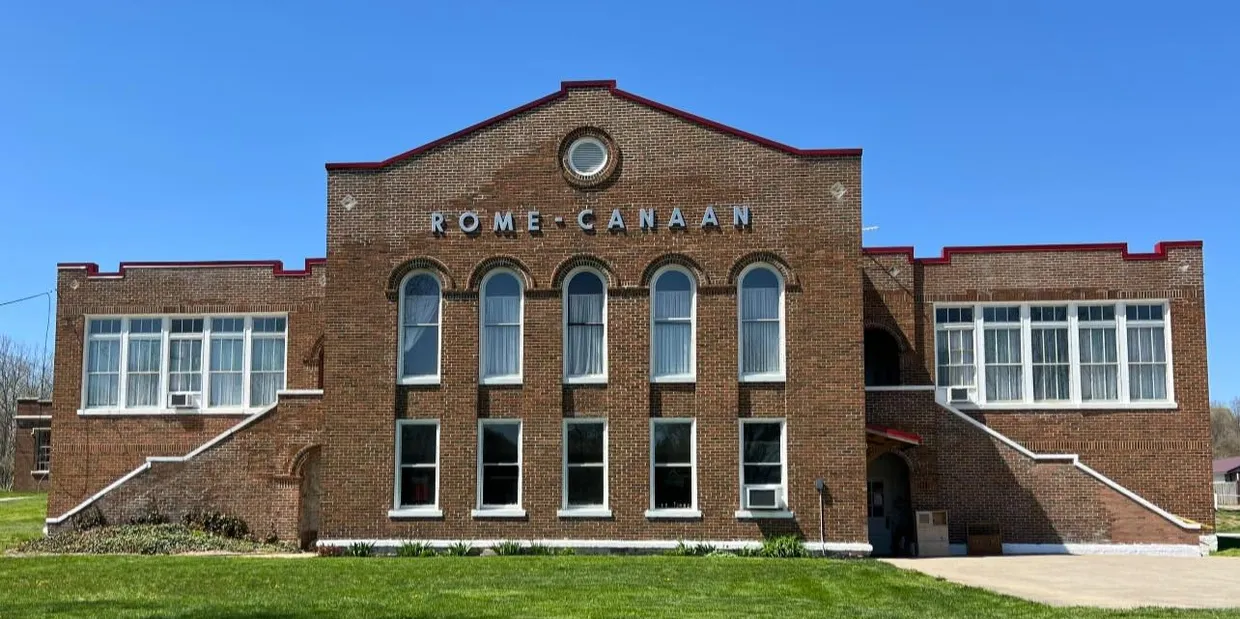
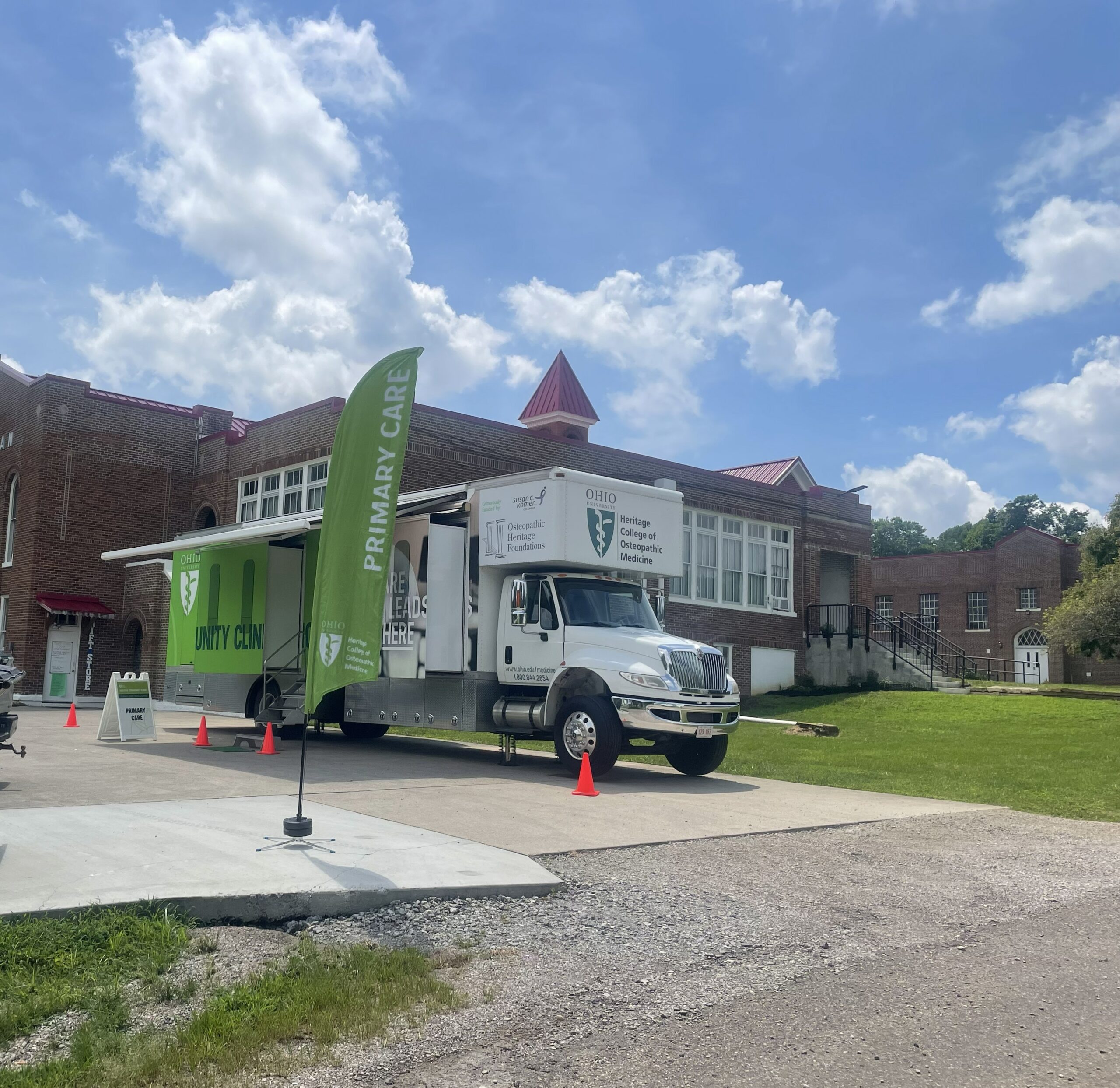
Federal Valley Resource Center (FVRC) is dedicated to the revitalization of rural Appalachian Ohio for generations to come. Located in the historic campus of the Rome-Canaan School in Stewart, Ohio, we provide the region with access to vital services, including food distribution, a low cost thrift store, and mobile health clinics, as well as arts and music education programs that allow the creative spirit to thrive.
Housed in one of the first public grade schools of the region (1897), FVRC has served the community of rural Appalachia Ohio since they began renting the old school in 1999 from the school district. In 2013, FVRC became the sole owner of the five-acre property with four buildings. In fiscal year 2023 FVRC received $594,000 from Congressionally Directed Spending to replace the roofs of all four buildings. This vital replacement has allowed FVRC to work toward actualizing their vision of renovating the campus into becoming an anchor for the heritage and cultural arts economy in Southeastern Ohio.
Even as these renovations occur, the center serves 675 community members annually through the following resources:
Additionally, FVRC hosts over 100 out of town visitors who attend workshops, concerts and cultural events. As additional hospital opportunities rise (such as the emergence of more Air BnBs), so do the frequency and numbers of out of town visitors to FVRC.
FVRC’s long term vision is to provide mixed use artist studio space for artists to work, offer community classes, lessons or performances; alongside offering the essential services that are needed to help support our local upcoming entrepreneurs.
FVRC has served as the ignition point for the Ohio Folk Center Network. In collaboration with United Plant Savers, FVRC guided development and completion of an ARC POWER-funded planning grant, which evaluates the feasibility and charts the roadmap for this emerging regional initiative.
Little Cities of Black Diamonds is a heritage-based community development organization representing more than 75 communities across Athens, Hocking, Morgan and Perry counties. Founded as a workgroup in 1993, Little Cities sought to uncover and share the rich history of southeast Ohio’s “boom and bust” coal towns. Our activities include historic preservation, education, community arts and economic development initiatives, such as the Little Cities Eco-Heritage Corridor project that seeks to revitalize southeast Ohio’s coal towns through authentic tourism.
Little Cities offers support to regional small businesses and artists, with special emphasis on arts that reflect the skills and traditions of local heritage. Since 2020, Little Cities of Black Diamonds has managed the Little Cities Heritage Interpreter program, which helps locals earn income as outdoor and heritage tour guides.
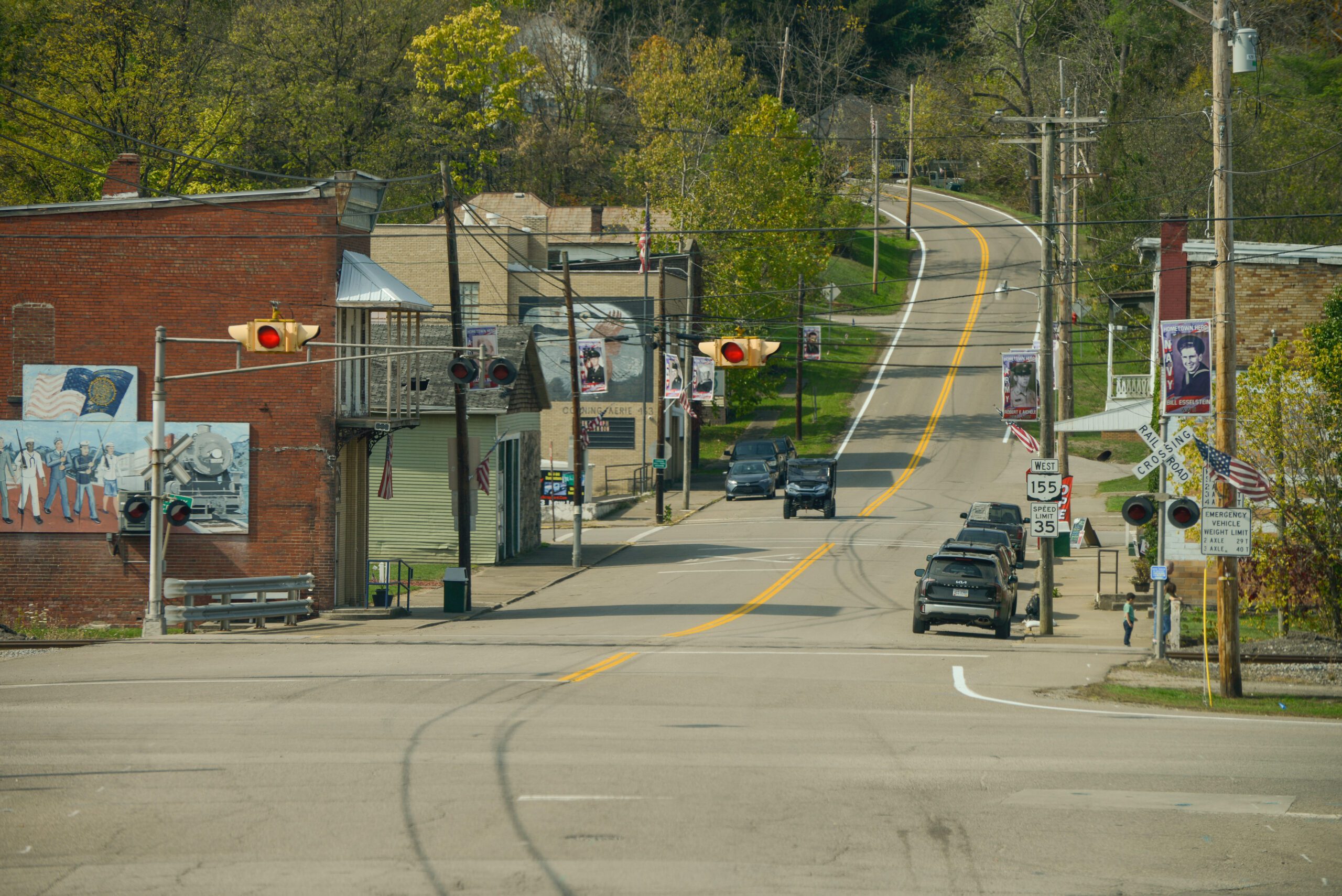
An example of a featured site in the Eco-Corridor Heritage project comes from the village of Corning.
The Village of Corning, in Monroe Township of Perry County, was a purpose-built coal mining town, as well as a major hub for the railroad transporting coal from other mines in the Sunday Creek Valley. The hills on which Corning sits were heavily mined out, and contain a cluster of abandoned underground mines, including Sunday Creek Coal Company Mines No. 5-8, Mine No. 11 and Mine No. 13, as well as 165 acres of surface mine lands. The massive nest of underground tunnels in Corning is so expansive that it stretches into three neighboring townships.
Corning is the site of the “Corning Geyser” through which water flows from the underground mine network into Sunday Creek. This site is the second largest contributor of acid mine drainage in the entire Sunday Creek Watershed.
Each of the sites in this project is part of a strategy to leverage Corning’s existing assets to boost its economy and community wellness through heritage and ecotourism. While the village lacks usable brick and mortar structures for new businesses, its green spaces pose an opportunity for economic development via outdoor recreation and live events.

A pilot program this year held a “Living Traditions Corning” outdoor festival in John Altier Park and was successful at bringing in income for a dozen local entrepreneurs, drawing out of town visitors and increasing traffic at two local businesses. Learn more about the Living Traditions collaborative venture here.