Morrow County and Highland County, Ohio Stewards: Jennifer Kleinrichert & Steve Ross

We began the most astonishing experiment of our lives 14 years ago on this 3.5-acre patch of land in central Ohio, specifically Morrow County. We have lived in different ecosystems over the years and in everyone we have planted native plants back onto degraded lands. We go out into natural areas, the more intact the better, and try to replicate them. We ask: Where is the most biodiversity? What is possible in the short term? The long term? What does plant succession look like here? Where do birds hang out the most? Who needs our help the most? Who are poor seed travelers? Who is disjunct from other populations? Observation is a very key part of how we do restoration because then we work to replicate what we see. The land here in Morrow County remains different from all the other places we have worked to restore because we stayed long term. Plants live for a long time, and we grew tired of leaving good plant and animal friends, so we channeled our itchy feet into other modes of existence. While we worked regular jobs, planted crazy numbers of diverse plants, hiked, explored, and observed the lands around us, something astonishing happened here. Now as I write, I think we might as well call what happened here: The Great Return.
In 2010 this land grew some older maple trees, black walnuts, pin oaks, little Eastern red cedars we could not yet see, and a whole lot of invasive bush honeysuckle and European grasses. The idea of restoration ran hot and heavy in our blood, and we began immediately without much of a plan other than to mimic intact natural areas, plant native, and plant as many species as possible that were known to benefit wildlife. What happened was beyond our wildest dreams. Life returned immediately. So much diverse life returned we felt/feel like we walked into a whole other world of living—one where there is biodiverse nonhuman life and one where we, as humans, feel whole again, like we returned to where we came from.
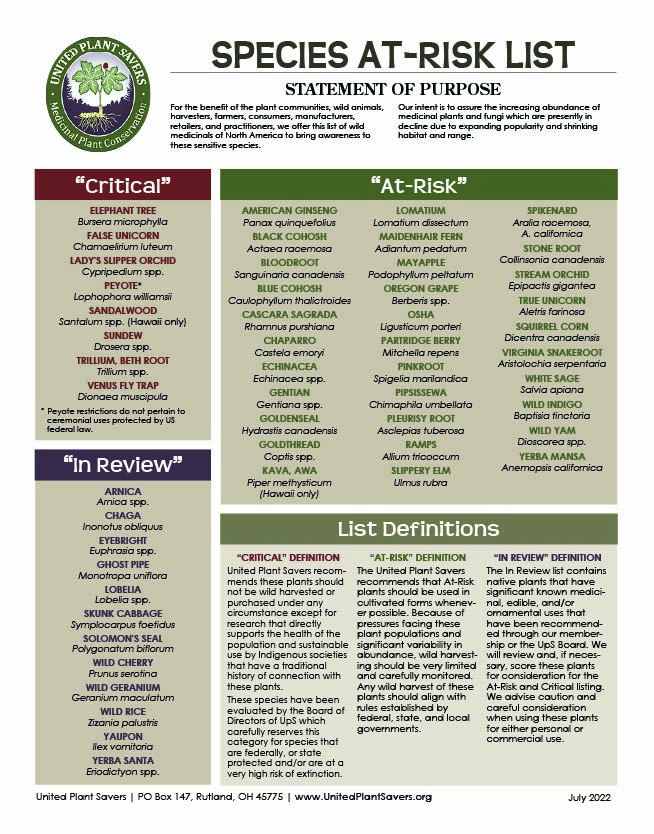
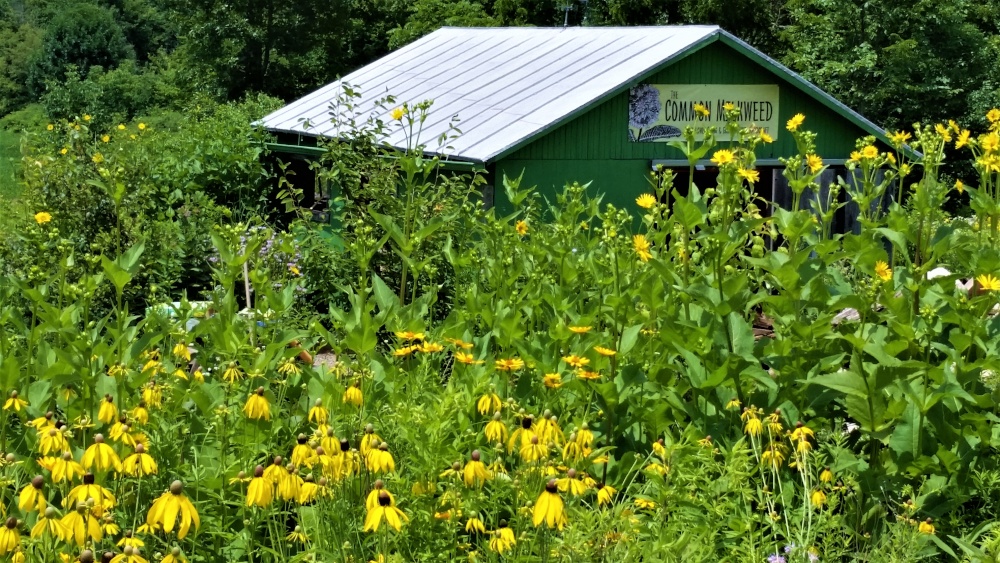
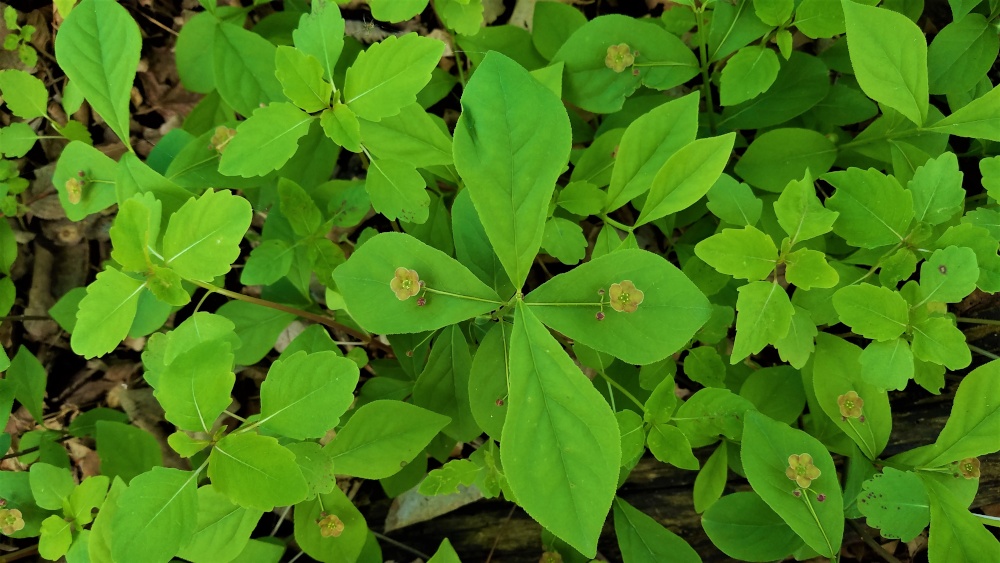
The Great Return on this land began with planting and tending native trees and shrubs in the overgrown sod, including oak trees, persimmon trees, hickory trees, sycamore trees, hazelnut, spicebush, and witch hazel. We also began removing the invasive, non-native shrubs like bush honeysuckle and plants like garlic mustard (Alliaria petiolata). We ate a lot of garlic mustard pesto while we did so! Common wood nymph butterflies thrived, using the overgrown sod as host plants, native or not. Without our help, the area we call the Old Field grew giant patches of silky and roughleaf dogwood, native shrubs adored by birds and utilized as roosts by migrating red bats. The ditch we helped shape back into a stream grew American elderberry (Sambucus nigra). Running strawberry bush reclaimed the area the bush honeysuckle previously hogged. Goldenrods (Solidago spp.) and asters reclaimed much of the overgrown sod areas and offered a sustaining source of nectar, pollen, seeds and foliage for diverse insects and birds. Woodland plants suppressed by garlic mustard showed their excitement in their growth and in their spread: spring beauty (Claytonia virginica), trout lily (Erythronium americanum), Jack-in-the-pulpit (Arisaema triphyllum), and mayapple (Podophyllum peltatum). Their presence encouraged us to keep removing the human trash piles smothering the soil and to let the leaves lie in place, to let the soil invertebrates and time do their work making more soil, and to plant fl oral allies. Now, they are reunited with long lost kin: wild ginger (Asarum canadense), bloodroot (Sanguinaria canadensis), black cohosh (Actaea racemosa), spikenard (Aralia racemosa), goldenseal (Hydrastis canadensis), trillium (Trillium spp.), flowering raspberry, pawpaw, river oats, beak grass, and bottlebrush grass. The sunnier areas grow plants like green-headed conefl ower (Rudbeckia laciniata), purple conefl ower (Echinacea purpurea), common milkweed (Asclepias syriaca), butterfly weed (Asclepias tuberosa), ashy sunfl ower (Helianthus mollis), American plum, redbud, and little bluestem (Schizachyrium scoparium). The list goes on and on from here and the results remain astonishing.
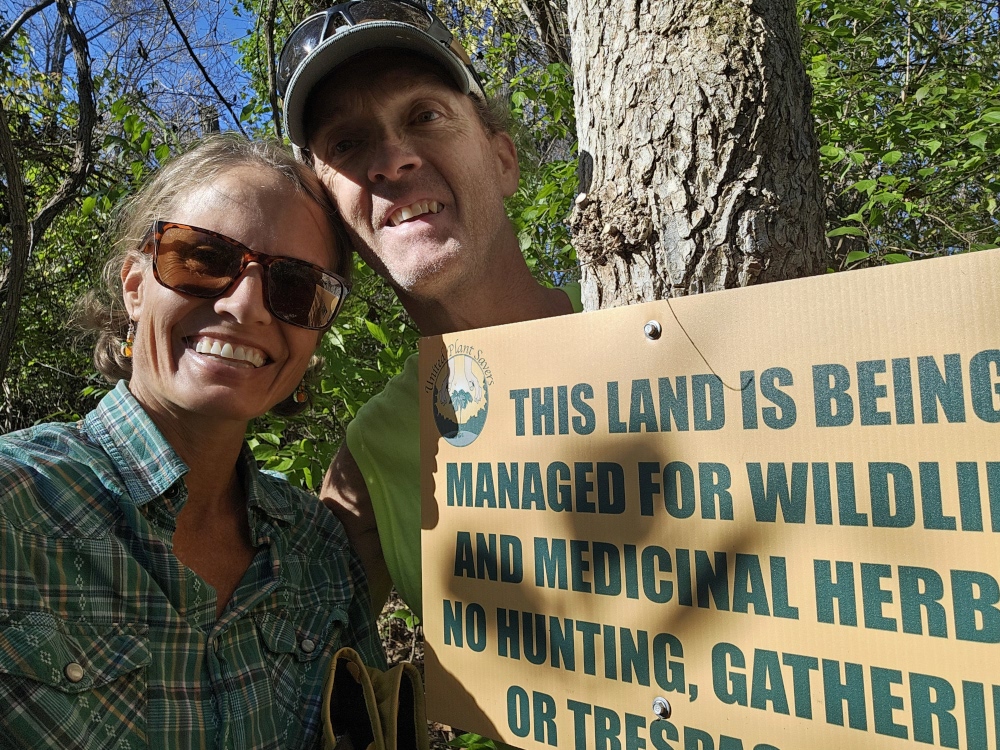
The plant diversity welcomed the insect diversity, which welcomed the bird diversity, and they all welcomed us. They invited us to remember we are nature, too. We evolved outdoors in the sun and the rain and the wind and the cold. We need to remember who we are and where we come from, so we know where to go and who to be, spending time with the plants and the snakes and the birds and listen. Listen to what they say in their own way and what the deepest, realest oldest parts of us say in response. Finding United Plant Savers here in Ohio offered such joy. As soon as the Botanical Sanctuary Network became known to us, we joined. How could we not? Tending the land while encouraging and cheering on The Great Return is our shared mission. Our sign hangs by the road along with a few others to let other humans know what is happening here. If we could offer this great gift of land memory to other humans, we would, but since one will only know the magic by doing it—by planting, by observing and by sharing—we say plant! Sharing space with nonhuman life is the greatest gift of our lives.
Now the great challenge of finding a way to protect 3.5 acres with a house on it that is not contiguous with other larger tracts of protected lands is at the forefront in our minds. We have been met with many more than one “no” so far, which we understand. Every group is mission driven with a small budget, but we will find a way. We didn’t reunite these plants with long lost kin to have them separated again.
We are The Common Milkweed—a way of life, a concept, and sometimes a business—originally inspired by a single wonderful plant that evolved to encompass all of our parts in The Great Return. We rewild land and invite nonhuman lives back on two Ohio properties: Persimmon North: 3.5 acres in Morrow County that we purchased in 2010 and Persimmon South: 10.2 acres in Highland County that we purchased in 2022. The latter will be protected in perpetuity by the Arc of Appalachia. We continue to work on protection for the Morrow County land. We share what we are doing and how we are doing it weekly on our YouTube channel: https://www.youtube.com/@ thecommonmilkweed. Please join us there! It’s a joyful and exciting process to witness. You can CREATE wilderness. What a wonder! We also write a quarterly blogpost at https://thecommonmilkweed.blogspot.com/.
For the Earth,
Jennifer Kleinrichert & Steve Ross