By Tanner Filyaw
Over the last few years UpS has continued to collaborate with local and regional partners on a variety of Forest Farming and AgroForestry grant projects. These projects have helped bring many new resources to the Botanical Sanctuary and have helped UpS grow in new and unexpected ways. Hopefully this article will provide a snapshot of the projects we have been working on over the past two years and give you a brief glimpse into the day-to-day happenings at UpS.
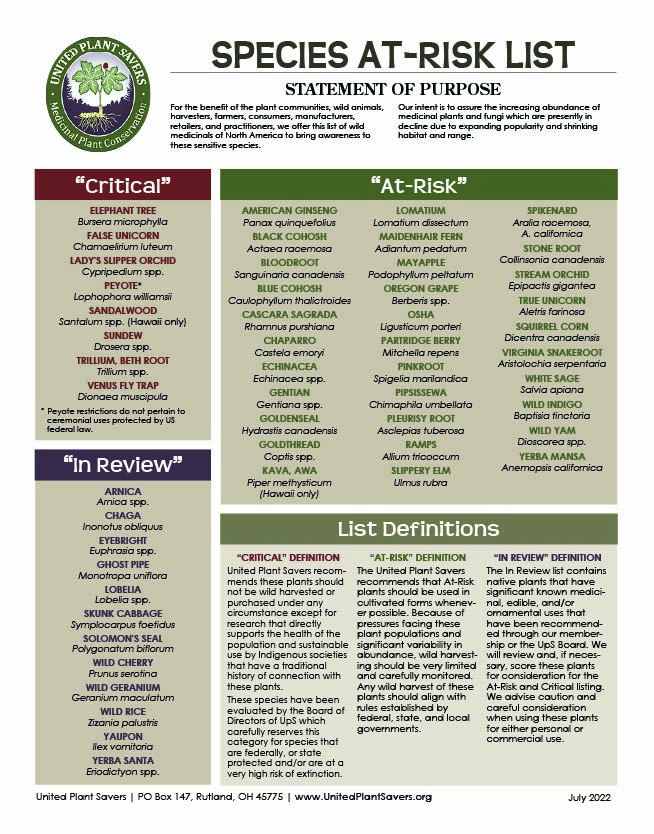
One of the most exciting projects that we have been able to implement in recent years has focused on expanding our capacity to grow and propagate at-risk forest herbs. Two concurrent projects funded through the USDA, and in partnership with the Appalachian Beginning Forest Farmers Coalition (ABFFC) and Rural Action respectively, have enabled UpS to purchase a substantial amount of rootstock for planting and propagation as well as acquire new tools, equipment, and soil amendments for forest farming and agroforestry demonstration sites. Since the fall of 2020, these resources have enabled us to plant nearly 200 lbs. of goldenseal (Hydrastis canadensis) and, collectively more than 120 lbs. of black cohosh (Actaea racemosa), bloodroot (Sanguinaria canadensis), Solomon’s seal (Polygonatum biflorum), wild yam (Dioscorea villosa), blue cohosh (Caulophyllum thalictroides), and false unicorn (Chamaelirium luteum). Over the coming years, we will continue to expand these plantings through seed collection and root division, with the end goal of being able to provide forest growers with high quality planting stock.
A key component of the “conservation through cultivation” strategy is having a strong network of growers, who can consistently produce high quality material that is ready to enter the market. A second project in collaboration with Rural Action, and funded through Appalachian Regional Commission’s POWER initiative, will help expand our capacity to provide post-harvest handling and secondary herb processing education for emerging producers. Resources made available through this project will enable UpS to purchase small-scale herb processing equipment that can be used for hands-on demonstrations and training and will also be available for use by local herb businesses. The items currently under consideration include a 2-zone commercial dehydrator (30 tray), 10’ x 14’ outdoor herb drying shed, small drum-style root washer, and a small herb and root grinder. Ultimately, we hope that this infrastructure will be a big asset for local and regional producers and will help enhance the quantity and quality of local herbal products entering the market.

In closing, we are profoundly grateful to all of our partners who have helped to make these projects a reality, including Rural Action, Virginia Tech, and all the partners that make up the ABFFC. Grants to support these types of projects are hard won through tedious proposal development and mountains of administrative paperwork, but sometimes that is what it takes to tip the scales in favor of conservation and sustainability.
Tanner Filyaw is the UpS Plant Propagation Manager.