Madison County, Alabama
Sanctuary Stewards: The Herring Family — Shay, Lucinda, Margaret, Nancy, and Hal.
Sharps Cove Botanical Sanctuary has the honor of being the first United Plant Savers Botanical Sanctuary in Alabama. Our family land of 300 acres of Southern Appalachian forest and old farm fields lies on the Cumberland Plateau in Northern Alabama in one of the most biodiverse regions of the world. The land is in a mountain cove on Sharp Mountain and Nance Mountain in Madison County. The 4000- acre Sharp Bingham Mountain Preserve, owned by the Nature Conservancy, and the Paint Rock Forest Research Center are a few miles away (as the crow flies).
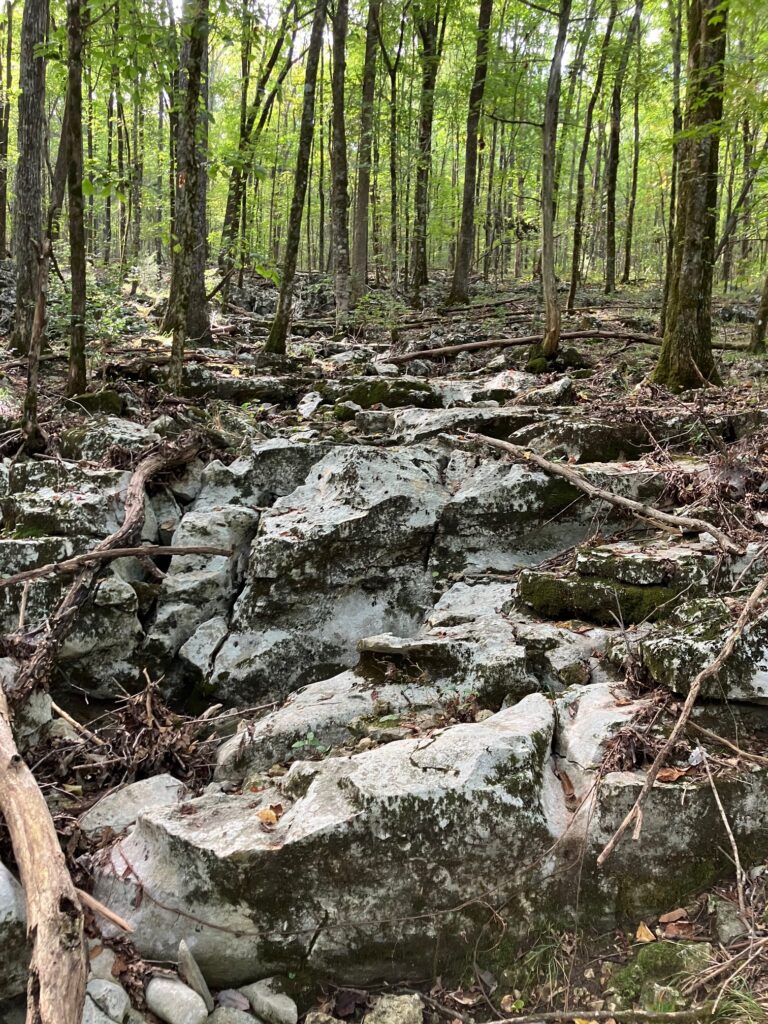
The forests are mature mixed hardwood with some pine and large old eastern red cedar trees, and the land is covered with limestone boulders, remnants of coral reefs and an ancient shallow sea. There are rare trees and shrubs such as smoke tree (Cotinus obovatus), locally called Chittumwood and Alabama snow wreath (Neviusia alabamensis) that are unique to the dry rocky limestone geology. There are numerous sinkholes and caves, and part of the land is known as Sharp Sinks where there are big sinkholes that drain into a large cave (Scott Cave) at the foot of the mountain on an adjacent farm.
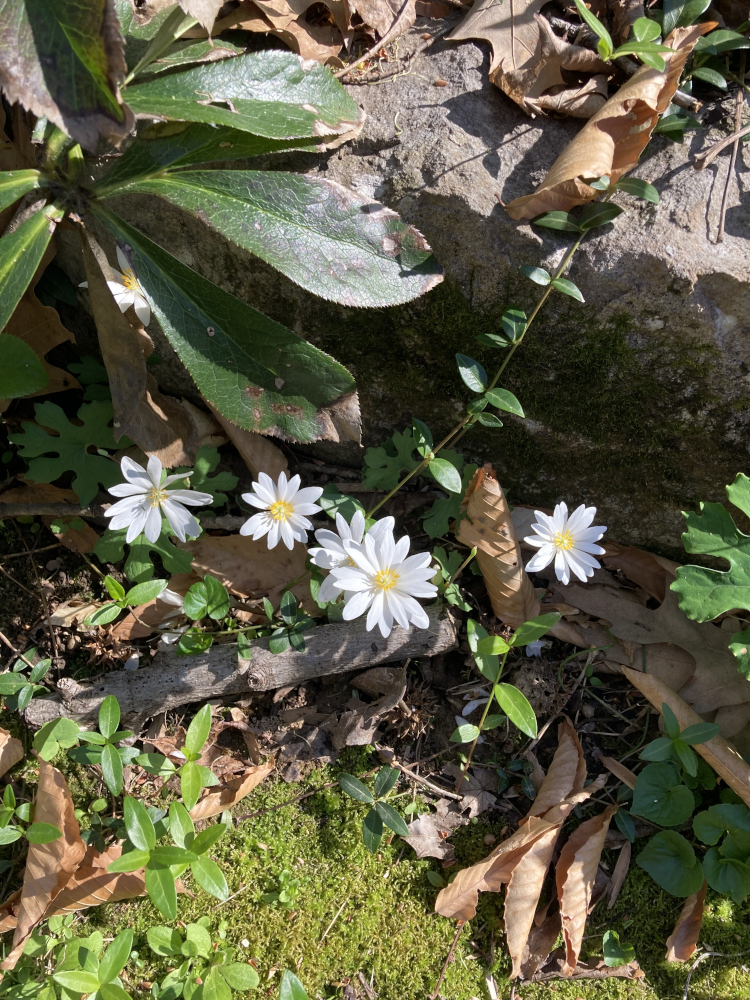
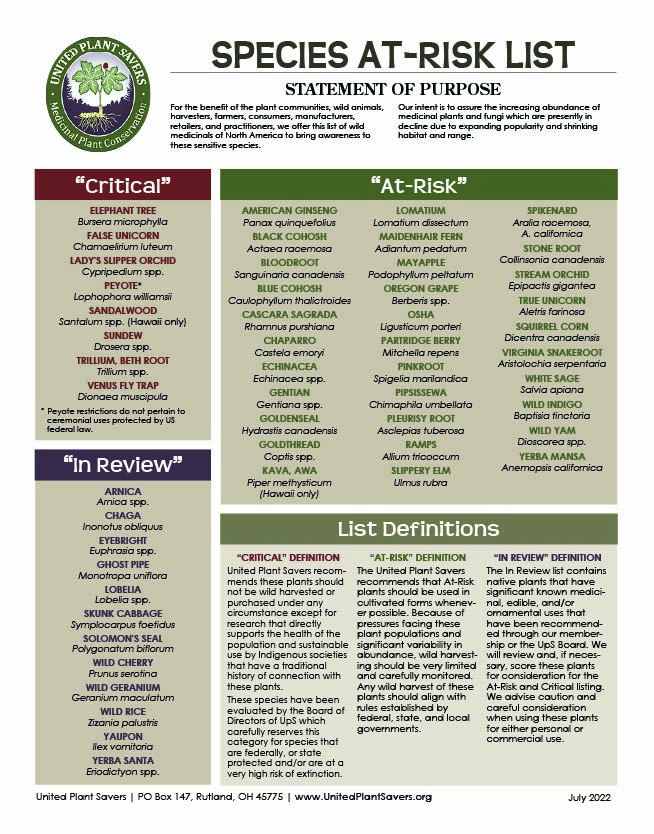
Bloodroot (Sanguinaria canadensis), trillium (Trillium spp.), and twin leaf (Jeffersonia diphylla) grow throughout the woodlands. There are ginseng (Panax quinquefolius), goldenseal (Hydrastis canadensis), and black cohosh (Actaea racemosa), but they are no longer abundant. Ginseng hunting has been a tradition in that part of Alabama for centuries, and our land was historically used for what was called “mountain pasture.” Grazing probably contributed to the scarcity of those plants. We hope to plant and restore those native medicinals. Our mother, Irobel Herring, planted a native plant garden 40 years ago that still thrives in the woods all around the house. Bloodroot, trillium, Solomon’s seal (Polygonatum bifl orum), black cohosh, phlox (Phlox spp.), and hundreds of bluebells (Mertensia virginica) bloom in early spring before the trees leaf out and the intense heat of Alabama summers begins.
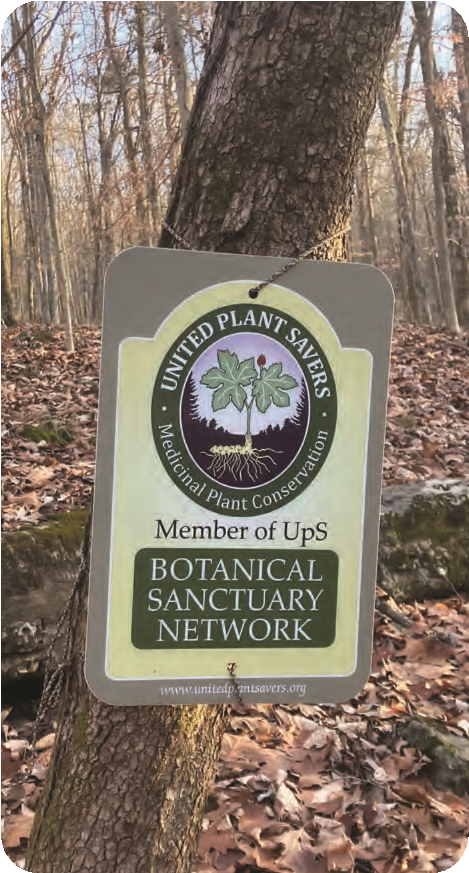
This beautiful and ecologically important land was left by our parents to fi ve siblings. We all agreed that we wanted to protect it for future generations and for all the diverse species that depend on it. All of the land is protected by a Conservation Easement with the Georgia Alabama Land Trust. This summer we were honored to become part of the United Plant Savers Botanical Sanctuary Network. In this politically uncertain time it feels positive and lifegiving to join the many people who love and care for the earth and the web of life that sustains us.
“The care of the earth is our most ancient, most worthy, and after all, our most pleasing responsibility. To cherish what remains of it and to foster its renewal is our only legitimate hope.”